/ Itinerari nel gusto / to taste recipes and cooking
Traditional Puglia food and cuisine: a journey through the flavors of Salento
From Lecce to Otranto, from Gallipoli to the Griko-speaking villages of inland Salento, something ties these very different corners of Puglia together: the rhythm of the pizzica, a traditional folk dance born as a popular ritual that still fills the region’s town squares today. That same spirit lives on in Puglia’s cuisine — simple ingredients like bread, olive oil, legumes and fish, that generations of hands have learned to transform with patience.
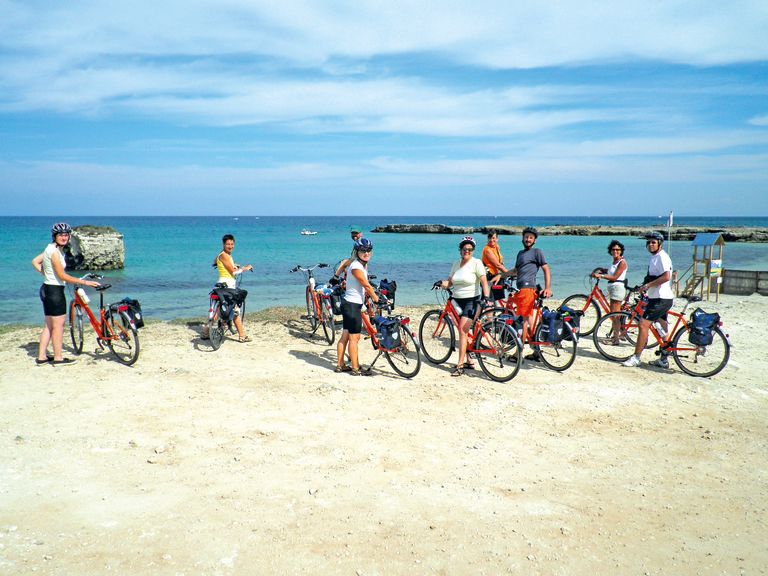
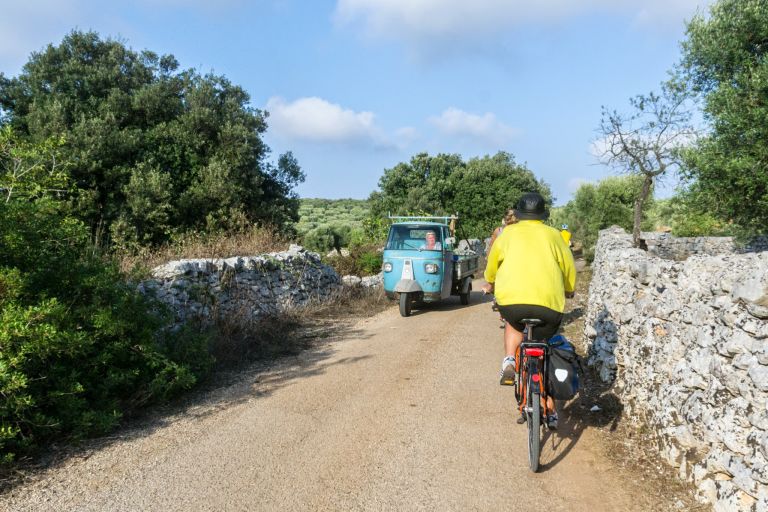
Same rhythm, but a landscape that never stops changing. From the baroque stone of Lecce, the scenery shifts to rows of vineyards, then to the sea, then to the quiet olive groves of Salento’s Griko-speaking hinterland. To really get to know it, it’s best explored a little at a time, with a bike tour, stopping in villages that still hold on to their local products and traditional crafts. In this article, we set off from the baroque heart of Salento, through vineyards, olive presses and fish markets.
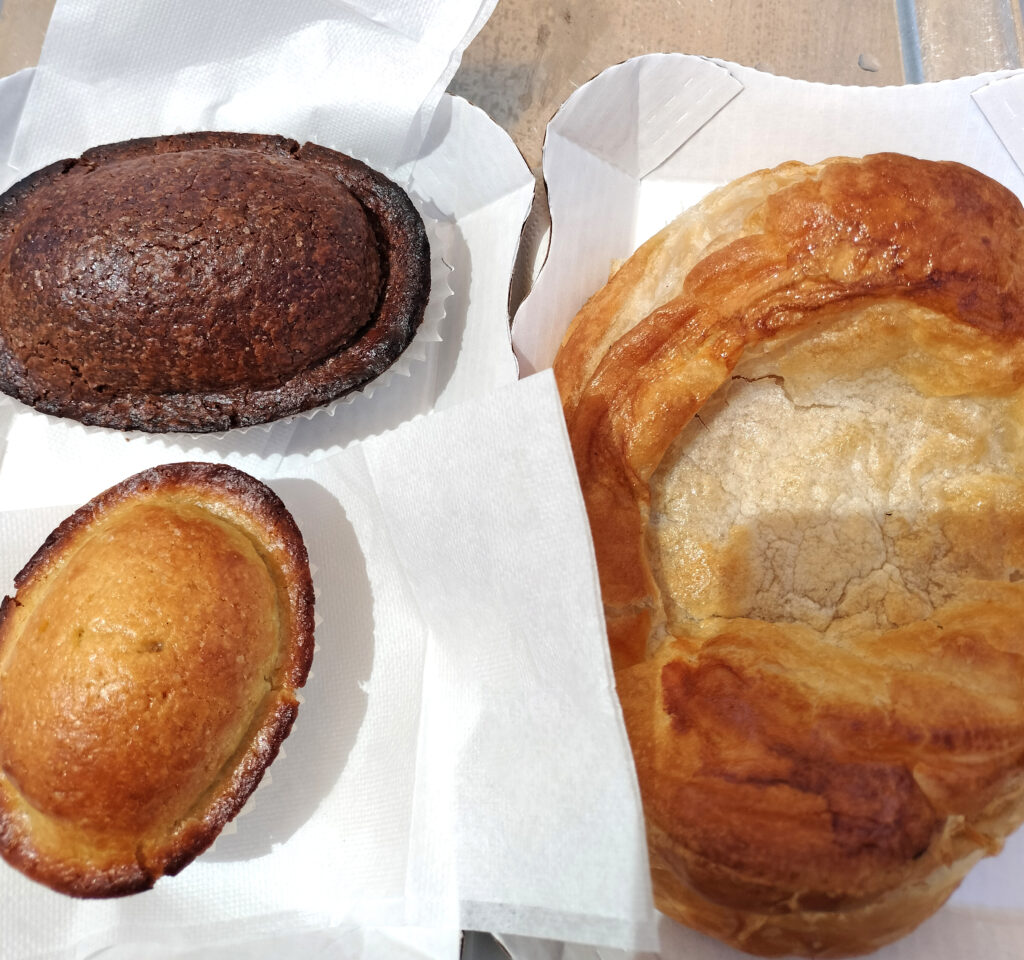
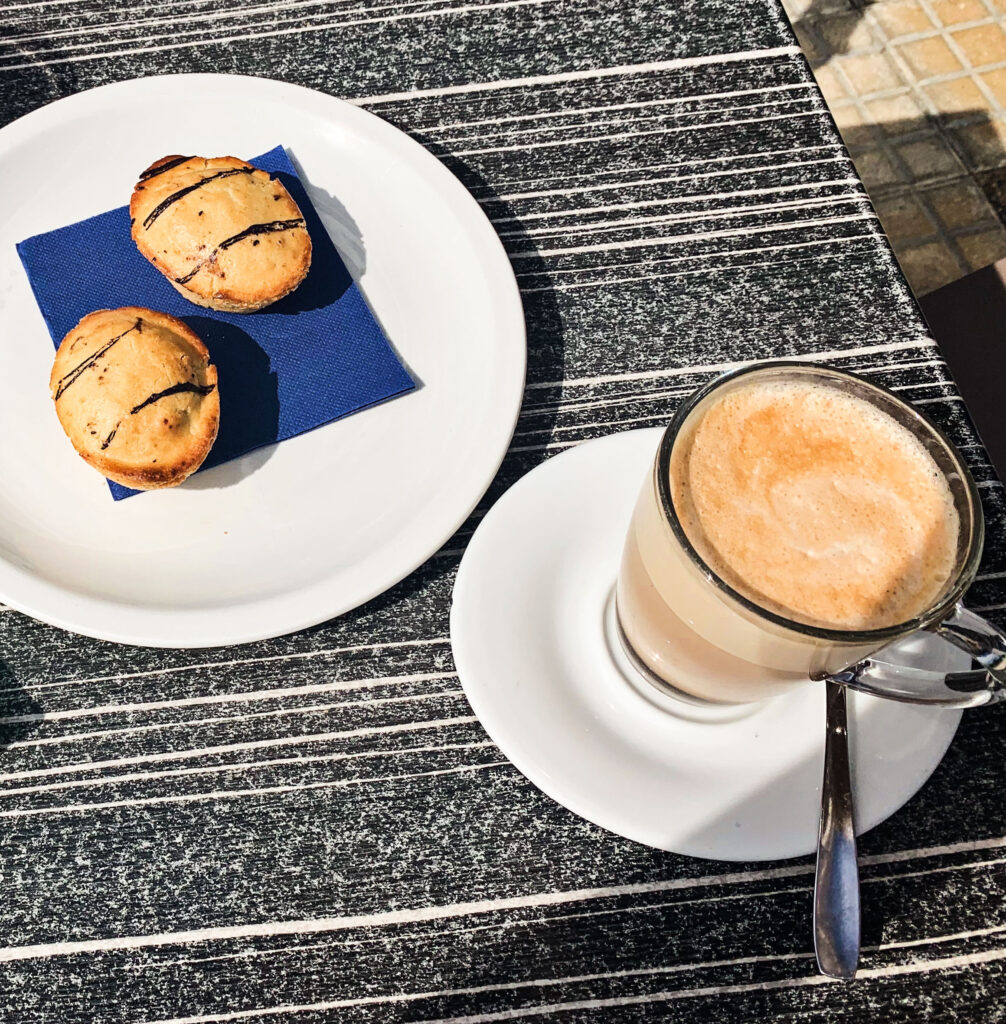
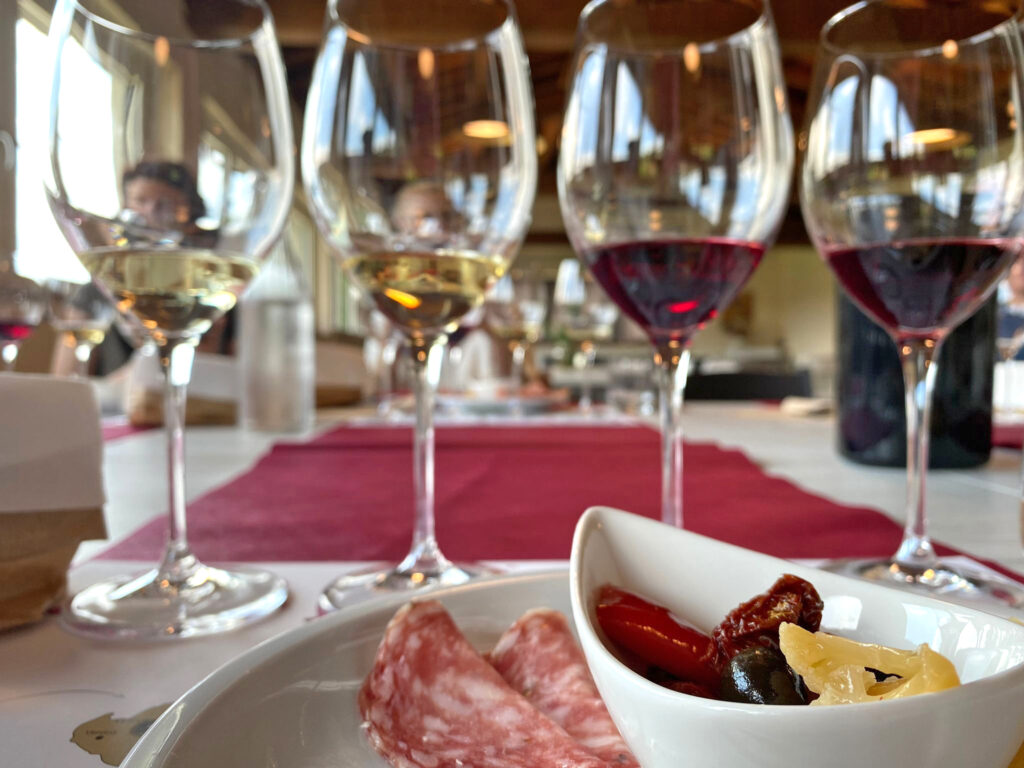
Lecce and the hinterland: Pasticciotto, Negroamaro and Rustico Leccese
Lecce, the baroque heart of the region, is best explored by wandering among façades of Lecce stone carved as delicately as lace, stopping mid-morning for a rustico leccese — two discs of puff pastry filled with béchamel, melted mozzarella and a touch of tomato. When the heat sets in, the local answer is iced coffee with almond milk: espresso poured over large ice cubes — large enough not to dilute it — with almond milk settling at the bottom of the glass.
About 30 kilometers inland to the south lies Galatina, birthplace of the pasticciotto — a shortcrust pastry filled with custard cream — created in 1745 at the historic Pasticceria Ascalone. It’s worth eating one while wandering the village’s narrow lanes, before stepping into the Basilica of Santa Caterina d’Alessandria and looking up at the 14th-century frescoes covering its walls.
Alternatively, about the same distance from Lecce but to the northwest, the countryside takes on a different character. Between Salice Salentino and Guagnano, the soil turns red and the vine rows trace neat geometric lines to the horizon: this is the Salice Salentino wine region. Riding by bike along the farm roads, you’ll notice the low, gnarled vines trained using the alberello pugliese method — a traditional Apulian bush-vine technique that requires hand-pruning and forces each plant to produce fewer bunches, concentrating their aromas and sugars. The area’s historic cellars — often housed in 19th-century masserie (fortified Apulian farmhouses) with star-vaulted stone ceilings — are the natural place to taste Negroamaro: a robust red with notes of dark berries, liquorice and tobacco, and the slightly bitter finish that gives the wine its name (Negroamaro literally means “black and bitter”). A glass pairs well with an aged Caciocavallo Pugliese or with Canestrato, a hard sheep’s milk cheese. It’s exactly why a visit to the local masserie and wine cellars is unmissable here — a chance to hear producers tell the story of their wines amid the rural architecture of their estates.
The Ionian Salento: scapece gallipolina, purple prawns and flavors of the sea
Heading west, the landscape opens onto the Ionian Sea. Porto Cesareo is the right stop for those traveling by bike: the coast here is low and sandy, protected by a Marine Protected Area that safeguards Posidonia seagrass meadows and the small Rabbit Island (Isola dei Conigli), reachable by wading through the shallows at low tide. The cycle path running along the coastline crosses stretches of Mediterranean scrubland, letting you alternate swims and stops among junipers and Aleppo pines, with the occasional village trattoria where the fish still comes straight from the morning boats.
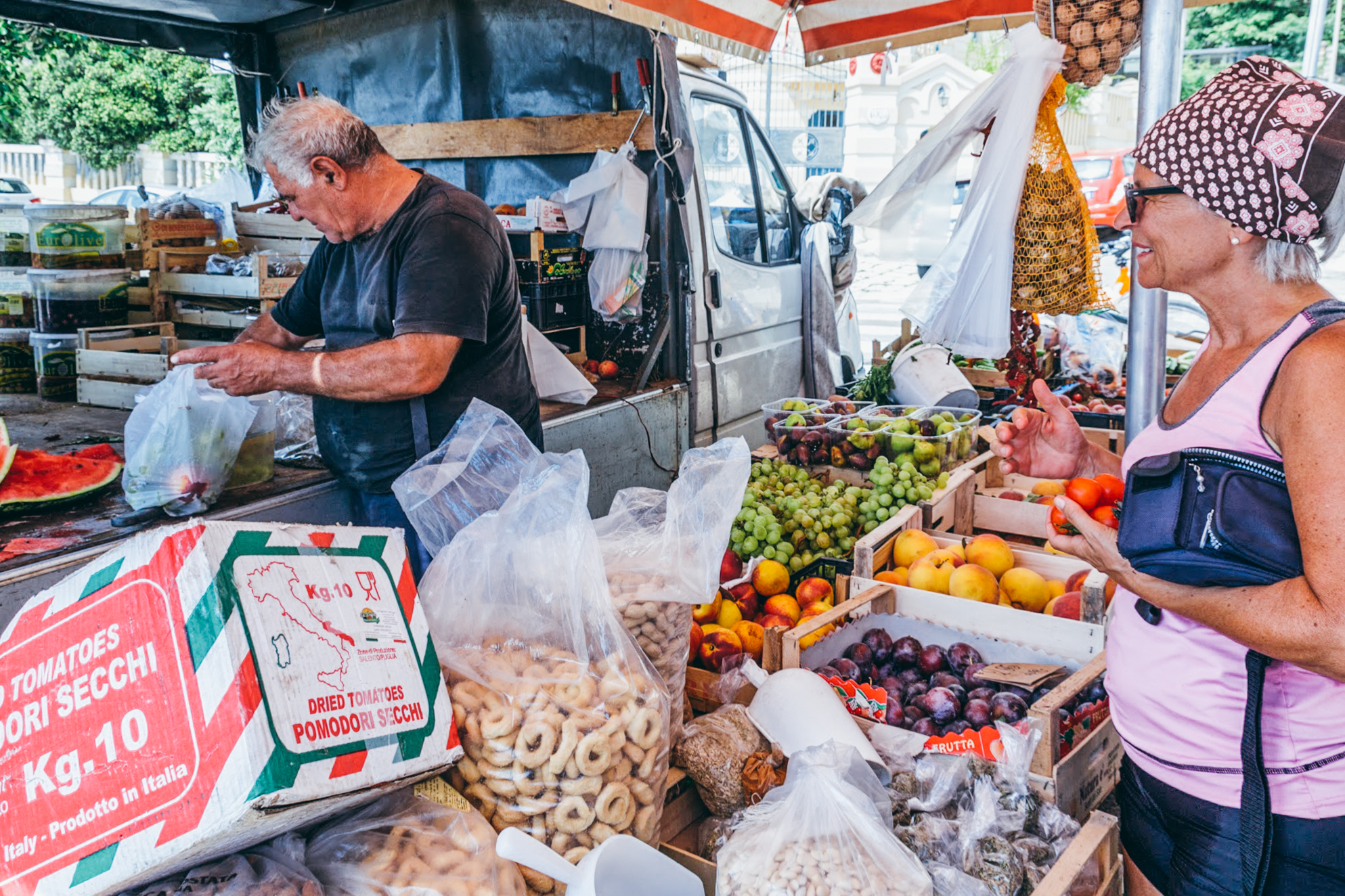
Continuing about 30 km along the coast brings you to Gallipoli, known as the “Beautiful City,” where the air smells of salt and nets laid out to dry. Here, the cuisine leaves the land behind and turns entirely to the sea. The most iconic dish is scapece gallipolina, a preparation born in the Middle Ages as a way to preserve fish during sieges: small mixed fish caught by local paranza boats, floured and fried, layered with stale breadcrumbs, and steeped in a marinade of hot white vinegar with dissolved saffron — which softens the bones and gives the dish its unmistakable golden-yellow color. Also central to the town’s long fishing tradition is the Gallipoli Purple Prawn, caught at great depths: with its violet shell and sweet, briny flesh, it’s sought after by chefs around the world, and can be tasted at its freshest in the city’s restaurants and fish markets, where it arrives daily as the paranza boats return to port in the shadow of the Angevin Castle.
The Ionian coast comes to an end, quite literally, at Santa Maria di Leuca, where the Adriatic and Ionian seas meet before a headland the Romans named De Finibus Terrae — “the end of the earth.” The lighthouse and sanctuary perched on the cliffs, and the Art Nouveau villas overlooking the sea, tell of a different, more refined side of Salento — one best discovered by bike along the coast in the cooler hours of the day, when the light on the water shifts color every few minutes.
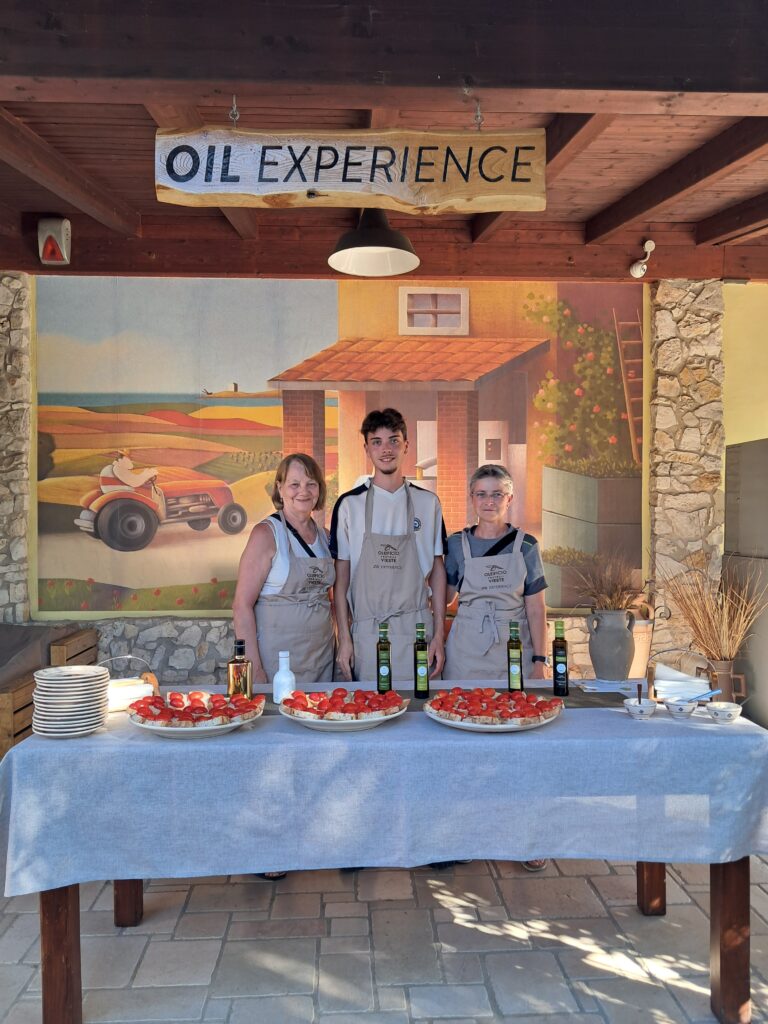
From Presicce to Otranto: extra virgin olive oil, frise and fresh fish
Almost at the very tip of the peninsula lies Presicce-Acquarica, one of Italy’s officially recognized “Most Beautiful Villages,” known as the “City of the Underground Olive Mills.” Above ground, you’ll find elegant palazzi and the late-Baroque grace of the historic center; beneath the central Piazza del Popolo, though, lies an underground world of ancient olive mills hand-carved into the soft tuff rock. Between the 17th and 19th centuries, this was where olio lampante — “lamp oil” — was produced and shipped to light major European cities, from Naples to London: the mills were built underground to keep a constant temperature that stopped the oil from solidifying, and olives were lowered from street level through holes cut into the pavement above. Today, after the difficult years brought on by the Xylella outbreak, local producers are replanting their groves with a focus on high-quality, table-grade extra virgin olive oil. A guided tasting — the small glass warmed between your hands to release the aromas — or simply a slice of bread drizzled with freshly pressed oil, explains better than words why olive oil here is never just a condiment.
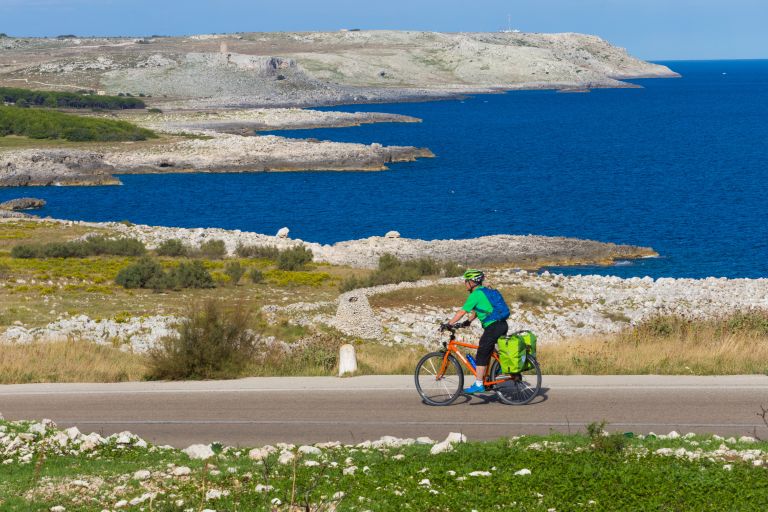
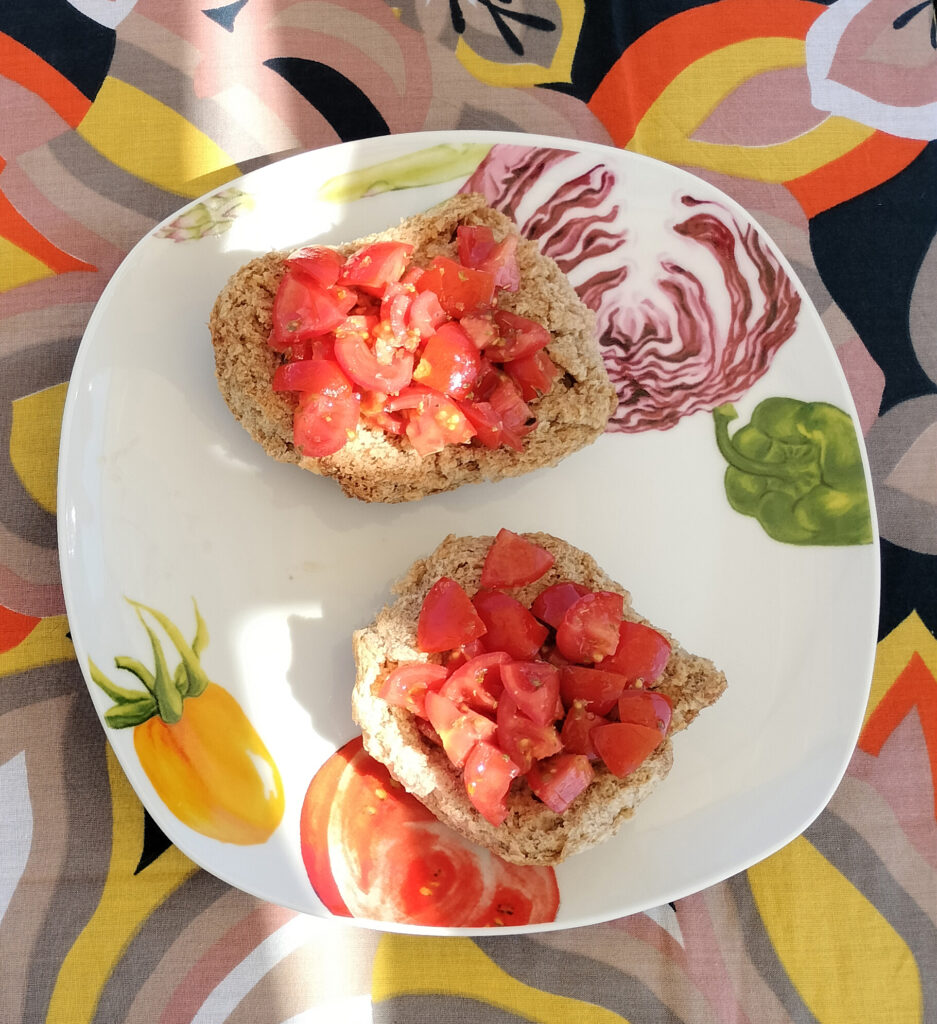
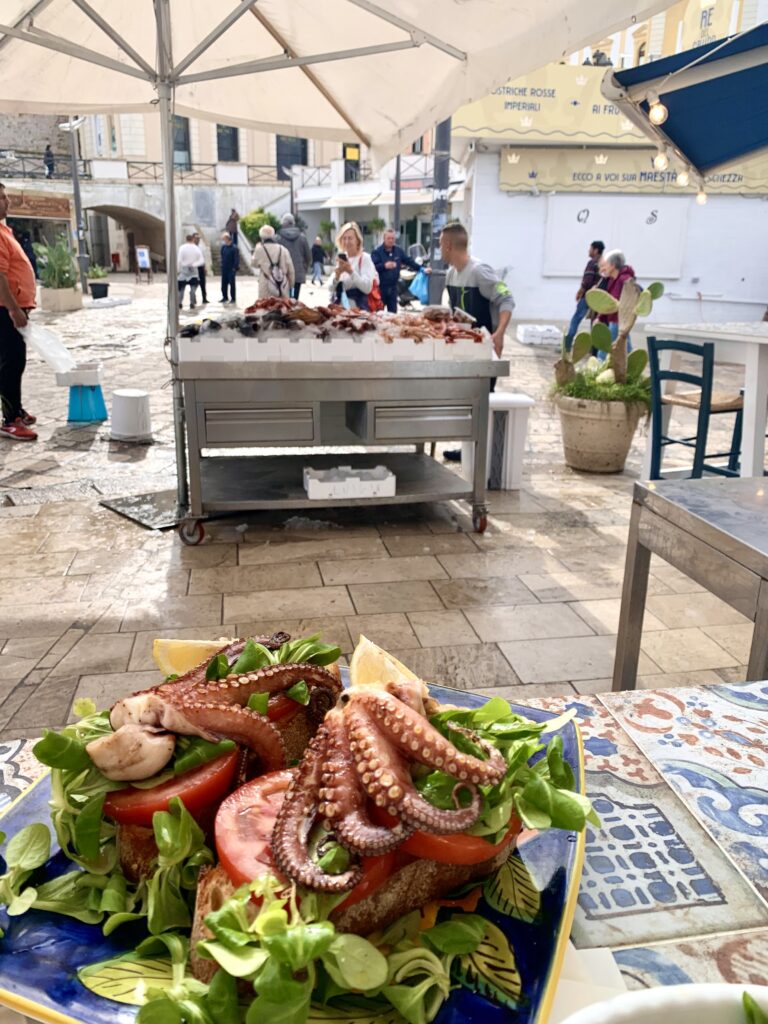
From Leuca, the scenic road that climbs the coast northward is, on its own, one of the most loved experiences for anyone cycling through Salento: coves, coastal watchtowers and the Baia dei Turchi (“Bay of the Turks”) follow one after another along a route that alternates paved and unpaved roads, with easy stops for a plate of humble local fish or a friseddha — stale, twice-baked bread, softened and topped with tomato and oregano, a staple that’s never missing from the table here. The route leads straight to Otranto, Italy’s easternmost gateway. Its historic center, enclosed within the Aragonese walls (built under Spanish rule), holds within its Cathedral one of the largest medieval mosaic floors in Europe — a Tree of Life that winds its way across the entire nave.
Grecìa Salentina: ciceri e tria, fave and cicoria
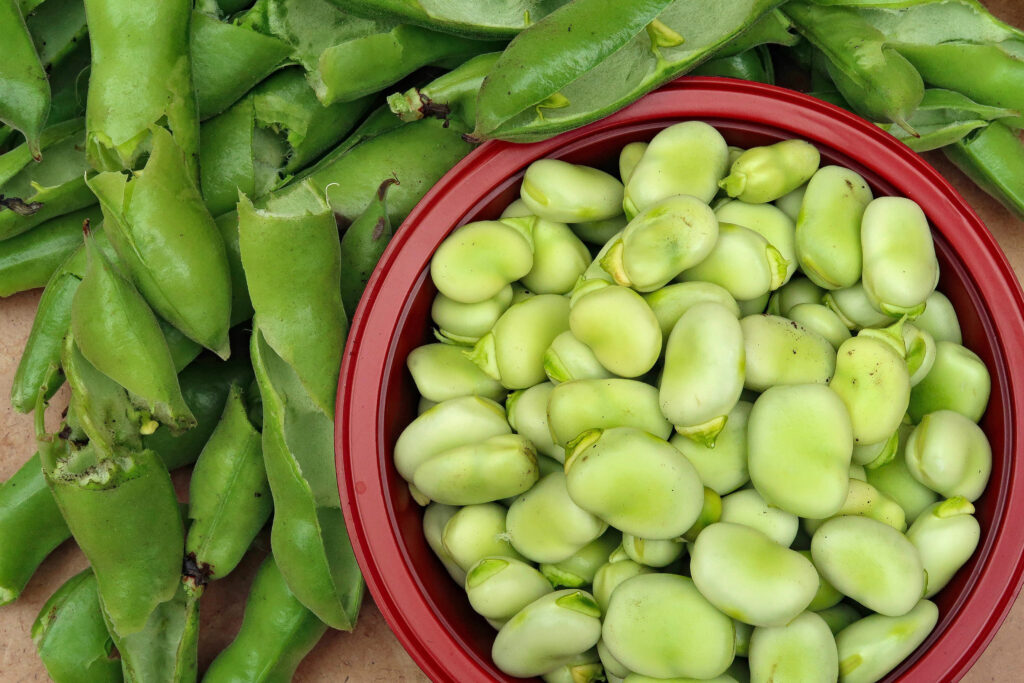
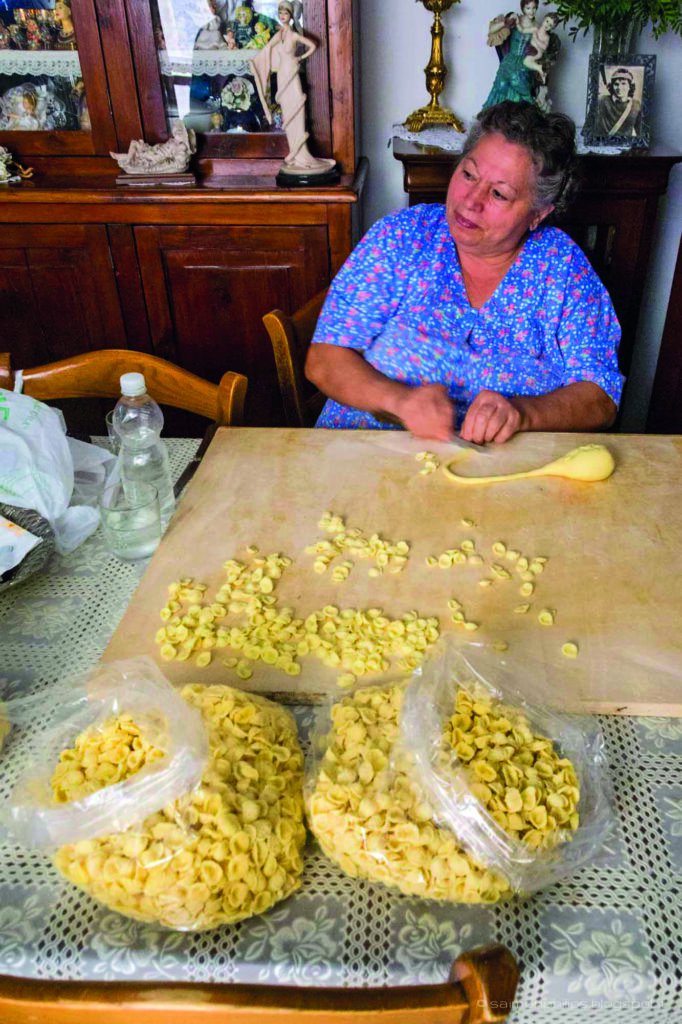
Inland lies a territory that feels as though time has stood still: Grecìa Salentina, originally nine towns where Griko — a dialect of Greek origin — was once spoken, and is still spoken today by some of the older residents. Here, the cuisine turns simple and rustic, built on slow cooking and few ingredients. Two dishes not to miss if you stop at a local trattoria: Ciceri e Tria, nicknamed Salento’s “lasagna” for its playful mix of fried and boiled pasta, and Fave e Cicoria, a puree of dried white fava beans slow-cooked in a traditional terracotta pot known as a pignata, served with wild chicory greens.
Martano, the area’s most populous town, hosts the Sagra della Volìa Cazzata every autumn — a harvest festival celebrating crushed, still-unripe olives, usually of the Cellina di Nardò variety: for the occasion, the town fills with new-season wine, horsemeat stew and folk music, marking the end of the harvest. Not far away, Melpignano hosts the grand finale concert of La Notte della Taranta every August — Europe’s largest folk music festival — when thousands gather in the square in front of the Convent of the Augustinians to dance the pizzica until dawn. For the rest of the year, though, Melpignano is best enjoyed at a slower pace: its 16th-century cloister, stone courtyards and lanes winding through the olive groves are perfect to explore by bike, perhaps linking two or three of the Griko villages in a single day, with stops to taste the local oil and bread at the masserie along the way.
Whether it’s a glass of Negroamaro by the sea or the rhythm of a traditional tambourine in a village square, Salento is best told in small stages, with time to stop, taste and move on. It’s no coincidence that locals call that lingering urge to return mal di Salento — “Salento sickness.”
If you wish to know more about Puglia and Salento, read our ultimate travel guide: Things to do in Puglia: white towns, beaches and cycling routes
Other tasty destinations to explore by bike
If you’re a food lover, Puglia is only the beginning: there are plenty of other destinations just waiting to be tasted — and the good news is, they’re all perfect to explore by bike too. Head south to discover the sun-drenched flavours of Provence and the Camargue, or dive into the rich, velvety flavours of Piedmont— proof that the best souvenirs are always the ones you eat.
Now that you’ve read the article, we bet you can’t wait to taste all these delicious dishes! Check out all Girolibero tour in Puglia and Salento and find your next adventure.4 Travel tips