/ Claudia Zigliotto / to cycle travel by bike
Things to do in Bruges, what to see in Flanders’ fairytale city
Canals, bridges, medieval façades: visiting Bruges is like stepping into a postcard from another age. A small city in Flanders, in northern Belgium, where every corner looks made for a photo. No wonder it’s one of the best-loved stops on a bike trip to Belgium — and for us, it’s even better when you arrive by bike.
Why Bruges is so famous
Bruges is the Flemish city everyone dreams of seeing at least once. Its historic centre is a UNESCO World Heritage Site, and for good reason: for centuries its canals linked the city to the sea, bringing wealth and merchants from all over Europe. In the 15th century, Bruges was one of the most prosperous and lively cities on the continent, a leading Hanseatic port. Then time almost stood still: the medieval fabric has survived practically intact, and strolling (or pedalling) through its streets today feels a little like travelling back in time.

Romantic Bruges: things to do and what to see
Canals, almshouses, squares and museums: these are the places that show Bruges at its most romantic, and the Bruges attractions you simply can’t miss.
Markt e Burg: the city’s two squares
If Markt, the market square, is the heart of Bruges, Burg is its soul. Markt is dominated by the Belfry, which has towered 83 metres over the city since the Middle Ages, and by the Provincial Court, surrounded by colourful houses with their typical stepped gables. Burg, on the other hand, is a small open-air museum of architectural styles: here you’ll find the Basilica of the Holy Blood, the Liberty of Bruges (Brugse Vrije) and the Provost’s House, the former residence of the provost.
The canals of Bruges
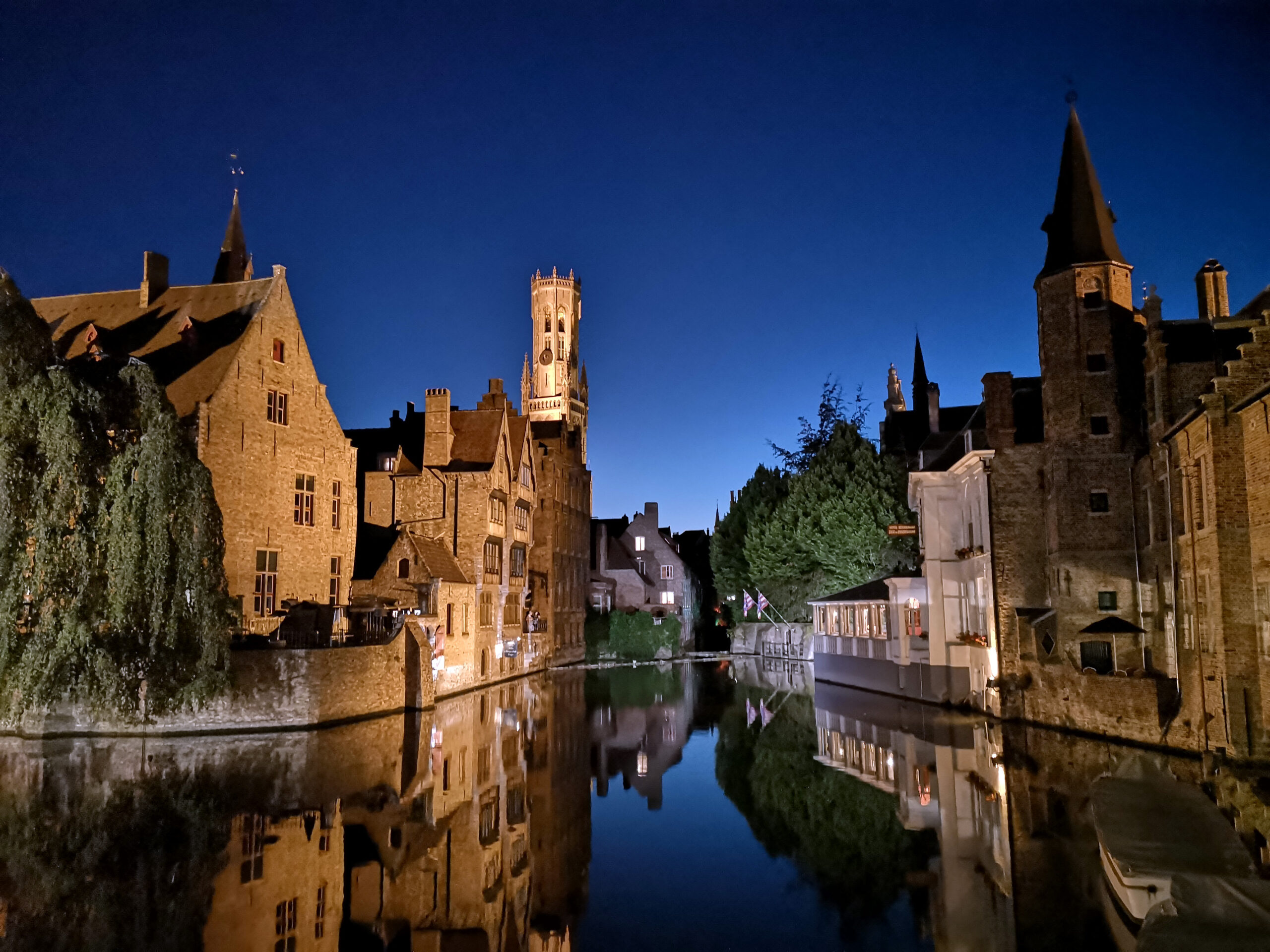
The canals have been the city’s arteries for centuries, and every bend brings a different view. A little mist, a family of swans gliding by: here time always seems to stand still. One canal not to be missed? The Rozenhoedkaai, or Rosary Quay, the most photographed spot in Bruges. Rosaries were once sold here; today it’s the perfect backdrop for your holiday snap!
Begijnhof (Beguinage)
This is where the beguines lived: lay women who chose a chaste life of prayer, always in silence. The Beguinage of Bruges was inhabited exclusively by women for centuries, and today it is home to a few Benedictine nuns and some single women. Precisely because of this authentic way of life, UNESCO has recognised it as a World Heritage Site. Visitors are kindly asked to respect its silence.
Il Minnewater (the Lake of love)
This is the most romantic stop of all. Its name comes from the legend of the “minnen”, the water spirits believed to live in the lake. Add a love story that ended in tragedy, mysterious trees and wild nature, and romance is guaranteed.
The Hanseatic Quarter
In several corners of the city you can still feel Bruges’ trading history, from the time when the Hanseatic League connected Northern Europe, England and Germany. Take Jan van Eyckplein, once a port crowded with merchants from all over Europe, or the Tolhuis, the Old Toll House where, in the Middle Ages, people paid a toll to cross St John’s Bridge.
The Flemish primitives
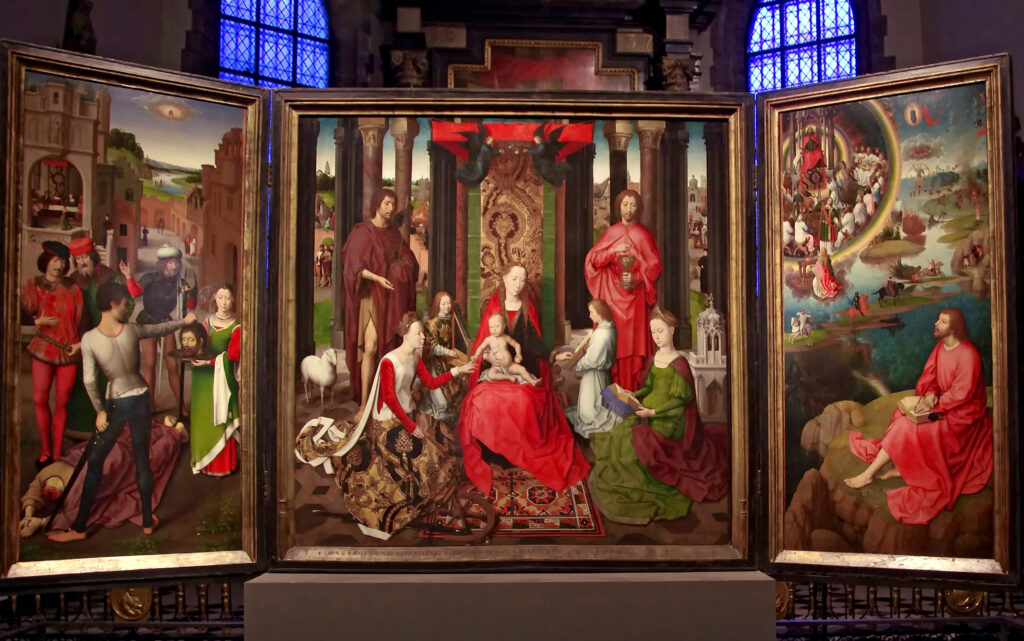
Bruges is the cradle of the Flemish Primitives, the 15th-century masters who revolutionised oil painting with their attention to detail and light — and many of their works are kept here. Don’t miss the Groeninge Museum, with Jan van Eyck’s Madonna with Canon van der Paele, and the St John’s Hospital Museum, with its paintings by Hans Memling. The Church of Our Lady is also worth a visit, with the Passion Triptych by Bernard van Orley and Marcus Gheeraerts and Michelangelo’s Madonna and Child, a testament to the artistic ties of the period.
Godshuizen (almshouses)
These small residential complexes were built as charity from the 14th century onwards. They are a true Bruges institution, scattered all over the centre, and the ideal place to soak up a little history away from the crowds.
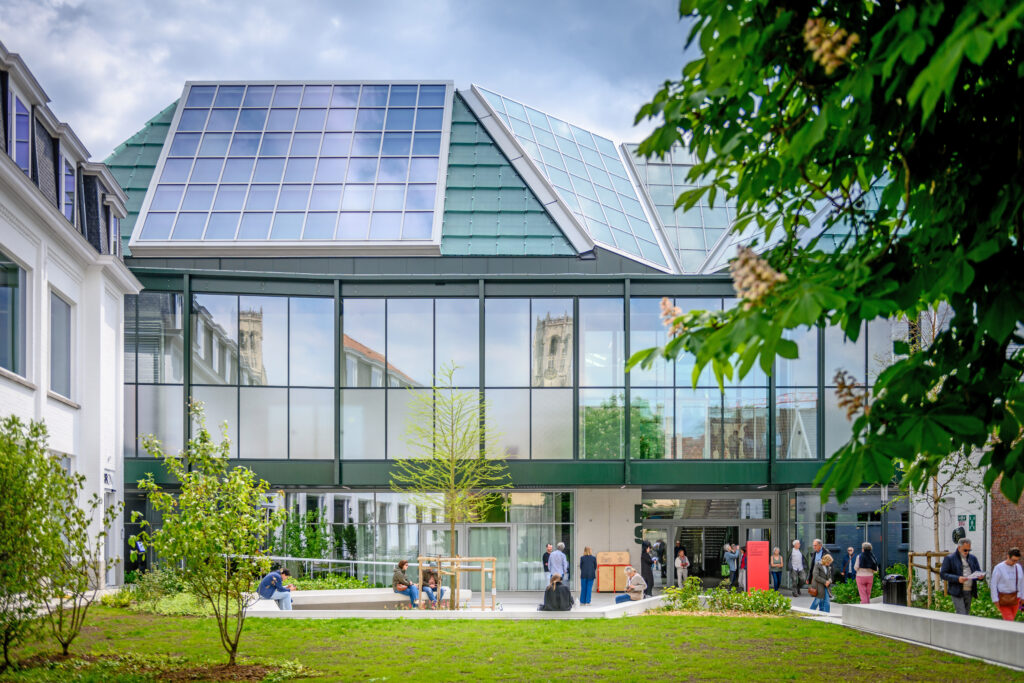
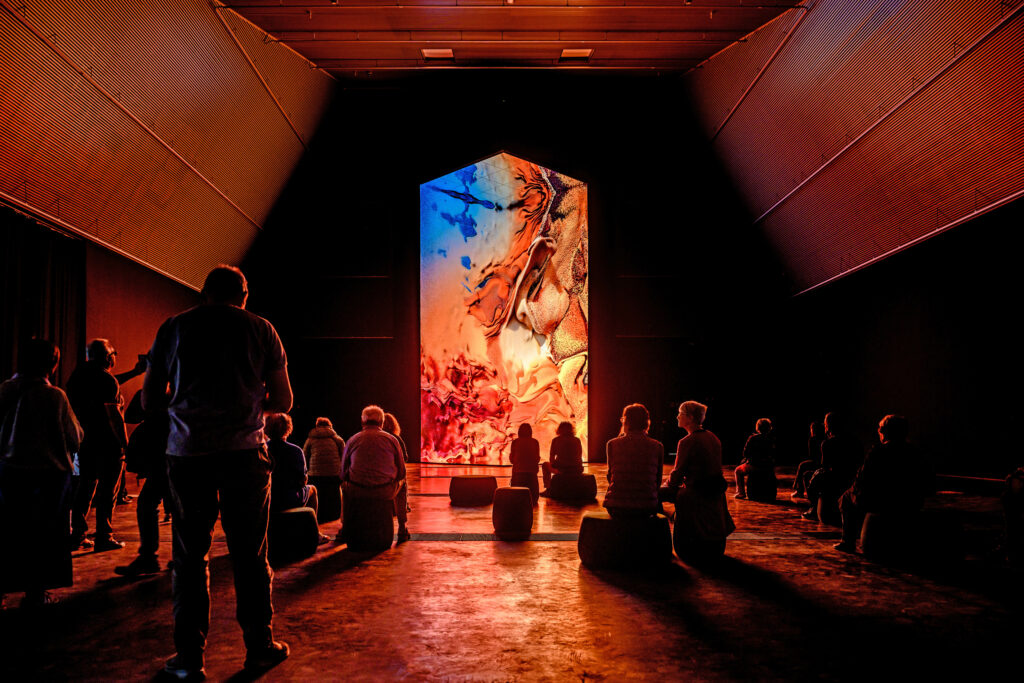
Contemporary Bruges: the new BRUSK cultural centre
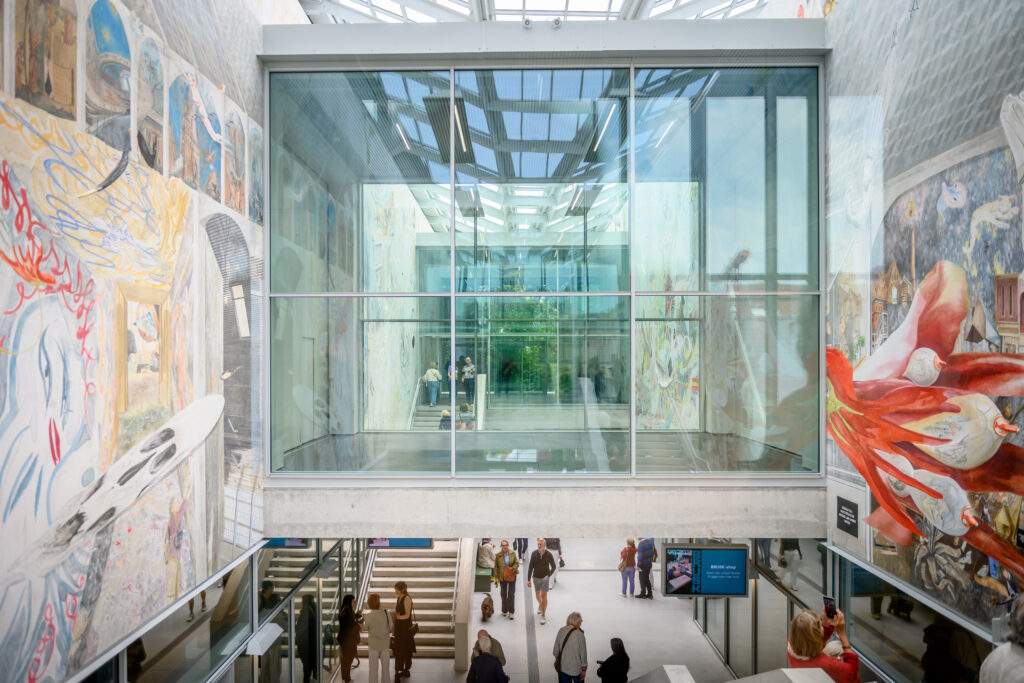
BRUSK is the new space that brings Bruges into the present. It isn’t a traditional museum, but a centre designed to create a dialogue between old and contemporary art, research and architecture. It is part of Musea Brugge, the network of the city’s municipal museums, and sits right in the heart of the UNESCO-listed historic centre, designed by the studios Robbrecht en Daem and Olivier Salens.
At its core are two large exhibition halls, where Musea Brugge stages shows that blend ancient, modern and contemporary art, always linked to today’s themes. The starting point is often the city’s own collection and Bruges as an environment, enriched by works on loan from museums around the world. And between exhibitions, treat yourself to a break at Bar Brusk.
In short, if the historic centre gives you romantic Bruges, BRUSK shows you its more curious, up-to-date side. And the best part is that you can get there by bike, just like everywhere else in the city.
Cycling in Bruges: why it’s a great idea
In Bruges, you can cycle around with complete peace of mind. Almost all the streets in the historic centre are part of a cycle zone. This means drivers can go no faster than 30 km/h and must stay behind cyclists. The result is a city made for two wheels, from the centre to the outskirts. And that’s not all: Bruges is also well connected to other Belgian cities, and beyond the border, which makes it a perfect stop on a longer itinerary through Flanders or on a journey all the way to Amsterdam. We organise cycling holidays in Flanders, including for families, with a stop right in Bruges.
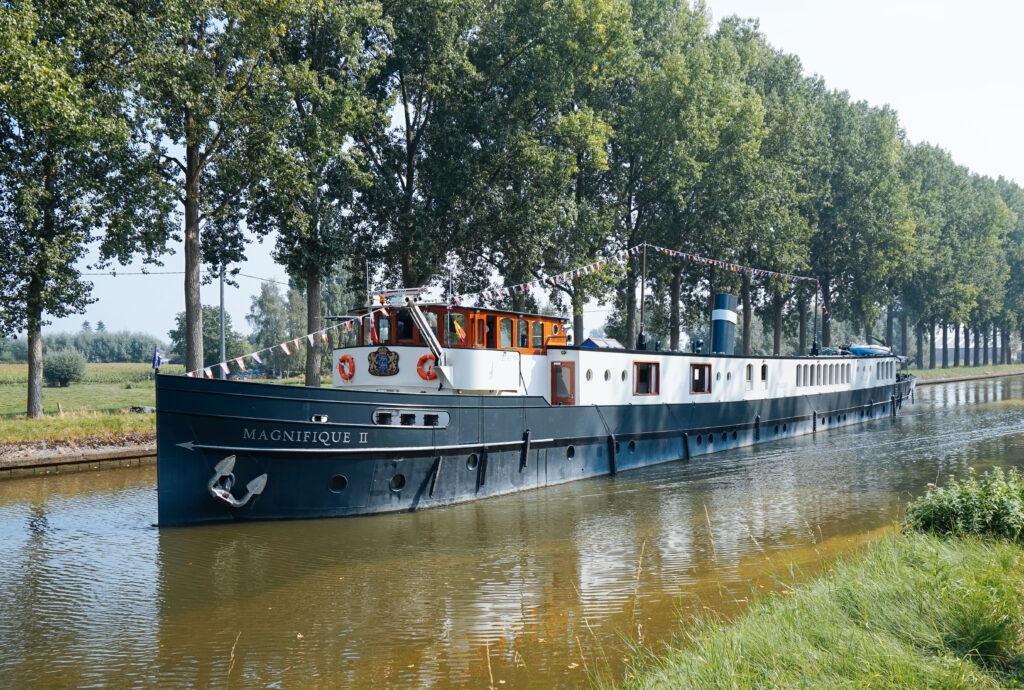
Bike and barge, between Bruges and Amsterdam
Belgium never stops surprising, and perhaps not everyone knows that bike and boat holidays were born right next door, in the Netherlands. It’s a very popular way to travel in Flanders too: you cycle by day and sleep on small hotel barges that move along canals and rivers.
A bike and boat itinerary from Bruges to Amsterdam takes you through canals, dykes and polders, past Gothic cathedrals and masterpieces of Flemish painting. And if the route allows, even a detour to the beaches of the North Sea.
Practical info for visiting Bruges
When is the best time to visit Bruges?
The best time to visit Bruges is from April to October: temperatures are mild and the days are longer, perfect for exploring the city at a leisurely pace (perhaps by bike).
What language do you speak in Bruges?
In Bruges, people speak Flemish, the Belgian variety of Dutch. But English and French are widely spoken everywhere, so making yourself understood is never a problem.
If you can’t wait yo discover Bruges, take a look at Girolibero’s tours!4 Travel tips