/ Giulia Gasparotto / to discover
Discover Puglia: white towns, beaches and cycling routes
One of the most captivating regions in southern Italy, Puglia stretches across the sun-drenched “heel” of the Italian boot. Here, endless olive groves, charming coastal landscapes and villages with an ancient soul await you at every turn. There’s no better way to truly experience it all than by tasting the local cuisine, sipping regional wines and uncovering its hidden treasures along the way.
This travel guide collects our recommendations on the must-see places and the typical dishes you simply can’t leave without trying. And here’s the good news: Puglia is also a perfect destination to explore by bike, with quiet country roads and breathtaking coastal routes to discover at your own pace. We travel there from March to November. Will you join us?
Alberobello, the city of trulli
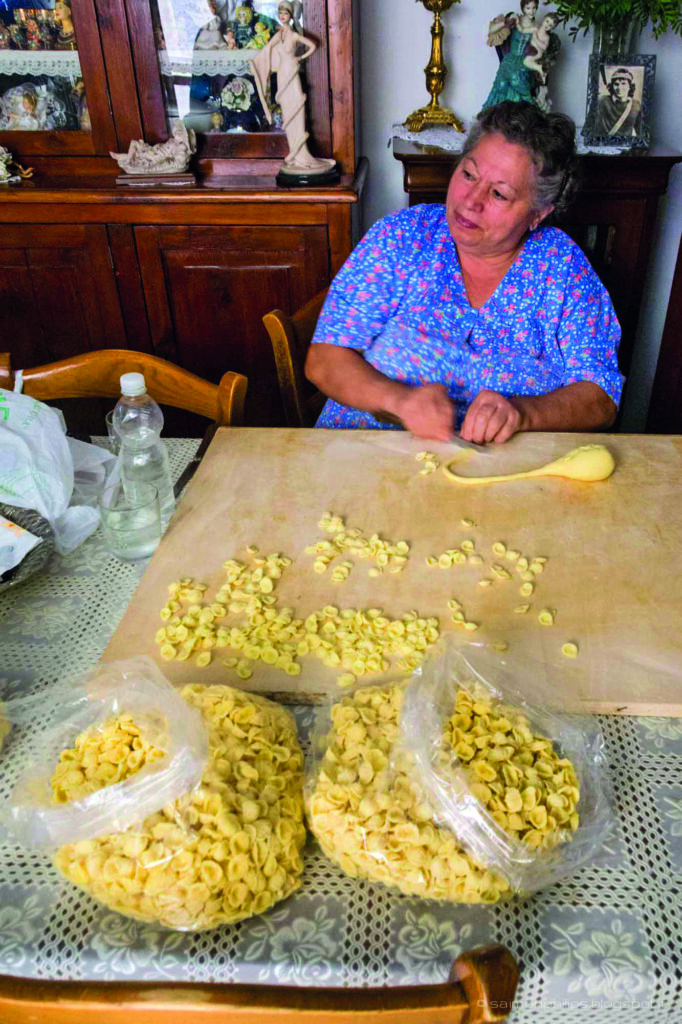
Alberobello exudes the authentic spirit of Puglia. Its narrow streets are lined with white trulli—the traditional dome-roofed houses—and small local shops. Green ivy blends with the colors of flowers that enliven every alleyway. Stroll through the two main districts, Rione Monti and Rione Aia Piccola, and soak up the atmosphere. If you’re lucky, you might come across an elderly woman kneading orecchiette pasta by hand. Be sure to visit the Trullo Sovrano, and then head to the Trullo Siamese. The latter’s strange shape stems from an ancient legend. Two brothers who were in love with the same woman lived in the trullo. The young woman was promised in marriage to the eldest son but she was actually in love with the second, and they soon became lovers. When the betrayal was discovered, the elder brother kicked them both out of the trullo. The younger brother, however, asked for his share of the inheritance, and the house was divided in two.
From the Santa Lucia viewpoint, you can enjoy a unique view. It is impressive at sunset and quite beautiful in the evening when all the trulli are illuminated!
Ostuni, the white city
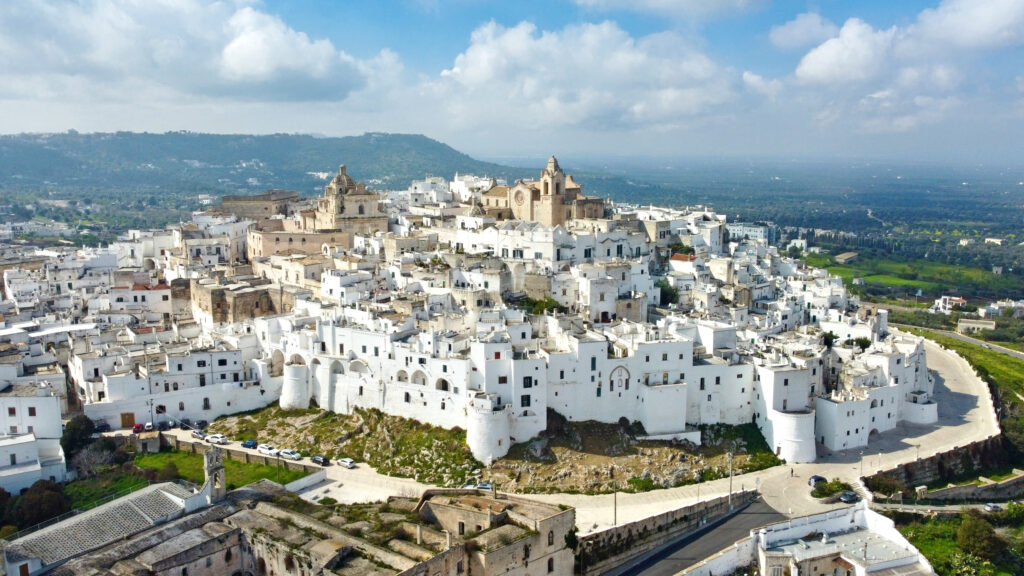
Perched on a hill, Ostuni boasts stunning sea views. Its distinctive whitewashed buildings have earned Ostuni the nickname “the White City.” At the heart of the city is Piazza della Libertà, home to the Church of San Francesco, the town hall, and the Column of Sant’Oronzo, which symbolizes devotion to the patron saint. The main street in the historic center, Via della Cattedrale, is lined with picturesque artisan shops and vendors selling delicious local products. At the end of the street stands the Cathedral of S. Maria Assunta, a prime example of late Apulian Baroque architecture. Nearby is the Scoppa arch, said to be inspired by the Ponte dei Sospiri (Bridge of Sighs) in Venice.
Before leaving the center, be sure to see the famous Porta Blu (Blue Gate), also known as the Gate of Paradise, due to the stark contrast between the blue door and white wall. According to legend, lovers and travelers would stop in front of the door to share their promises, desires, and dreams, hoping that the wind and waves of the sea would make them come true.
Lecce and its baroque
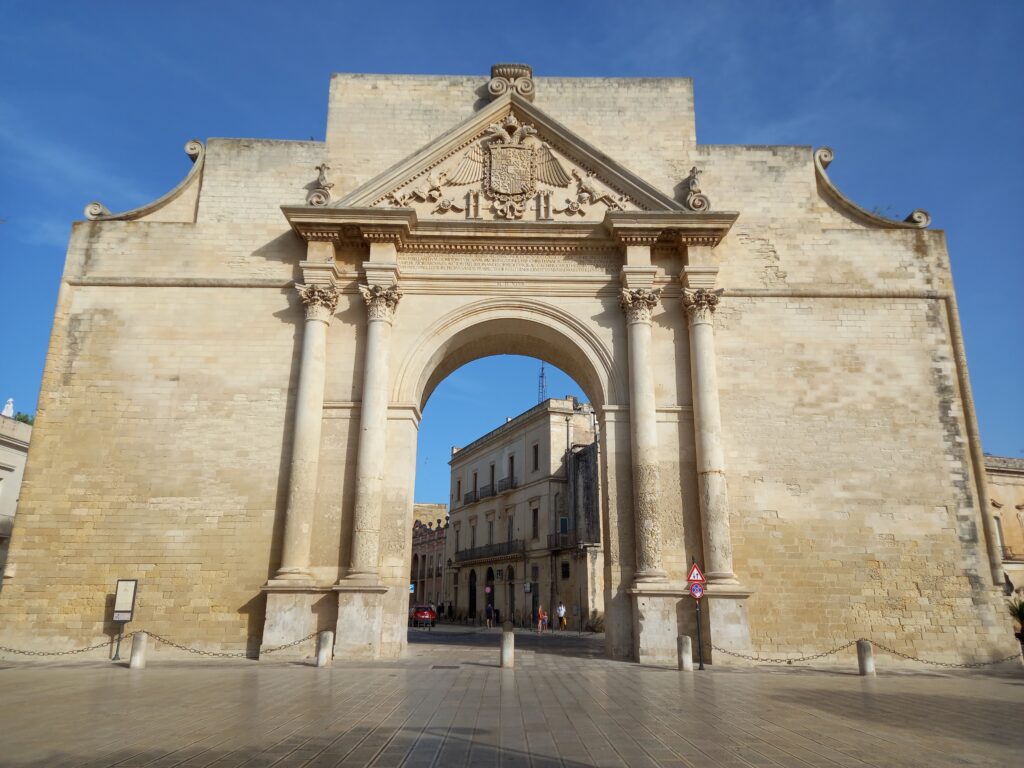
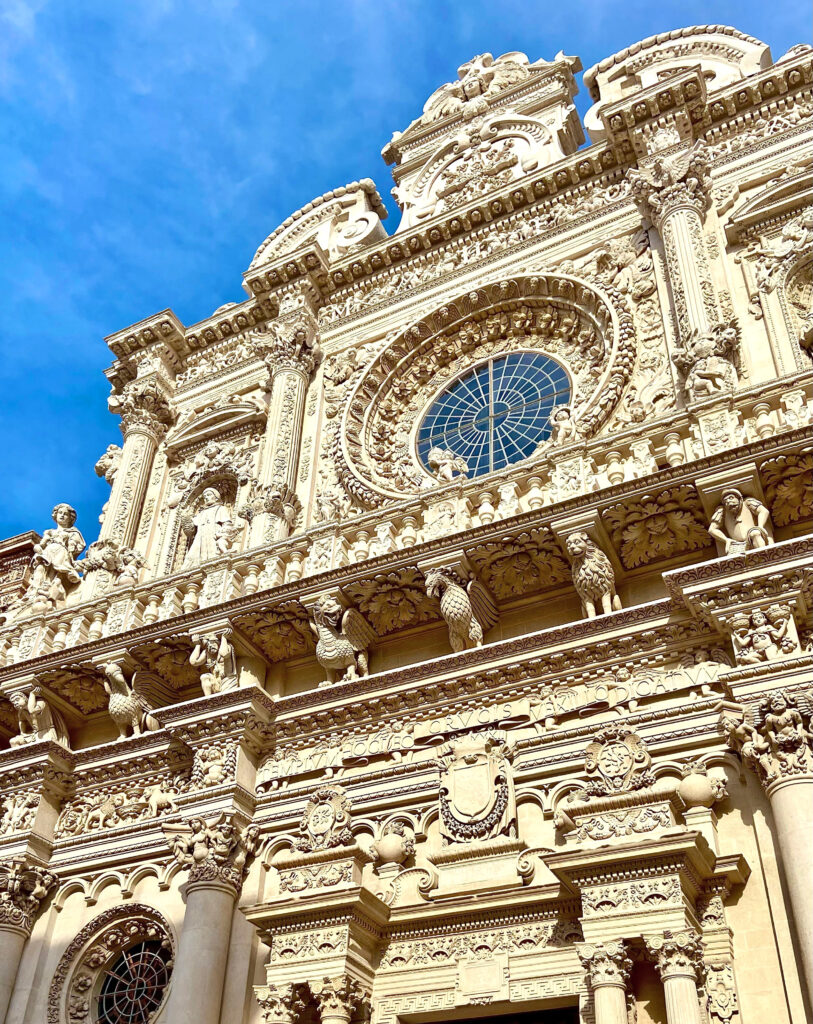
In the heart of Salento lies Lecce, a small city that will win you over with its extraordinary Baroque architecture and the warm glow of pietra leccese — the golden local stone used in the construction of virtually every building in the historic centre. Step through one of the city’s three ancient gates to begin your exploration: Porta Napoli, which once marked the road to the capital of the Kingdom; Porta Rudiae, a fine example of Lecce Baroque in its own right; or Porta San Biagio, with its distinctive pinkish hue. Once inside, let yourself wander through streets lined with noble palaces, flower-draped balconies and hidden courtyards tucked between churches and narrow alleyways. Look up often — the city rewards those who do! From the Basilica di Santa Croce, the most celebrated symbol of Lecce’s distinctive style, to the sumptuous cathedral and bell tower framing Piazza del Duomo, the Baroque here is unlike anywhere else. Before you leave, make sure to stop at Piazza Sant’Oronzo, where a partially excavated Roman amphitheatre brings two thousand years of history right to the surface.
Bari, the capital city
Bari is a charming city with two souls. The old town — Bari Vecchia — is emblematic of Apulian traditions and culture, while the elegant Murat district offers a more modern vibe. Stroll along the seafront and let the sound of the waves guide you. Admire the many small, colourful boats and enjoy the company of the fishermen selling their fresh catch. The historic centre welcomes you with a maze of colourful alleys lined with small shops selling handmade souvenirs, fresh fruit and other local products. It’s an explosion of scents!
And let’s not forget the famous Via delle Orecchiette. Local women keep tradition alive here by sitting outside their doorways every day, kneading kilos and kilos of fresh pasta by hand just as their grandmothers did before them, bringing this small street to life in the most authentic way. It’s an unparalleled immersion in local culture.
Pass under the Arco delle Meraviglie (Arch of Wonders), said to have been built in one night to allow two lovers to marry. Then make your way to the Basilica di San Nicola, a masterpiece of Romanesque architecture that houses the relics of St. Nicholas and has become an established pilgrimage site for the faithful, and one of the most visited places in Puglia. And if you can, time your visit to end at the Fortino di Sant’Antonio, a favourite local spot for watching the sun sink into the Adriatic.
Otranto, Italy’s easternmost municipality
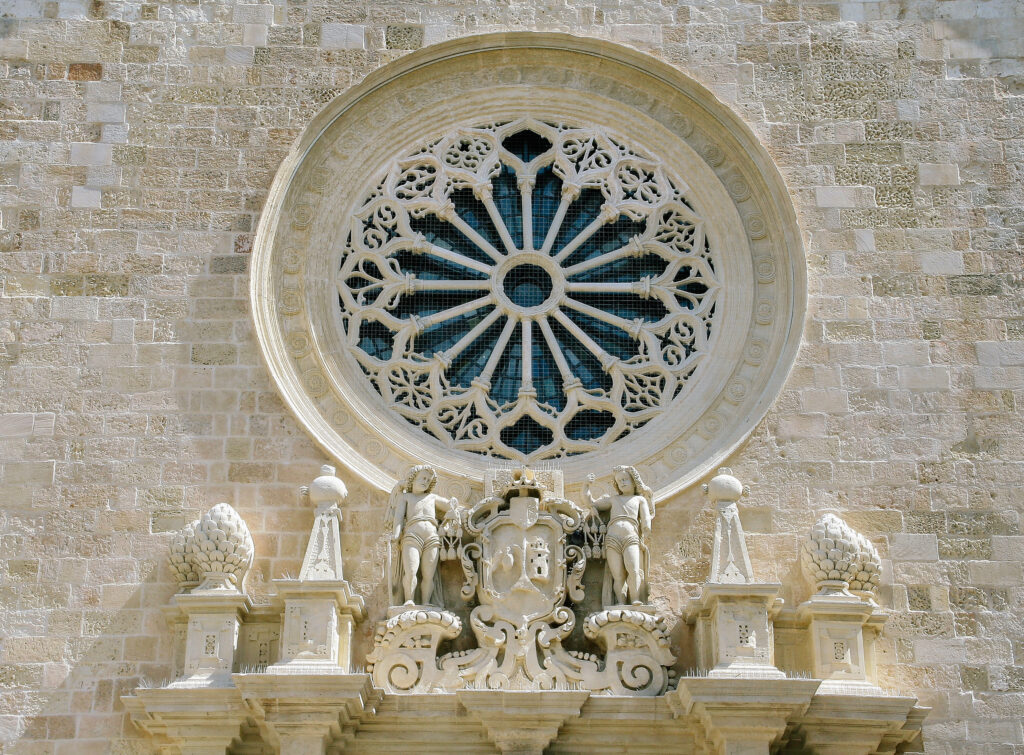
Did you know that Otranto is the easternmost municipality in Italy? Known as the “little pearl of Salento,” it stands out for its ancient village, stone-paved streets, and Aragonese castle overlooking the sea. Climb up to the castle’s ramparts for a wonderful view over the town and the coastline.
In the historic centre, be sure to visit the Cathedral. You can admire its beauty from the outside just by turning the corner, but you will only fully appreciate the little treasure that it truly is once you step inside. There you’ll find one of the world’s largest floor mosaics, depicting biblical and mythological scenes as well as the tree of life. At the far end of the nave is the Chapel of the Martyrs, which houses the remains of the 800 inhabitants of Otranto who were beheaded by the Turks in 1480 for refusing to renounce their Christian faith. Don’t leave without visiting the crypt below, with its 72 columns, each featuring a different style of capital.
In the evening, take a stroll along the Lungomare degli Eroi. Feel the wind in your hair, enjoy the crystal-clear sea, and stop at one of the small bars along the way for an excellent ice cream. What more could you ask for?
Other places not to be missed
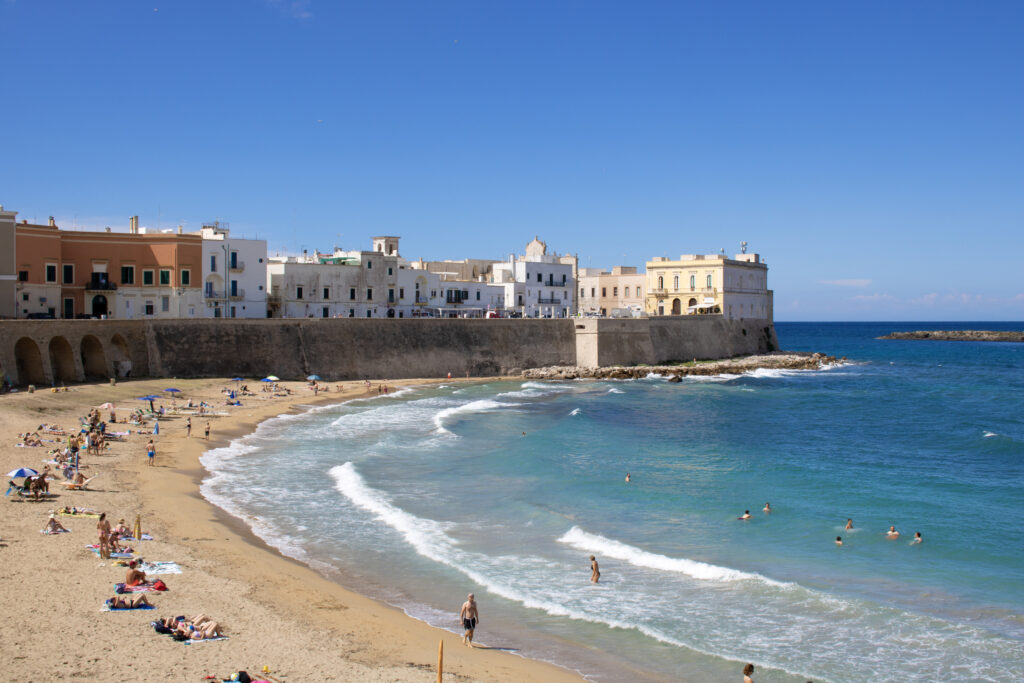
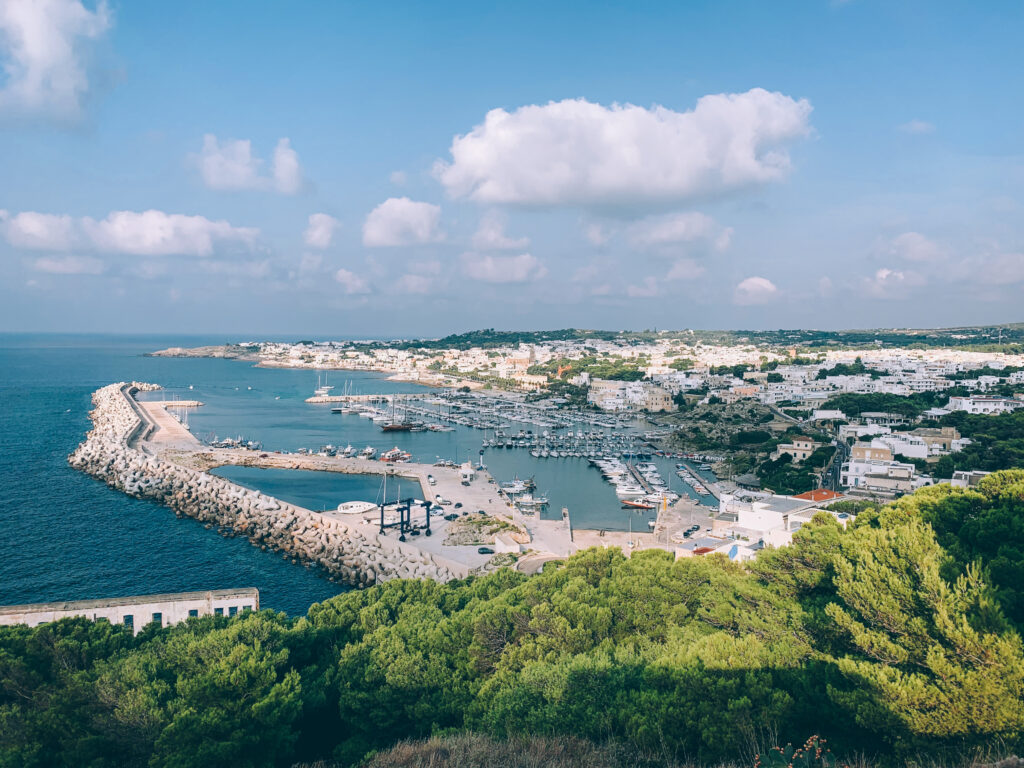
In Monopoli, stroll through the medieval old town, then head down to one of its coves to enjoy the intensely blue sea. Gallipoli, known as the “Pearl of the Ionian Sea,” will welcome you with a vibrant nightlife, beautiful beaches, and an old town of narrow streets and Baroque buildings. Santa Maria di Leuca, where the Adriatic and the Ionian Sea meet, is framed by pines, junipers and myrtles — and wrapped in legend. The story goes that Meliso and Aristula were two young lovers. When the mermaid Leucasia failed to win Meliso’s heart, she took her revenge by unleashing a storm so powerful it separated the two lovers and claimed their lives. Moved by their fate, the goddess Minerva turned their bodies to stone, forming Punta Meliso and Punta Ristola. As for Leucasia, repentant for what she had done, she too turned to stone — becoming the whitest of the cliffs: Santa Maria di Leuca.
Taranto is nicknamed the “city of two seas” for its unique position between the Mar Piccolo and the Ionian Sea, with white beaches and turquoise water that are hard to resist. And here’s a fun detail: the old town is built on a small island, connected to the rest of the city by a bridge!
Two more villages deserve a place on your itinerary. Castro, another pearl of Salento, boasts a beautiful Blue Flag sea and the spectacular Zinzulusa Cave — whose name, in the local dialect, means “rags.” Legend has it that a cruel baron dressed his daughter in rags, until a fairy took pity on her, giving her a new dress and turning the rags to stone, forming the cave’s stalagmites and stalactites. Cisternino, one of the most beautiful villages in Italy, needs little introduction: white alleys adorned with flowers, decorated arches and hidden courtyards give it an intimate, authentic atmosphere that is simply not to be missed.
The best beaches in Puglia
Which beach should you choose? With so much coastline and so much beauty, it’s not an easy decision, so here are a few of our favourites to get you started.
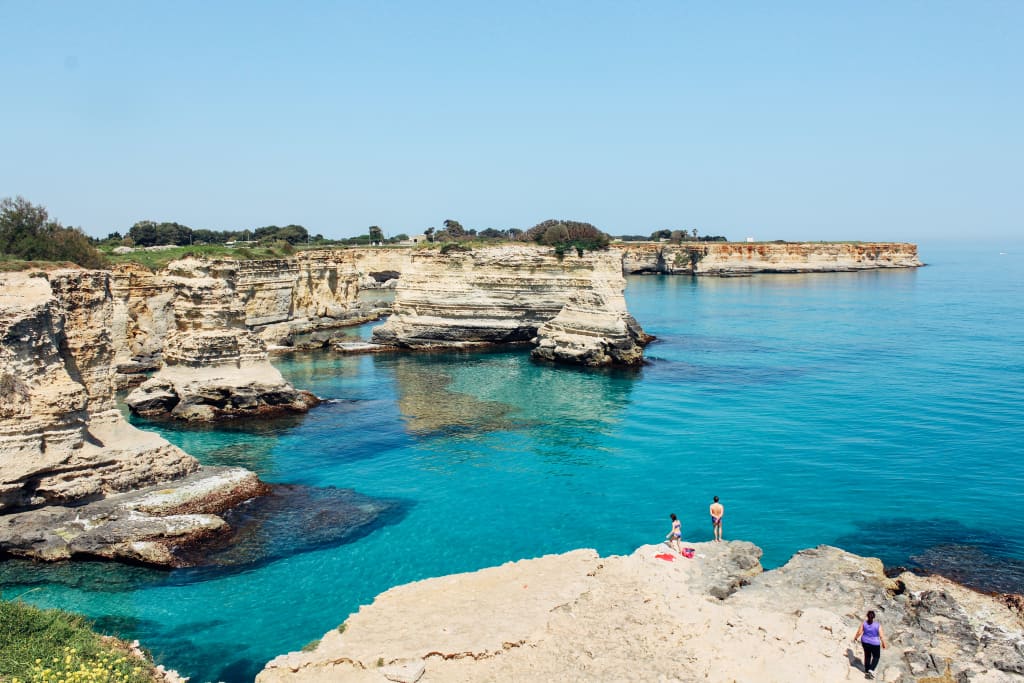
Baia dei Turchi is a protected oasis of Mediterranean scrub with white sand and emerald waters. Pescoluse, nicknamed the “Maldives of Salento,” lives up to its reputation with golden sand and impossibly turquoise water. Punta Prosciutto is consistently ranked among Italy’s most beautiful beaches, while Punta della Suina — the “Caribbean of the Ionian Sea” — is framed by a wild landscape of low cliffs and crystal-clear water. Torre dell’Orso is a charming arched bay shaded by pine trees, with cliffs that plunge straight into the sea. Not far away, Baia dell’Orte is a wilder, more unspoiled cove, and from Torre del Serpe you can take in a sweeping panoramic view of the entire Otranto coastline.
Nature reigns supreme at Porto Badisco too, a rocky bay ringed by prickly pears and myrtles, ideal for slowing down and soaking up the unhurried rhythm of Puglia. Legend has it that Aeneas, the hero of Virgil’s Aeneid, landed here after fleeing Troy and found refuge among the hospitable people of Salento. And finally, don’t miss the Faraglioni di Sant’Andrea: striking white rock formations rising dramatically from the crystal-clear sea.
Hidden gems: unusual sights and local curiosities
A splash of colour: the Bauxite Quarry
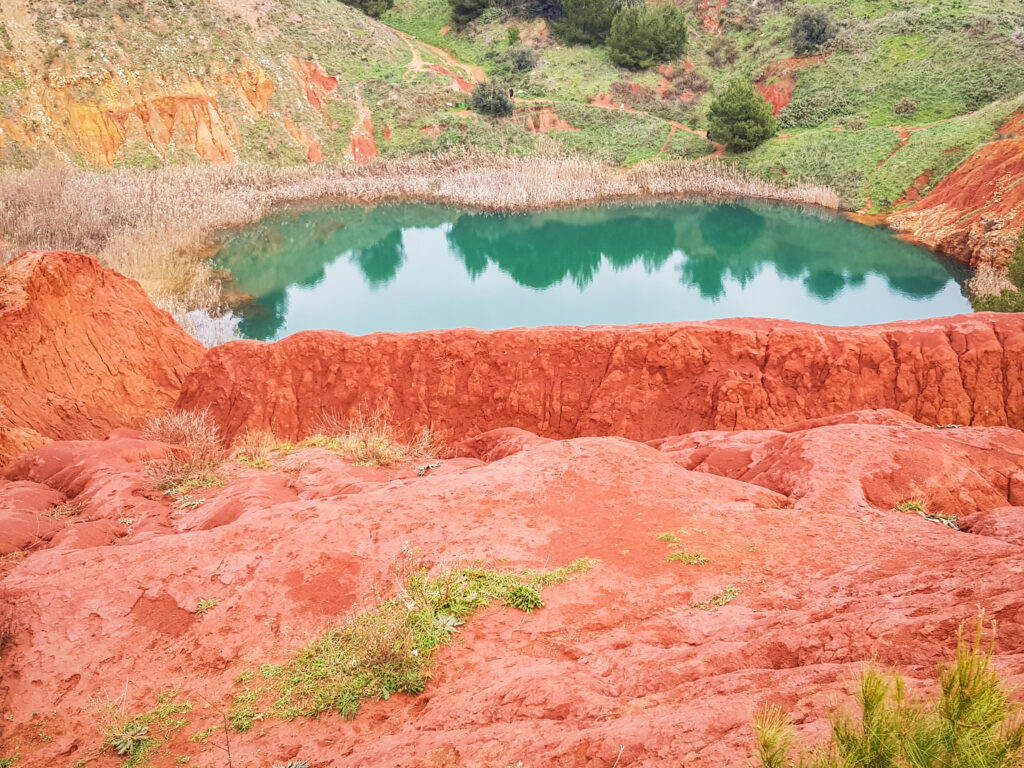
Near Baia dell’Orte lies an old mining site that has quietly become one of the area’s most striking natural attractions. What immediately catches the eye is the intense colour contrast: vivid red earth meeting the emerald green of a lake fed by an underground aquifer. It’s a truly unique sight.
Italy’s first sunrise: the Punta Palascìa Lighthouse
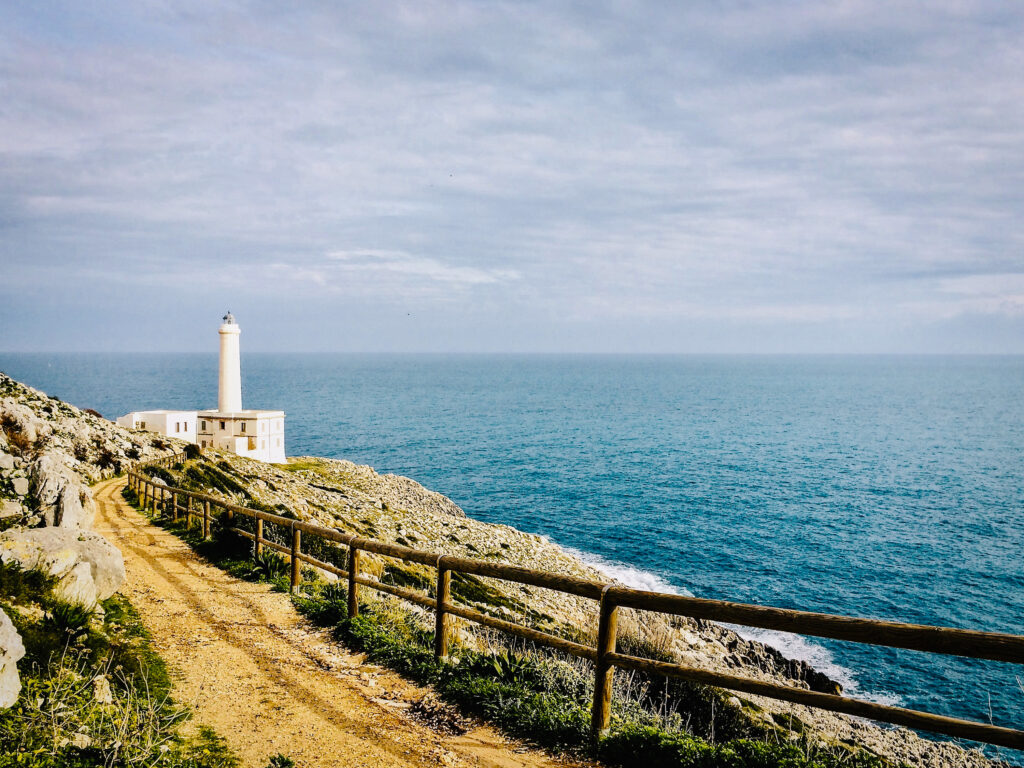
Did you know that this is the first place in Italy where the sun rises each day? Located at the easternmost point of the country, Punta Palascìa is home to one of the most important lighthouses in the Mediterranean. On New Year’s Eve, hundreds of people gather here to watch the first sunrise of the new year — a tradition as poetic as the landscape itself.
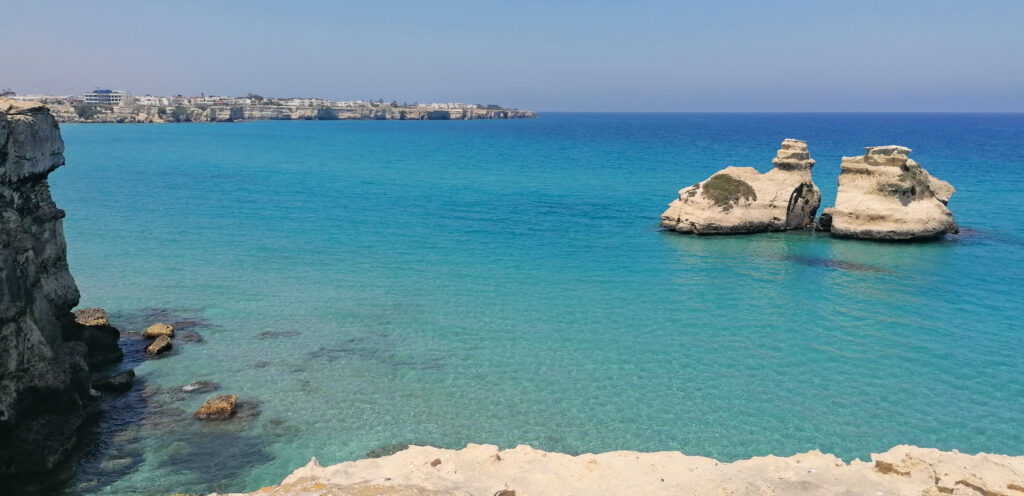
A legend set in stone: Le Due Sorelle
Le Due Sorelle — the Two Sisters — are twin sea stacks rising from the water in front of Torre dell’Orso. According to legend, two sisters, after a long day’s work in the fields, went down to the sea to cool off. One was so enchanted by the sound of the waves and the scent of the salt air that she fell, almost hypnotised, from the cliff. Her sister dived in to save her, but the waves were too strong. The gods, moved by the tragedy, turned them both to stone — preserving their final embrace for eternity.
Today, it’s a wonderful spot to relax on the beach, swim, and snorkel around the stacks. You can also hop on a boat to explore the coastline up close.
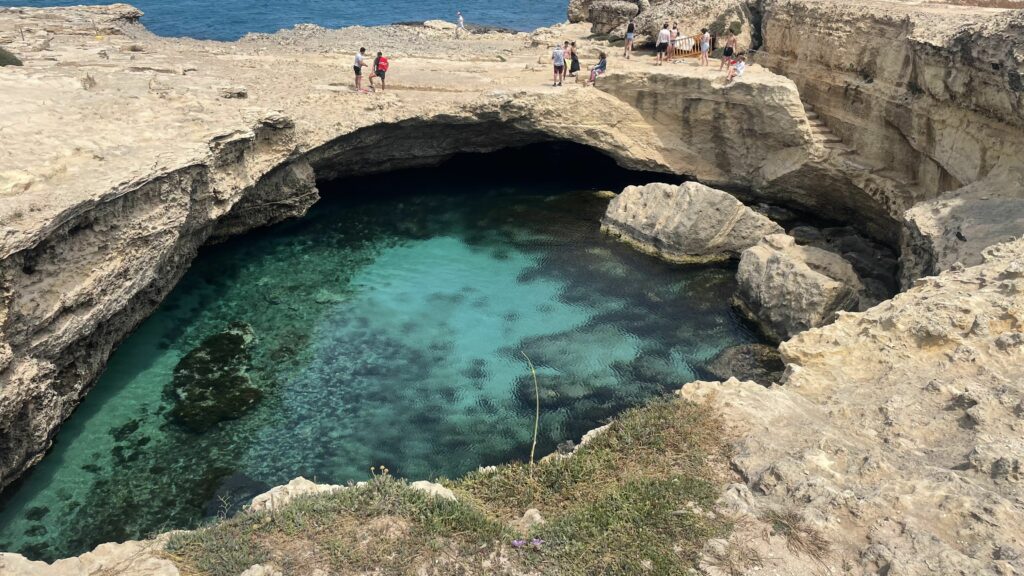
Poets and springs: the Grotta della Poesia
This is one of the most beautiful natural pools in the world. Swimming is now prohibited to protect the area, but it is well worth a visit for the views alone. As for the name, there are two versions. The more historically accurate one traces it back to the Greek word poesìa, meaning “freshwater spring.” The more romantic version tells of a beautiful girl who used to bathe here, so captivating that she inspired the verses of dozens of poets. Take your pick.
90 million years underground: the Castellana Caves
The Castellana Caves are a system of underground caverns dating back over 90 million years and one of the most fascinating natural spectacles in the world, filled with rare and extraordinary stalactites and stalagmites. You enter through La Grave, an open-air chasm that locals once called Bocca dell’Inferno, the Mouth of Hell, believing that the bats emerging from it were the souls of the damned. From there, a path winds through tunnels and chambers until it reaches the dazzling La Grotta Bianca.
And if you’re visiting in summer, check the dates for Hell in the Cave: a theatrical production of Dante’s Inferno staged inside the caves, with dancing, singing, lights and sound. It’s one of the most evocative performances in Italy — and tickets sell out fast, so book ahead.
Taranta, Pizzica, and Griko: the living soul of Puglia
The origins of taranta and pizzica run deep. The taranta takes its name from a poisonous spider native to Puglia, whose bite, according to legend, caused physical pain and psychological delirium in its victims, particularly during summer harvests. Those affected, known as tarantati, felt an uncontrollable urge to move, throw themselves to the ground and dance for days on end to expel the poison. Music was believed to be the only cure, and so the tambourine and violin gave rise to the taranta, a frenzied, healing dance. The pizzica weaves some of these movements into a broader folk tradition — a dance of couples, courtship and celebration.
And have you ever heard of Griko? It is a dialect that blends ancient Greek with Salento influences, still spoken today in the villages of Grecìa Salentina, in the province of Lecce. Some keep it alive in daily conversation; others preserve it through songs and poems. Either way, it is a small linguistic miracle worth knowing about.
Orecchiette, focaccia and… panzerotti!
Apulian cuisine can be summed up in a few words: simple, authentic, rooted in ancient traditions and built around the freshest ingredients the sea and land have to offer. Three local products you absolutely must try are extra-virgin olive oil, Altamura bread, and burrata from Andria.
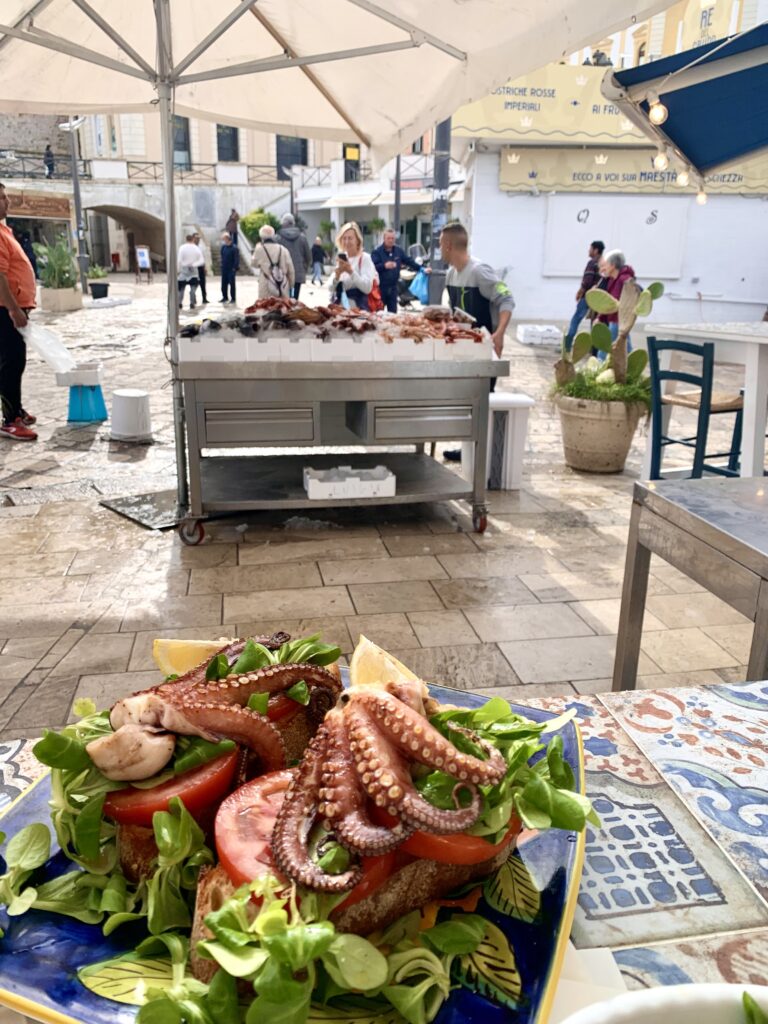
Puglia’s signature first course is orecchiette alle cime di rapa, handmade pasta with turnip greens, garlic, anchovies and chilli pepper. Then there’s tiedda riso, patate e cozze: a layered bake of rice, potatoes and mussels with an interesting backstory. Originally, it was a humble dish prepared by poor families using rice, potatoes and whatever vegetables were in season — no mussels. It was the Spanish who added them, drawing inspiration from paella de mariscos. Another peasant classic well worth trying is mashed fava beans with chicory, served with toasted bread. Meat lovers shouldn’t miss bombette — pork rolls stuffed with cheese and grilled to perfection — while those who prefer fish should seek out polpo in pignata: octopus slow-cooked in a terracotta pot.
And then there’s street food, which in Puglia is a serious affair. Start with focaccia barese — tall, soft and utterly addictive. Move on to rustico leccese, a flaky puff pastry filled with tomato and béchamel. And save room for a panzerotto: a golden, deep-fried pocket of dough stuffed with tomato and mozzarella that is, quite simply, impossible to resist.
How to discover Puglia by bike
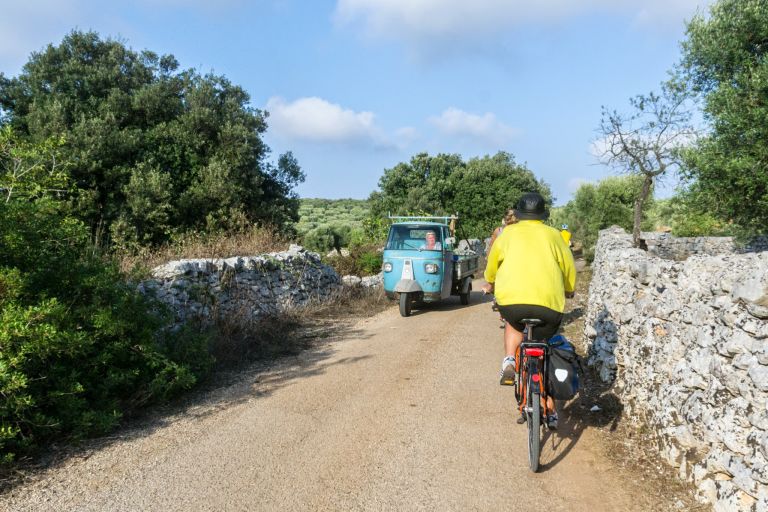
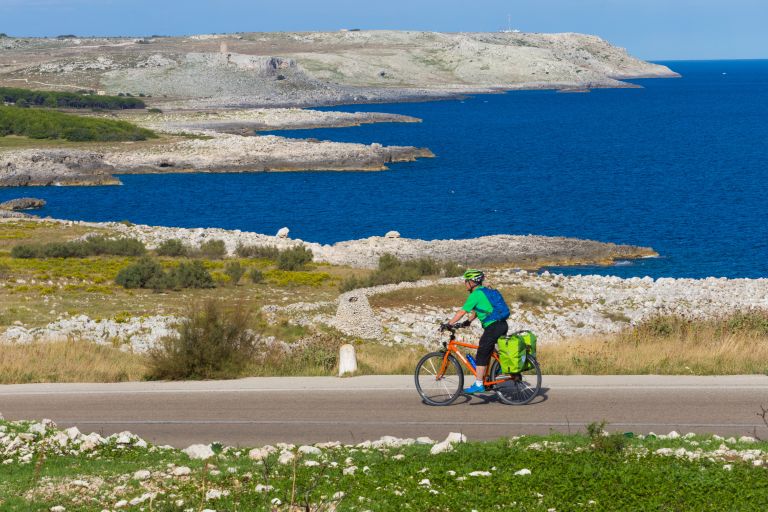
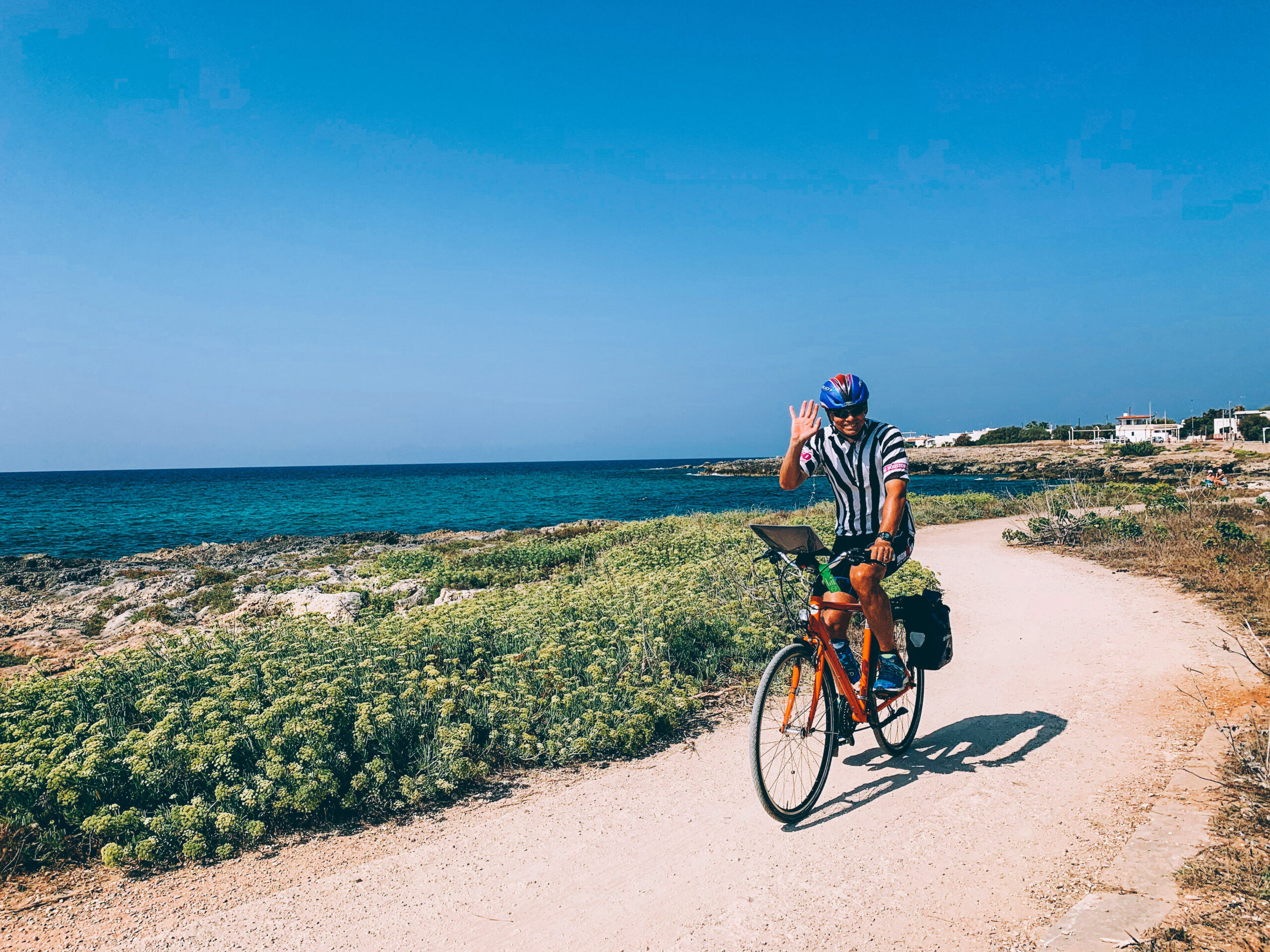
One of the best ways to experience Puglia is by bike. Cycling through the region lets you set your own pace, moving between historic towns and stretches of beautiful coastline, with plenty of stops along the way to sample the local food and wine.
Our promise is simple: cycle easy, travel light. Choose your tour and we will take care of everything else: a carefully designed itinerary, handpicked accommodations, luggage transfer, and multilingual assistance along the way.
Getting there: how to reach Puglia
The main airports serving Puglia are Bari and Brindisi, both well connected to the major Italian and European cities. Once you land, the main towns and cities are reachable by public transport — check Trainline for train and bus connections and to find the best routes for your trip.
In some of our tours, we also offer private transfers.
Now that you’ve read the article, are you eager to set off and explore this fascinating region? Take a look at Girolibero’s trips to Puglia!2 Travel tips in Puglia