/ Girolibero / to cycle bike paths travel by bike
The Loire Valley by bike: a complete cycling guide
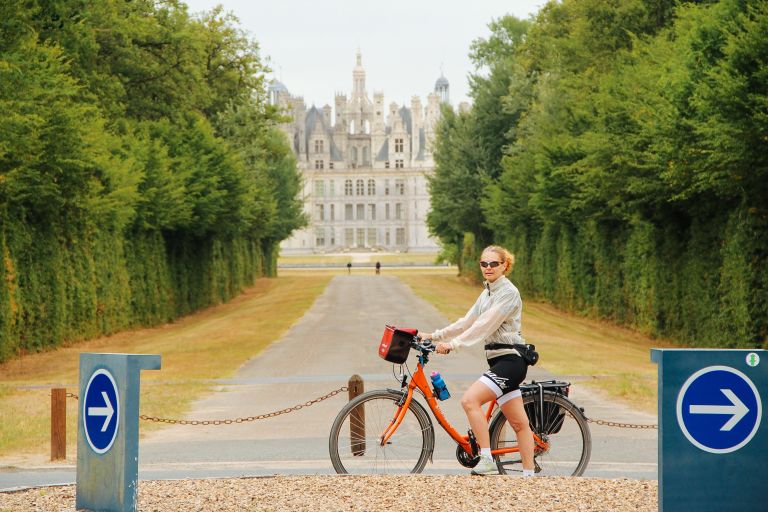
Imagine pedalling along a quiet riverside path, rounding a bend, and suddenly finding yourself face to face with Château de Chambord — one of the most spectacular Renaissance buildings in the world. No crowds at the entrance, no coach park. Just you, your bike, and a moment of pure wonder.
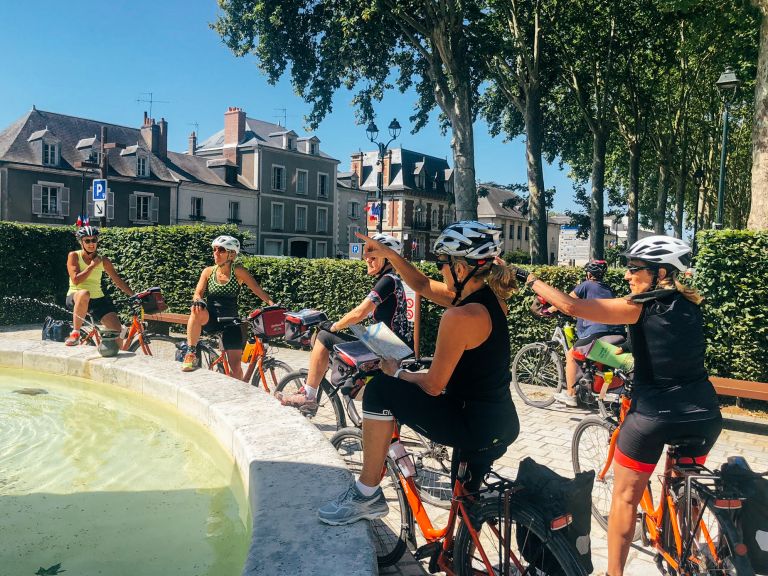
This is what cycling the Loire Valley feels like. And it’s the reason the Loire à Vélo attracts nearly a million cyclists every year. Girolibero has been organising self-guided cycling holidays in the Loire Valley for over 25 years. Every tour includes handpicked hotels and guesthouses with breakfast, luggage transfer from stage to stage every morning, rental bikes (touring or electric), a digital app with GPS tracks, maps, roadbook and points of interest, and 7-day-a-week multilingual assistance.
The Loire Valley has been one of the most loved destinations for cycling holidays in France. Our local base in Orléans — run by our colleague Leonardo, who personally checks and prepares each of the 200 orange bikes before every departure — means that help is always close at hand.
Why the Loire Valley is perfect for a cycling holiday
The Loire Valley is one of the rare destinations that delivers on every front: outstanding natural beauty, world-class cultural heritage, exceptional food and wine — and a cycling infrastructure that makes it genuinely accessible for everyone, from solo travellers to families with young children.
The Loire à Vélo stretches for 900 km from Nevers to Saint-Nazaire on the Atlantic coast, following the longest river in France. It forms part of EuroVelo 6, the cross-continental cycle route linking the Atlantic to the Black Sea. But you don’t need to ride the whole thing: the most scenic and castle-rich section runs between Orléans and Saumur, covering around 200 km of flat, well-signposted paths and quiet country roads — suitable for all levels, including beginners and families.
UNESCO included the Loire Valley on its World Heritage List in 2000 — not just for the castles, but for the exceptional harmony between human history and natural landscape. Cycling through it feels like riding through an open-air museum, one that happens to also produce some of France’s finest wines.
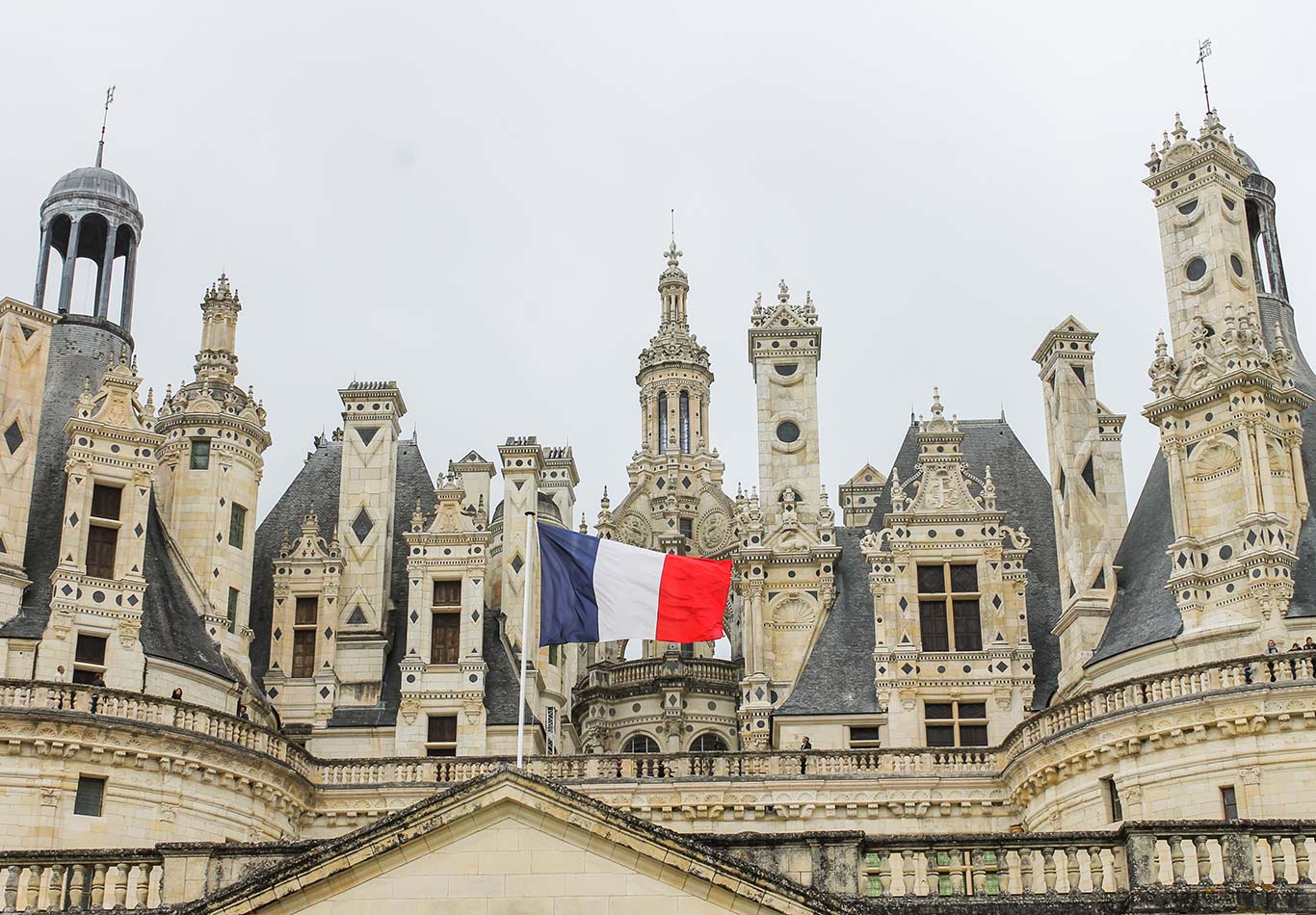
The Loire Valley castles you can reach by bike
More than 300 castles line the banks of the Loire and its tributaries. The most iconic ones are all within easy reach of the main route, often just a short detour away. Here are the ones not to miss, with approximate distances to help you plan your days.
Château de Chambord (~16 km from Blois) The undisputed showstopper. Chambord is the largest castle in the Loire Valley and one of the most recognisable examples of French Renaissance architecture, with its forest of towers and chimneys visible from kilometres away. It was built as a hunting lodge for King Francis I — a hunting lodge with 440 rooms. The famous double-helix staircase, attributed by many to Leonardo da Vinci, is worth the visit alone.
Château de Chenonceau (~12 km south of Amboise) Known as the “castle of the ladies” for the remarkable women who shaped its history — including Diane de Poitiers and Catherine de Medici — Chenonceau spans the River Cher on a series of elegant arches. Its formal gardens are among the most beautiful in France, reachable via quiet back roads through vineyards.
Château d’Amboise Perched dramatically above the town of Amboise, this royal residence offers sweeping views over the Loire. Leonardo da Vinci spent the last years of his life here as a guest of King Francis I, and his tomb is in the castle chapel. The nearby Clos Lucé manor, where Leonardo lived and worked, houses faithful reproductions of his machines and inventions — a must for families with children.
Château de Blois One of the most historically layered castles in the valley, Blois was the preferred residence of several kings of France. Its architecture spans four distinct periods, from Gothic to Classical, making it a fascinating journey through French history in a single building. A natural stopping point on the route between Orléans and Tours.
Château de Cheverny (~14 km from Blois) If Chambord is about grandeur, Cheverny is about elegance. This 17th-century château has been owned by the same family for over four centuries and is still a private residence — which gives it a lived-in warmth that larger castles sometimes lack. It also inspired Moulinsart, the fictional home of Tintin’s Captain Haddock.
Château de Villandry (~17 km from Tours) Famous for its extraordinary Renaissance gardens — geometric, meticulously maintained and breathtaking from above — Villandry is a perfect stop in the final stretch toward Saumur. The kitchen garden alone, planted with vegetables arranged by colour and shape, is one of the most photographed sights in the Loire Valley.
Château d’Azay-le-Rideau (~26 km from Tours) One of the most romantic castles in the Loire Valley, Azay-le-Rideau rises from the waters of the Indre river like a mirage. Its Renaissance architecture is reflected perfectly in the surrounding moat — particularly magical in the early morning, before the day-trippers arrive.
Château d’Ussé Said to have inspired Charles Perrault’s Sleeping Beauty, Ussé rises from the forest with its white towers like something from a fairy tale. A slightly off-the-beaten-path detour, but one that rewards the effort.
How many days do you need to visit the Loire Valley castles by bike?
Six to eight days is the ideal length for a self-guided cycling holiday between Orléans and Saumur. This gives you enough time to visit the main castles comfortably — Chambord, Chenonceau, Amboise, Blois, Cheverny, Villandry — without rushing, with time left for wine tastings, slow lunches and spontaneous detours.
If you have only five days, focus on the stretch between Blois and Saumur: this is the most castle-dense section and the most rewarding for a shorter trip. If you have more time, extend toward Angers or add a day in Tours, one of the finest medieval cities in France.
Are there passes or discounts for visiting multiple castles?
Yes, and they’re worth knowing about before you set off.
The Loire à Vélo Pass, offered by the tourist offices of Tours and Orléans, gives you exclusive discounts and preferential rates on bike hire, guided tours, restaurants and attractions along the route. It is available in 24h (€59), 48h (€105) and 72h (€135) versions — a good deal if you plan to visit several castles and eat well along the way.
Some individual castles also offer combined tickets. Chambord, for example, offers packages that include both the castle visit and the surrounding estate. It’s always worth checking the official castle websites before you go, as promotions vary by season.
Note: if you book this Girolibero tour, castle admissions are included. Check the tour page for details.
The wines of the Loire Valley: a cycling holiday for food lovers too
The Loire Valley is not just about castles. It is one of France’s most important wine regions, and cycling through it means passing through some of its greatest appellations.
Around Vouvray, just east of Tours, the white Chenin Blanc grapes produce wines of extraordinary complexity — from bone-dry to lusciously sweet. Around Saumur, the sparkling Crémant de Loire is the local answer to Champagne, made by the same traditional method and often just as good at a fraction of the price. And around Chinon and Bourgueil, the Cabernet Franc grape produces elegant red wines with the scent of violets and dark berries that pair beautifully with the region’s goat’s cheeses and rillettes.
Many producers along the route welcome cyclists for tastings. It is one of the great pleasures of the Loire à Vélo: earning your glass of wine with a morning in the saddle, then spending the afternoon at a château.
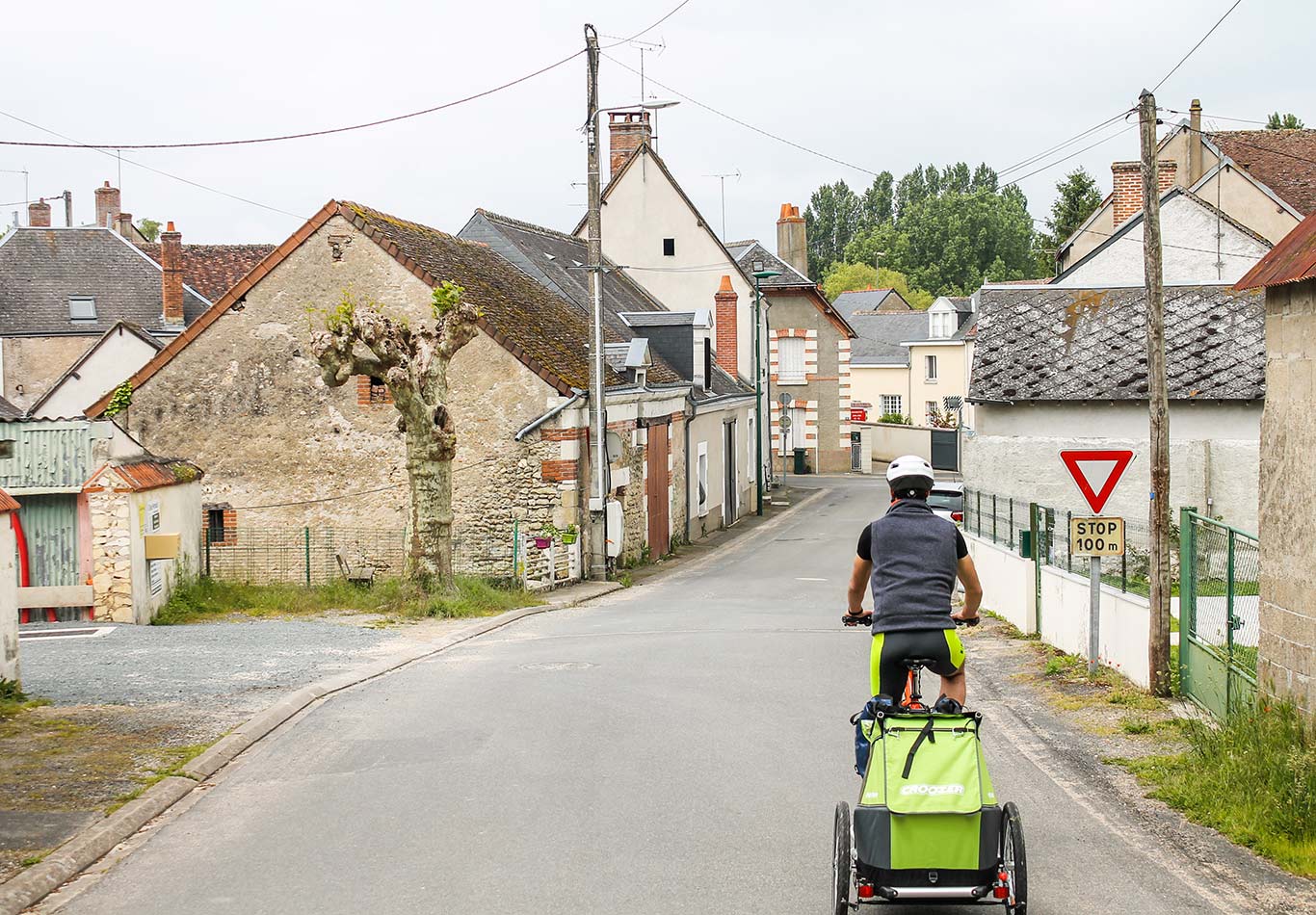
Cycling the Loire valley with children
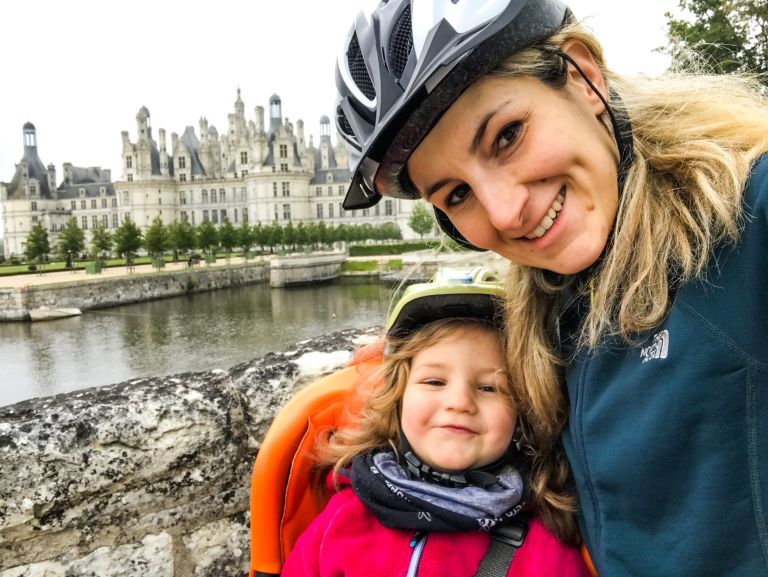
The Loire à Vélo is one of the most family-friendly cycling routes in Europe: flat terrain, well-maintained largely traffic-free paths, and castles with towers, drawbridges and secret passages that capture children’s imagination. Stages can be shortened using the regional TER train network, which carries bikes free of charge. See our dedicated guide to cycling the Loire Valley with children for a shorter 7-day family itinerary and child equipment options.
When is the best time to cycle the Loire Valley?
April to June is the sweet spot: mild temperatures, the gardens in full bloom, and fewer crowds than summer. May in particular is outstanding — the light is golden, the days are long and the châteaux are not yet overrun. July and August are busy but beautiful. Temperatures rarely exceed 28°C on the route, and the long evenings are made for lingering over dinner. Book accommodation well in advance, as the best hotels — especially those with the Accueil Vélo label — fill up quickly in high season. September is perhaps the most rewarding month of all. The harvest begins, the vineyards turn gold and the summer crowds thin out. Wine tastings take on a special meaning when the grapes are being picked just outside the cellar door.
Practical tips for cycling the Loire Valley
Difficulty: Easy. The route is almost entirely flat, with no significant climbs. Suitable for occasional cyclists and beginners.
Daily distances: Between 30 and 55 km per day. Stages can be shortened using the regional TER train network, which carries bikes free of charge. During summer, the special Vélo Loire train runs between Orléans and Nantes and can carry up to 83 bikes free of charge.
E-bikes: Not necessary on this route, but a great option if you want to spend more time at the castles and less time in the saddle. Particularly useful on longer days or if you’re travelling with children.
Getting there: The most convenient airports are Paris Charles de Gaulle (CDG) and Paris Orly (ORY). From Paris, Orléans is reachable by train in 60–90 minutes from Gare d’Austerlitz. You can use Trainline to compare timetables, prices, and international rail connections, integrating the main European operators.
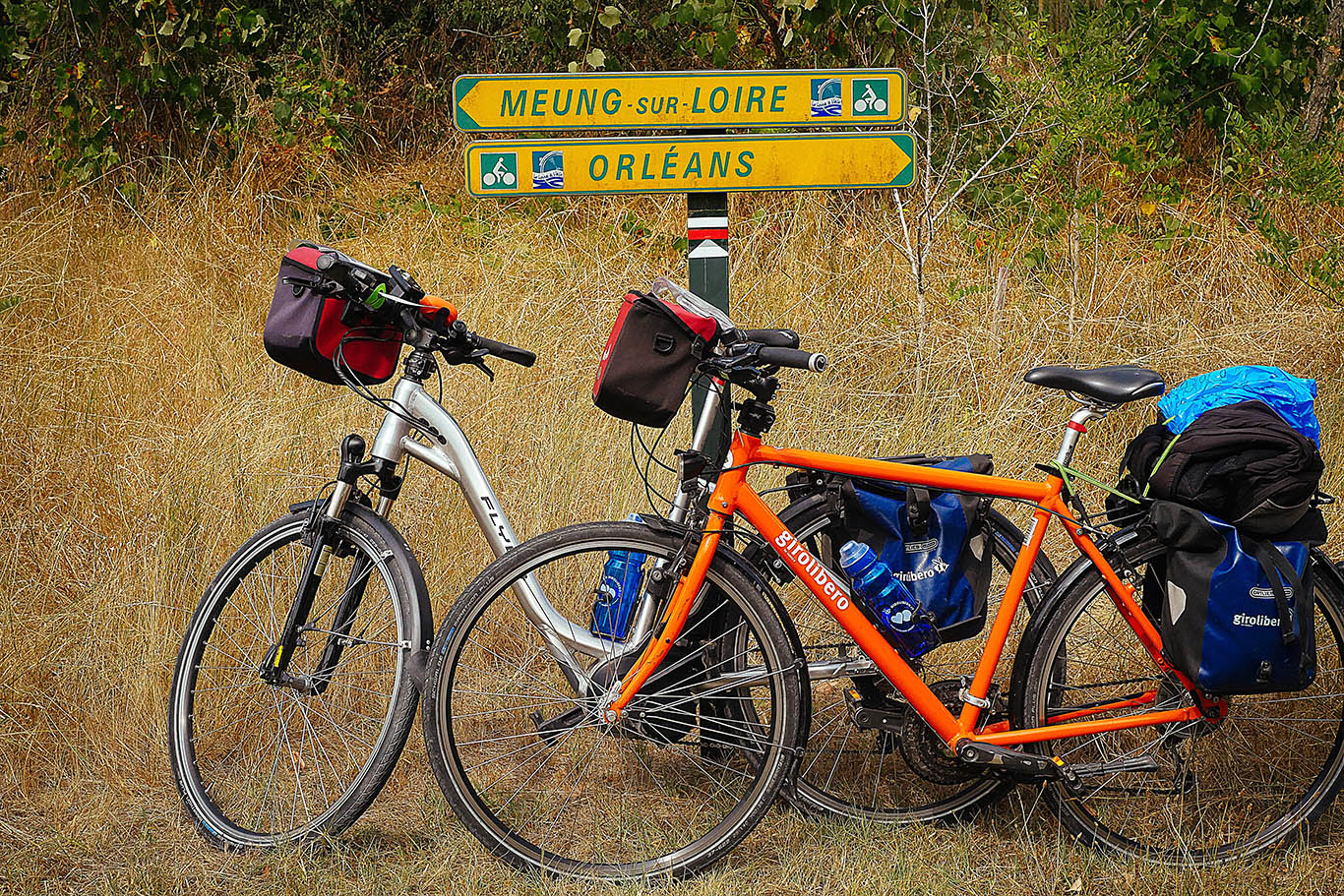
Signage: The Loire à Vélo is one of the best-signposted cycle routes in France. Green and white signs mark the route throughout — you are unlikely to get lost, though a GPS track or app is always reassuring.
Discover all our Loire Valley cycling tours4 Travel tips