
/ Itinerari nel gusto / to taste recipes and cooking
Provence and Camargue: a journey that’s a feast for the eyes (and beyond)
Some places are more than a backdrop — they are the first ingredient of the journey itself, on the road and at the table. Travelling through the Camargue, Provence and the Rhône Valley means stepping into an “edible” landscape, where every colour — from the pink of the salt flats to the silver-green of the olive groves — hints at a flavour waiting to be discovered. To truly savour this land, you need to slow down.
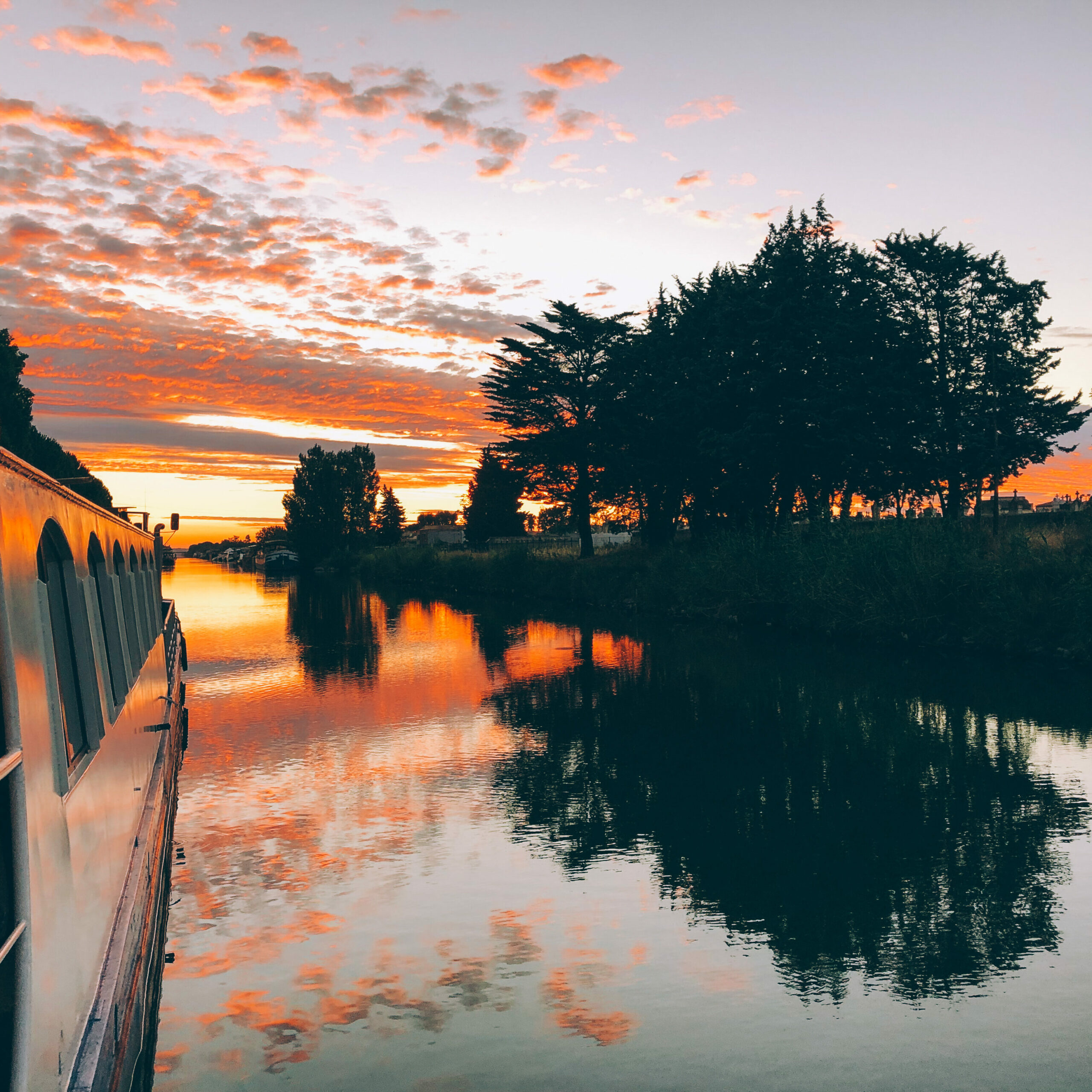
The perfect way to do it? With a bike and barge tour. Travelling along canals and cycling paths lets you tune into the unhurried rhythm of the territory, letting your nose recognise — before your eyes do — the nearness of a lavender field, an olive grove, or a kitchen already busy with herbs and olive oil. Get ready for a journey woven from salt, rice, fish and great wines: a concentrated palette of Mediterranean colours and flavours, all within a few kilometres.
Aigues-Mortes: the city of salt and fragrant bread
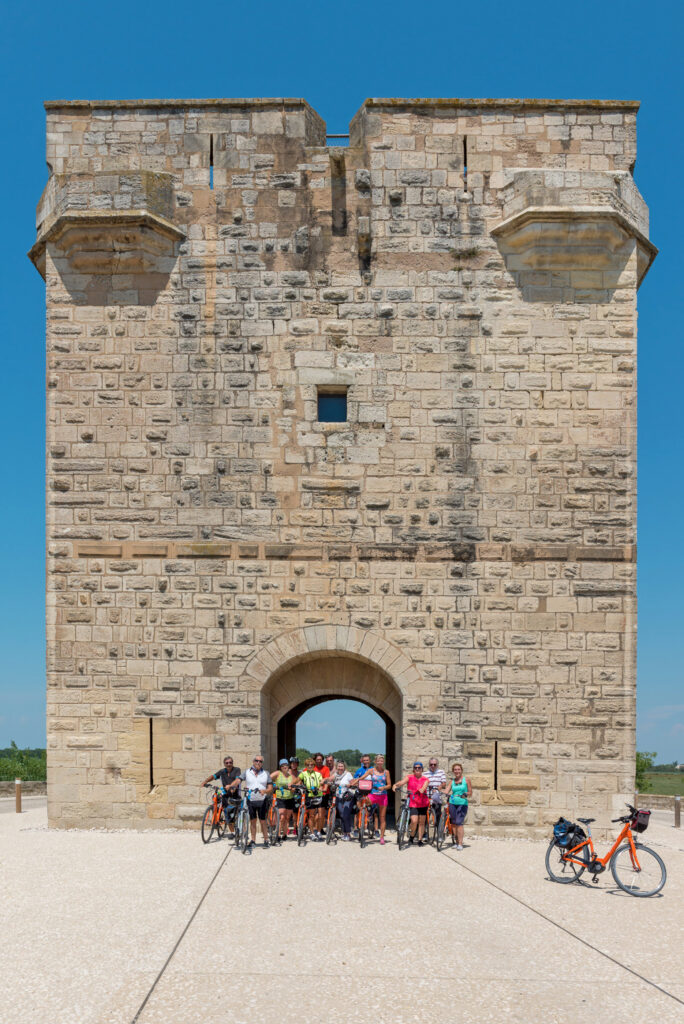
The Camargue announces itself dramatically. The medieval walls of Aigues-Mortes rise from the lagoon in near-perfect condition, a stone mirage suspended between water and sky. This city doesn’t simply introduce a landscape — it tells its story. It was from here that Louis IX of France set off for the Crusades, and the weight of that history is still tangible in every tower and battlement.
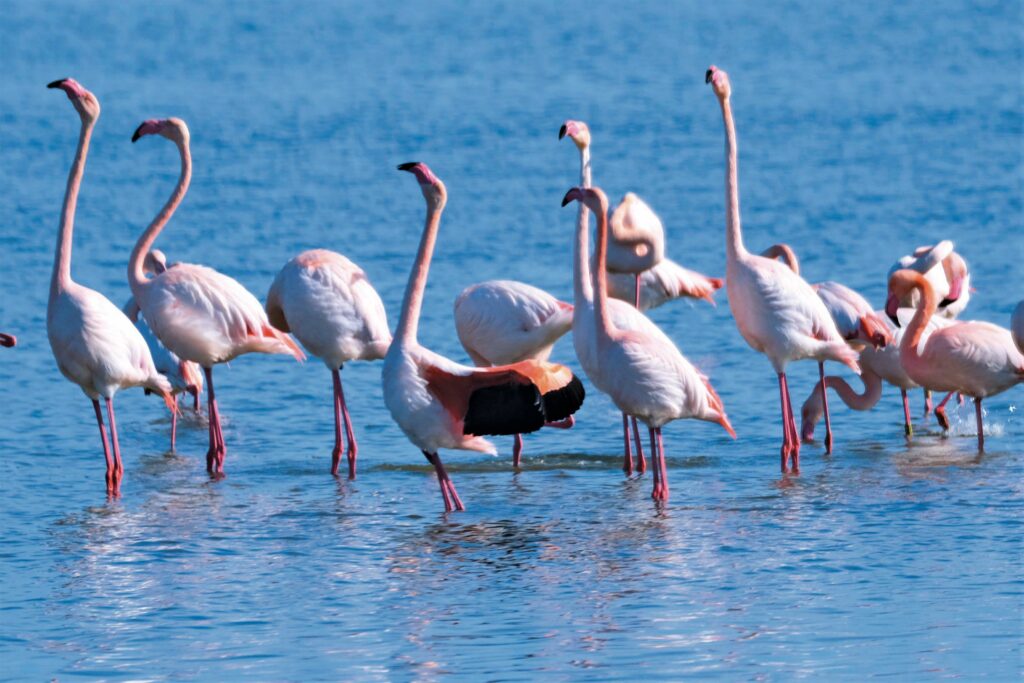
Beyond the walls, the salt flats stretch out as one of the region’s most defining features. Salt here is not just industry — it’s theatre. White (and sometimes rose-pink, thanks to microscopic algae) mountains alternate with reflective basins that mirror the sky, creating a singular environment shared with flamingos and migratory birds.
Inside the city walls, the pace shifts again. Cobbled streets, small squares and artisan shops create an intimate atmosphere, where the briny air mingles with a sweet, citrusy note drifting out from the bakeries.
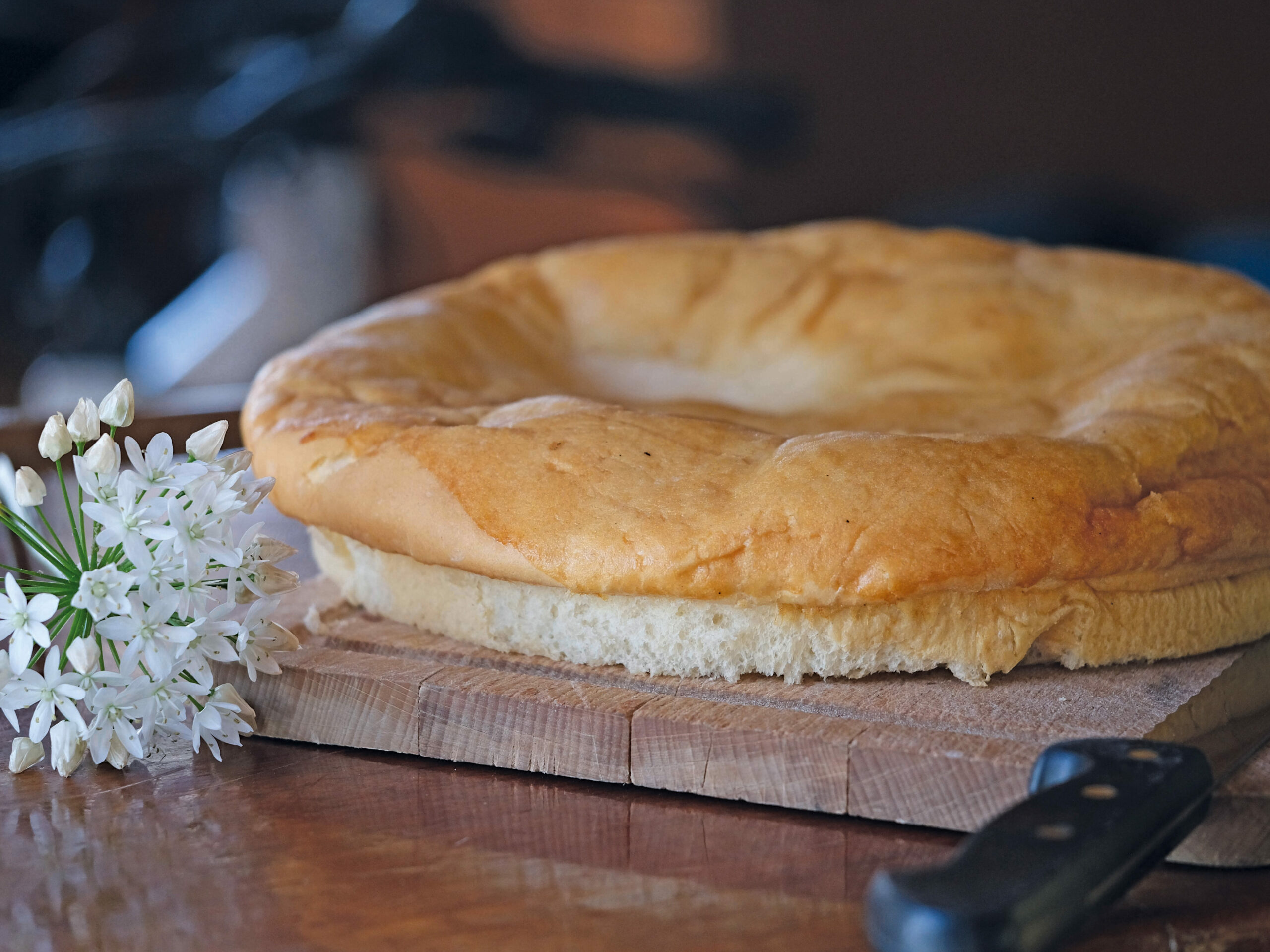
The iconic dish: Fougasse d’Aigues-Mortes. Don’t expect an ordinary salty flatbread — this is a cloud-soft, sugary, intensely fragrant brioche flavoured with orange blossom water. It’s a pastry that perfectly captures the spirit of this place: simple in its ingredients, yet capable of conjuring something far greater.
Marshes, flamingos and salt flats: the cuisine of the lagoon
Step outside the walls of Aigues-Mortes and the landscape transforms completely — it opens up, flattens out, stretches to the horizon. This is where the bike and barge formula finds its true element. Roads become thin ribbons of asphalt suspended between water and sky, while canals turn into slow-travel corridors waiting to be explored.
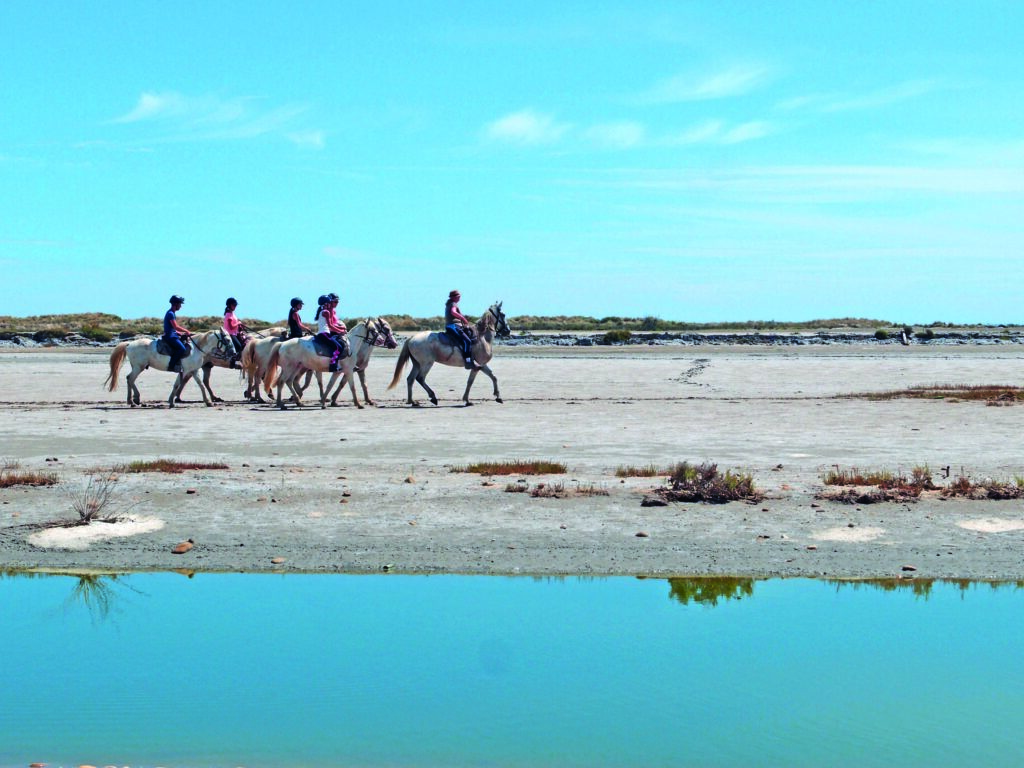
A perfect vantage point for taking in the essence of the Camargue is the Tour Carbonnière, where the eye sweeps across a mosaic of ponds, salt pans and grassy expanses rippled by the wind. Pedalling or gliding through these wetlands, you’ll meet the locals: flocks of pink flamingos, herons, white horses and black bulls — the iconic figures of an ecosystem that has held onto its wild character.
Further south, the landscape becomes even more elemental, eventually opening onto the Plage de l’Espiguette, one of the most pristine beaches on the French Mediterranean coast. Here, dunes stretch endlessly and the sea reclaims its role, drawing a vivid but ever-shifting line between land and water.
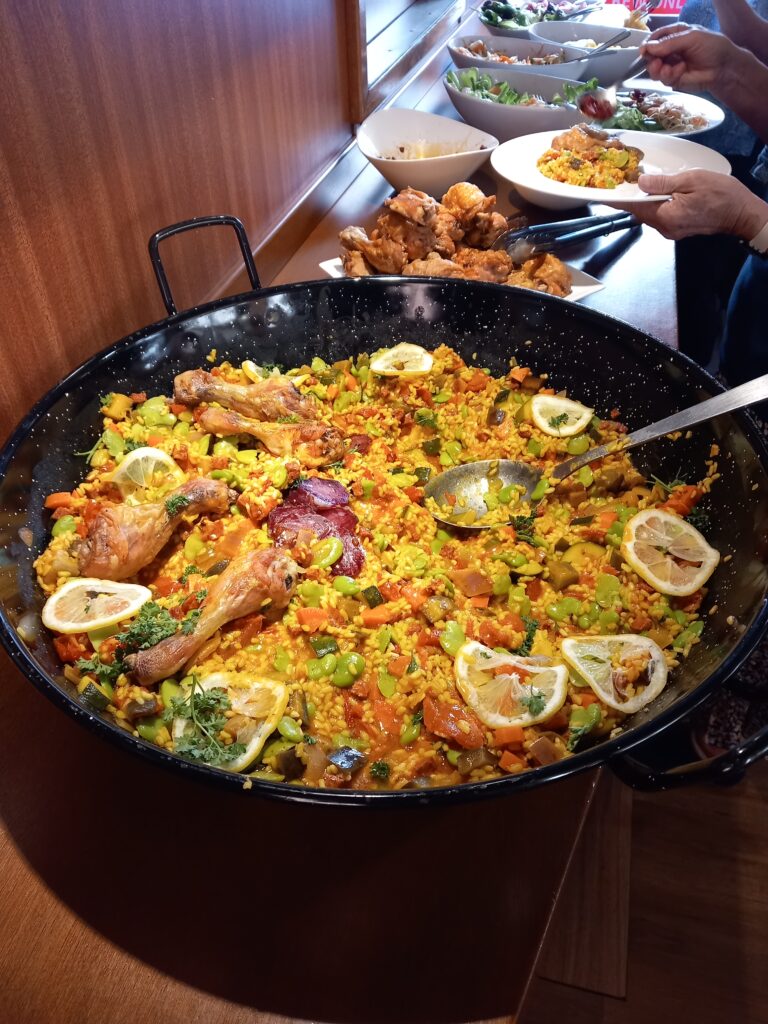
The iconic dish: Paella Camarguaise. A local take on a classic, made with the celebrated Camargue rice — grown in these very wetlands through a careful balance of Rhône waters and salty soil, producing a grain found nowhere else in Europe.
But this rice is not only for convivial platters: it also pairs beautifully with salt-marsh lamb, whose flesh carries a distinctive natural salinity from the coastal grasses the animals graze on. Together, rice and lamb achieve a quiet, perfect equilibrium.
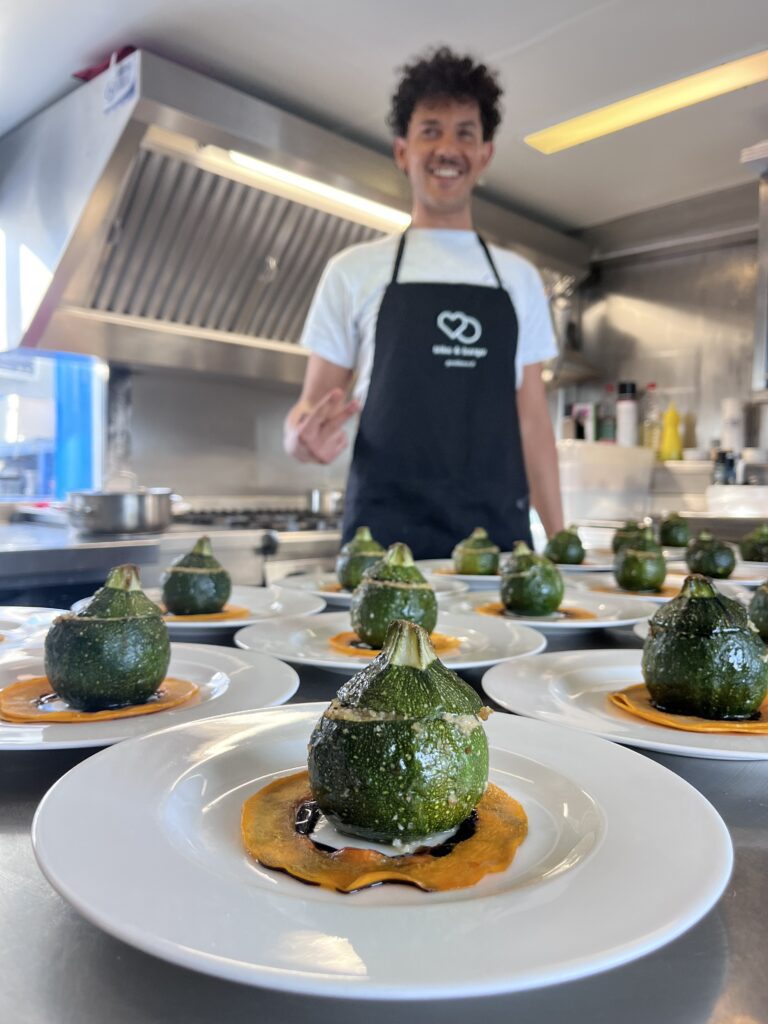
Arles: Rome, Provence and a market full of flavours
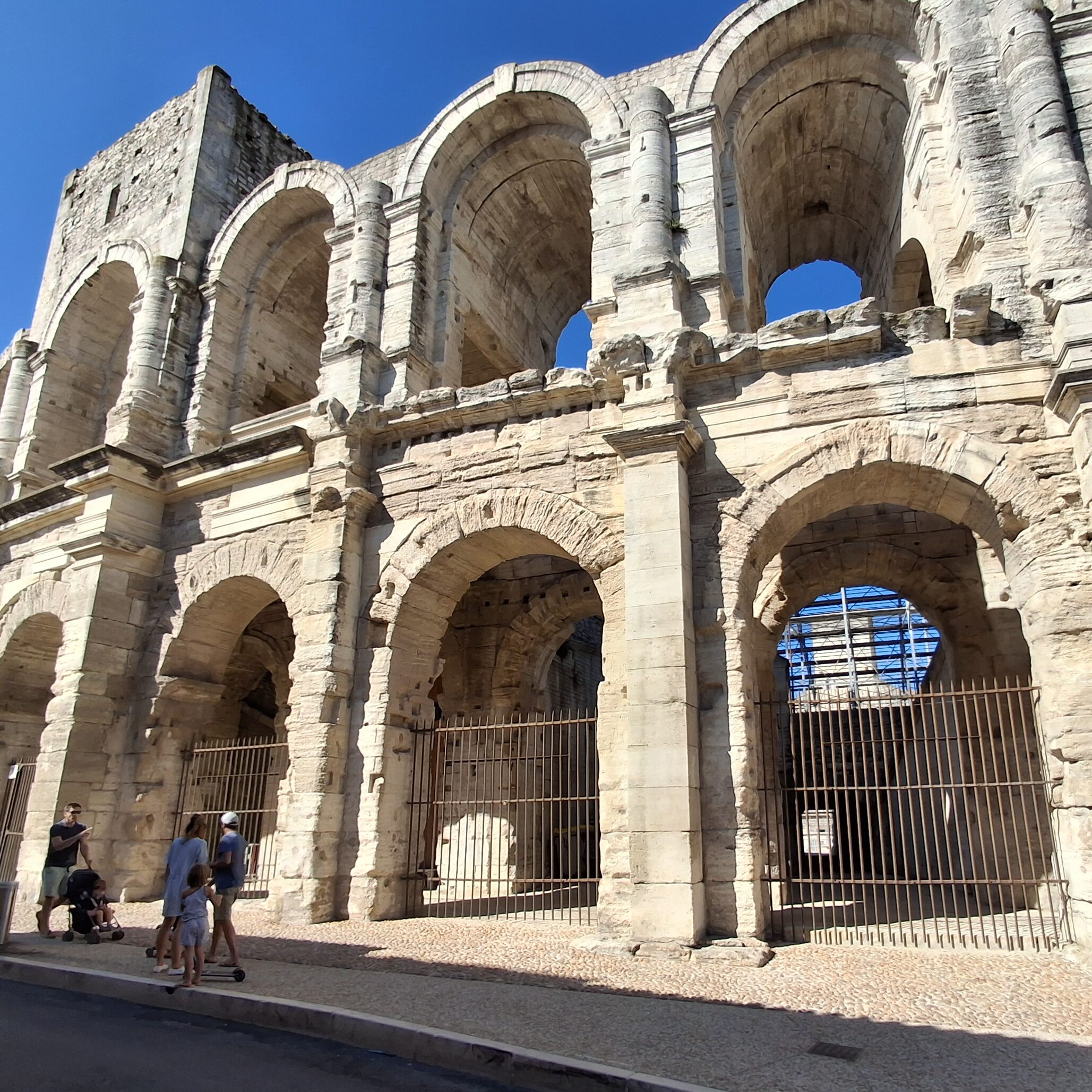
Heading north, the journey shifts register again. Arles is a layered city where Roman heritage and Provençal identity hold an easy conversation. The great amphitheatre anchors the old town, a tangible echo of an imperial past, while the streets still seem to carry the light that captivated Vincent van Gogh during his time here.
Arles has a different energy from the stillness of the Camargue. Arriving by bike means easing gradually into a fabric of squares, cafés and local shops; arriving by boat along the Rhône, you sense its long history as a trading crossroads. But it’s on market days that the city comes fully alive: stalls overflowing with local produce, rich aromas, vivid colours. Here, food is not just tradition — it’s a daily, shared experience.
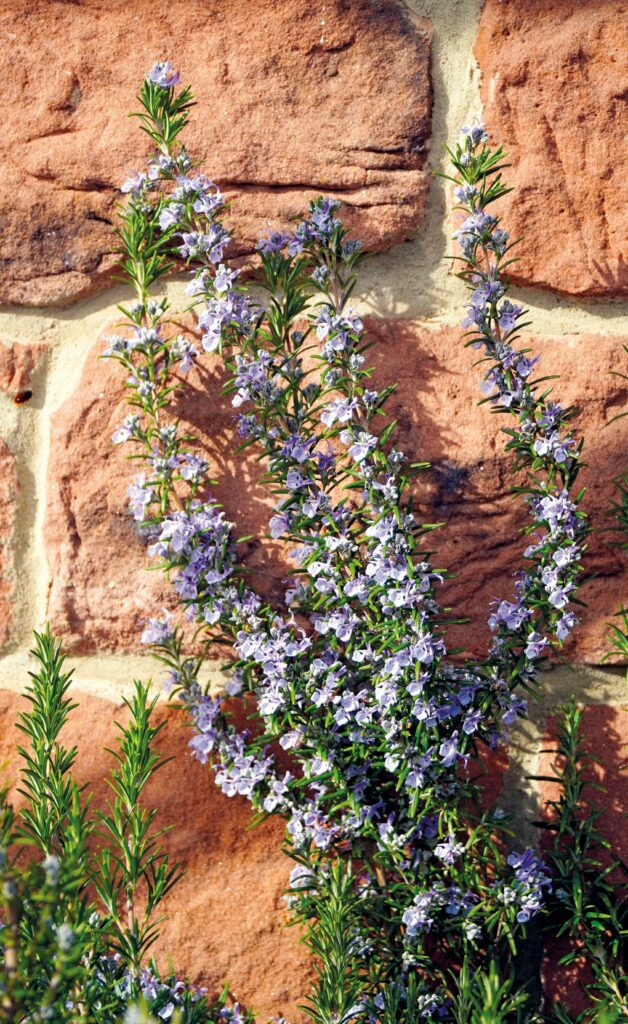
The iconic dish: Classic Provençal cuisine. More than a single recipe, it’s a repertoire of flavours that reaches its peak in the markets: tapenade, an intense cream of olives and capers; ratatouille, a slow-stewed triumph of summer vegetables; everything elevated by high-quality olive oil and a generous hand with aromatic herbs — thyme, rosemary, savory — that define the region’s culinary identity.
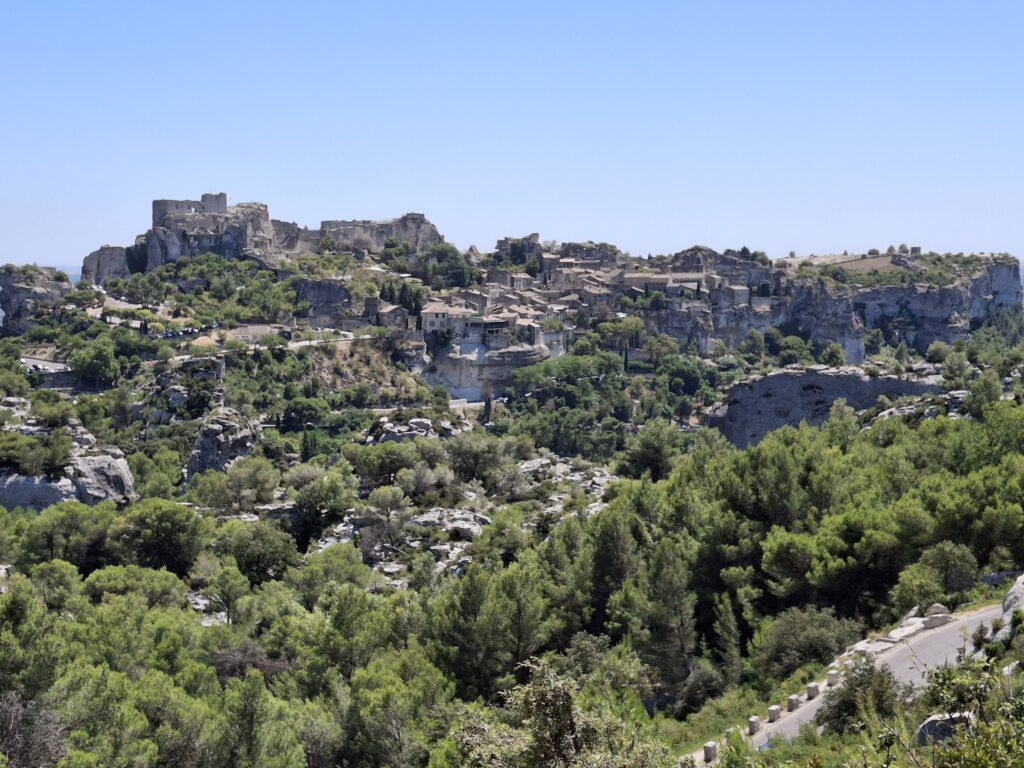
Les Alpilles and Les Baux-de-Provence: the taste of stone
As you climb towards Les Baux-de-Provence, the landscape sheds another skin. The softness of the plains gives way to something more sculpted, almost mineral: this is Les Alpilles, where limestone surfaces shape every view. The wind plays a precise role here — it dries, clarifies and intensifies — while the light, bouncing off pale rock, turns almost blinding.
Arriving by bike means tackling short, sharp climbs rewarded by views that burst open suddenly between olive groves and valleys. By boat, leaving the Rhône and heading inland, you feel the gradual transition from a water landscape to one of stone. Either way, the arrival at Les Baux-de-Provence is cinematic: a village suspended in the air, clinging to the mountainside, commanding the valley below.
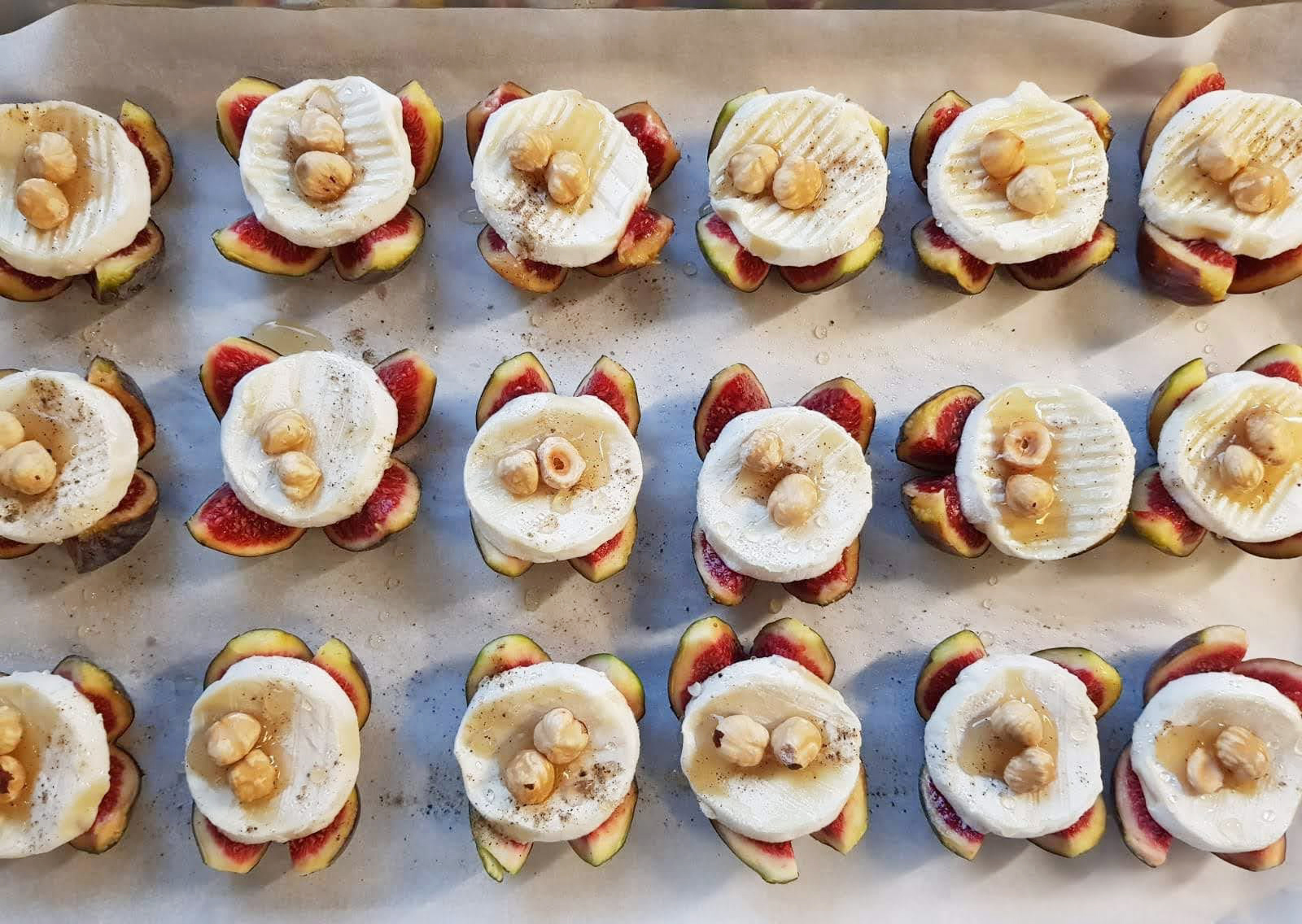
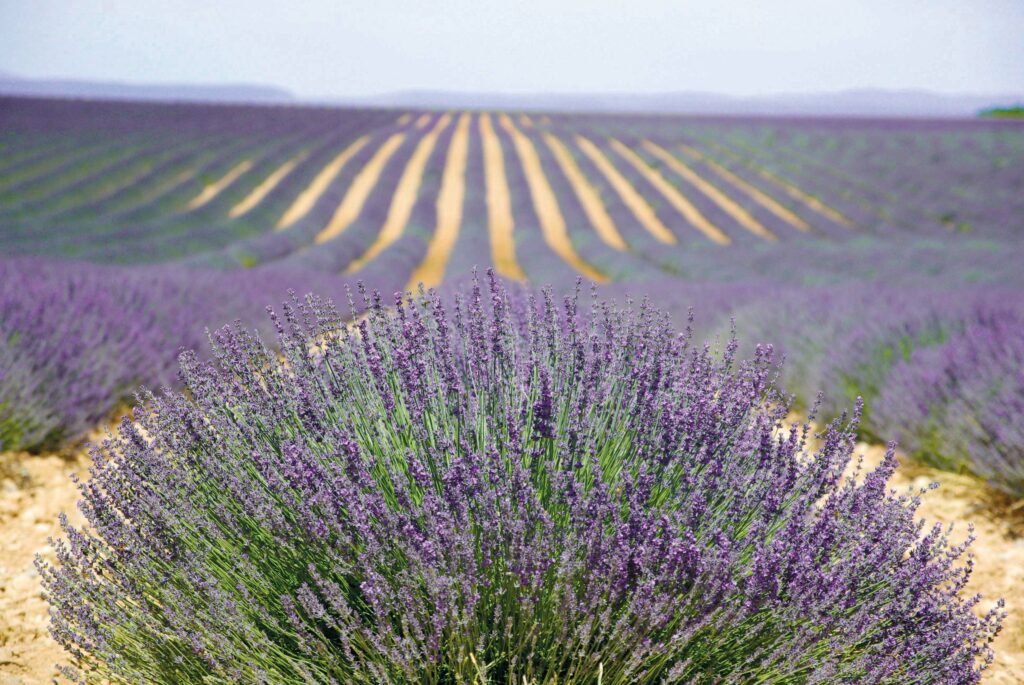
The iconic dish: Roasted figs with warm goat’s cheese and lavender honey (Figues rôties au chèvre chaud et miel de lavande). Not a codified recipe as such, but a pairing deeply rooted in the local food culture. The sweetness of the fig, the creamy sharpness of the goat’s cheese, and the floral notes of lavender honey together capture the essence of Les Alpilles in a single bite: a cuisine of balanced contrasts, where a handful of ingredients tell the story of an entire landscape.
Alongside this, the AOP olive oil of Les Alpilles remains essential — a robust, vegetally complex oil with a gentle peppery finish, born from olive trees growing in difficult terrain, shaped by wind and stony soil. It’s the thread that ties every dish together, from the simplest preparation to the most elaborate.
Vallabrègues and Tarascon: the river’s peasant kitchen
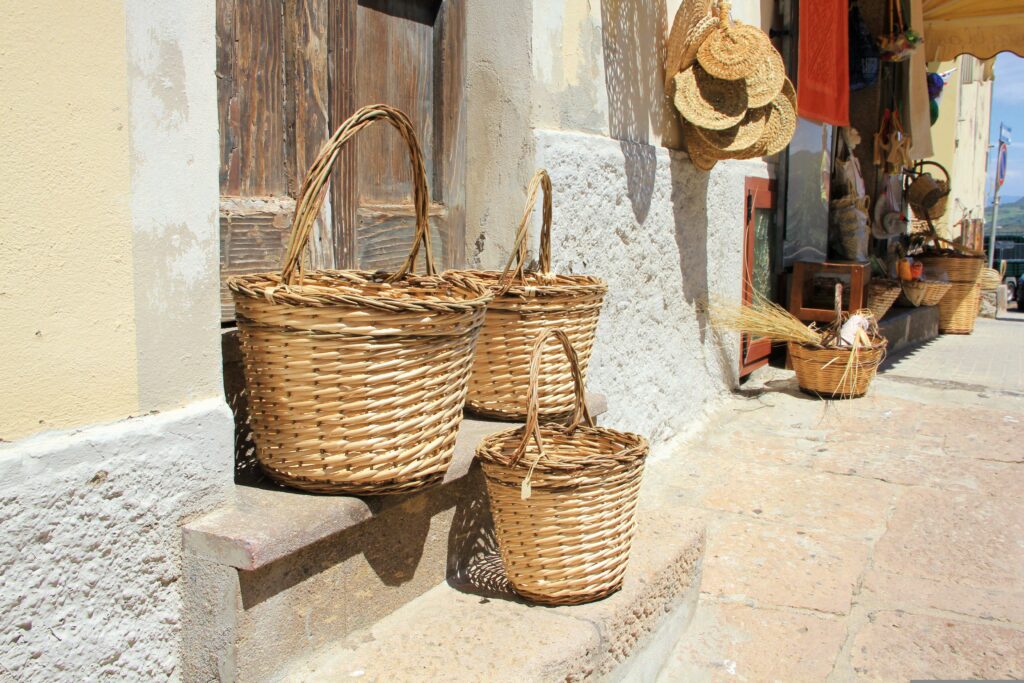
Back along the banks of the Rhône, the landscape softens and opens again. Between Vallabrègues and Tarascon lies a less iconic but deeply authentic Provence, where the river has spent centuries building a fertile, generous terrain. Vallabrègues, known for its tradition of willow weaving, carries an artisan spirit that flows into its cooking too: honest, essential, in step with natural rhythms.
Following the Rhône to reach these villages means watching the landscape unfold between embankments, cultivated fields and long rows of trees, feeling the slow breath of a river that is, here, a true artery of life. Less spectacular than Les Alpilles or the Camargue, but all the more intimate for it.
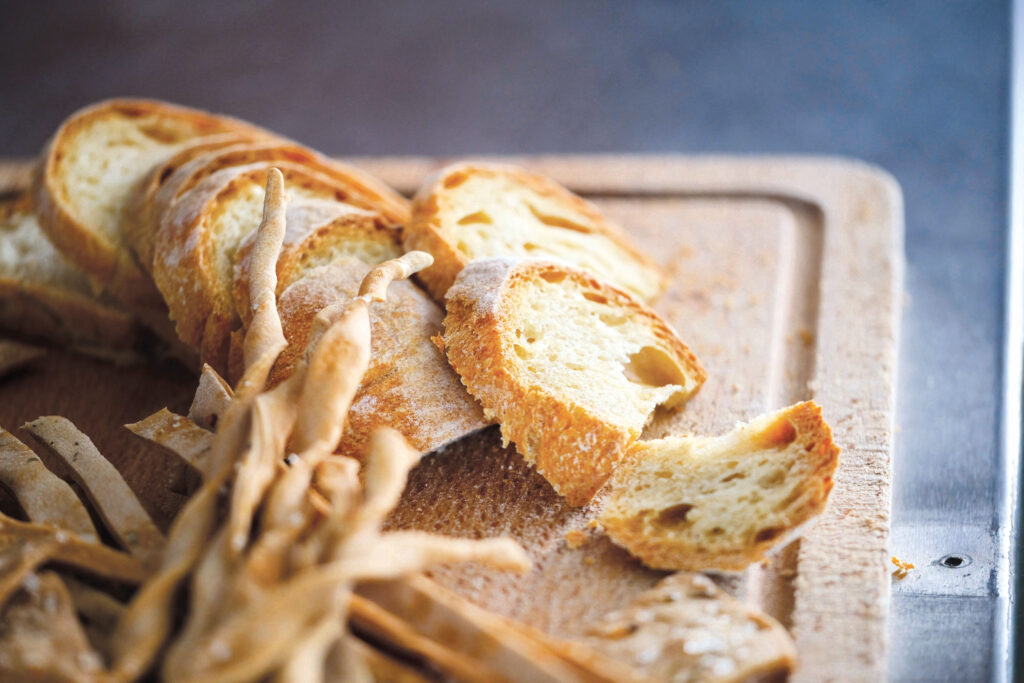
The iconic dish: Pain de Beaucaire. A bread with an unmistakable shape — compact yet open in texture — originally conceived as a working and travelling bread, built to accompany hearty dishes and keep well over time. Its structure makes it ideal for mopping up sauces and soaking into slow-cooked preparations where wine is as much an ingredient as a drink. In the local braises, red wine enters the pot early, building deep, layered flavours.
Pont du Gard e Aramon: engineering and great wines
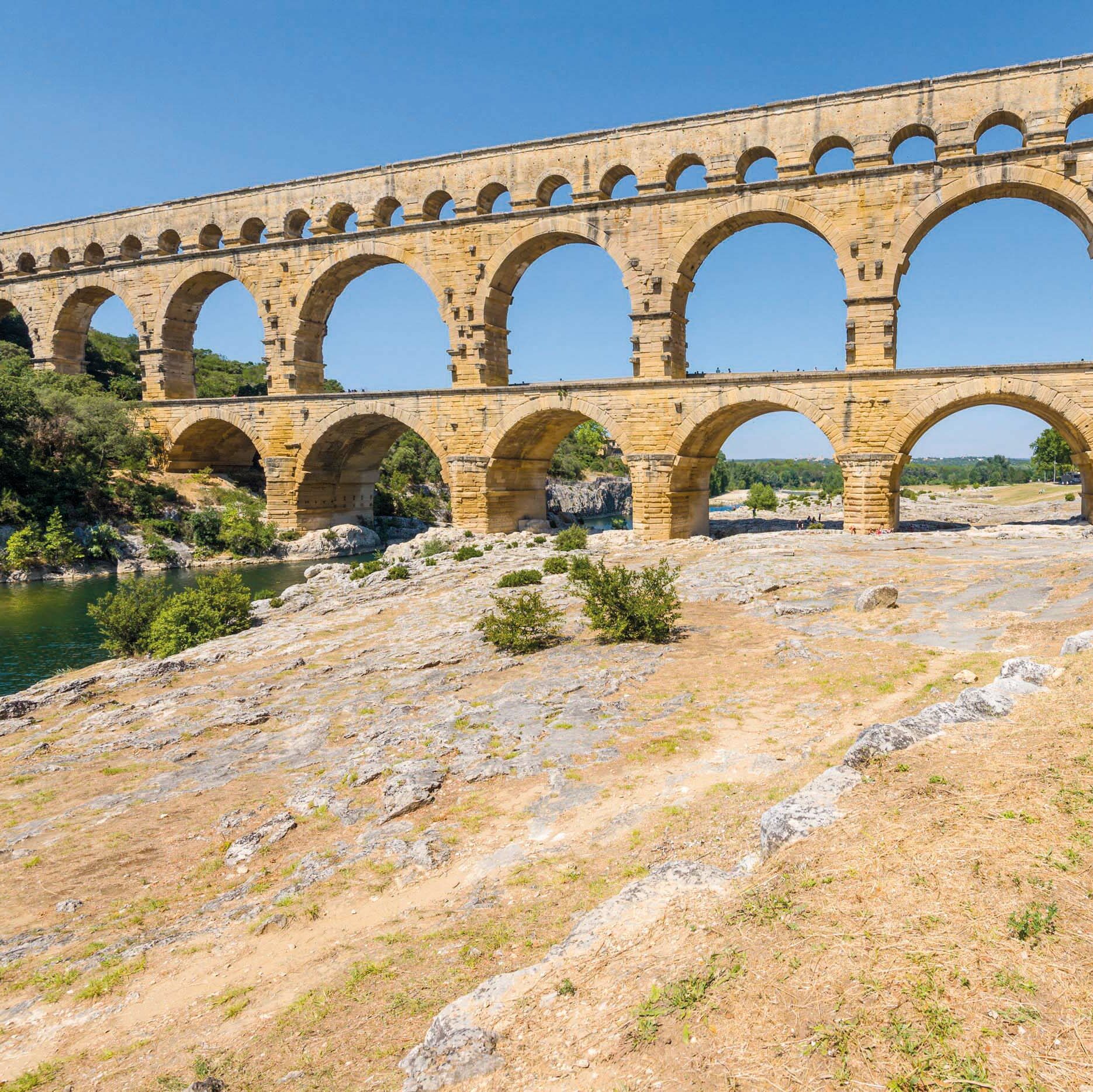
The Pont du Gard is breathtaking. Monumental yet perfectly in harmony with its surroundings, it spans the Gardon river with a lightness that feels almost impossible for a structure of such scale. It’s not only a testament to Roman ambition, but to their ability to read and work with the land — here, engineering becomes part of the garrigue, in an equilibrium that seems entirely natural.
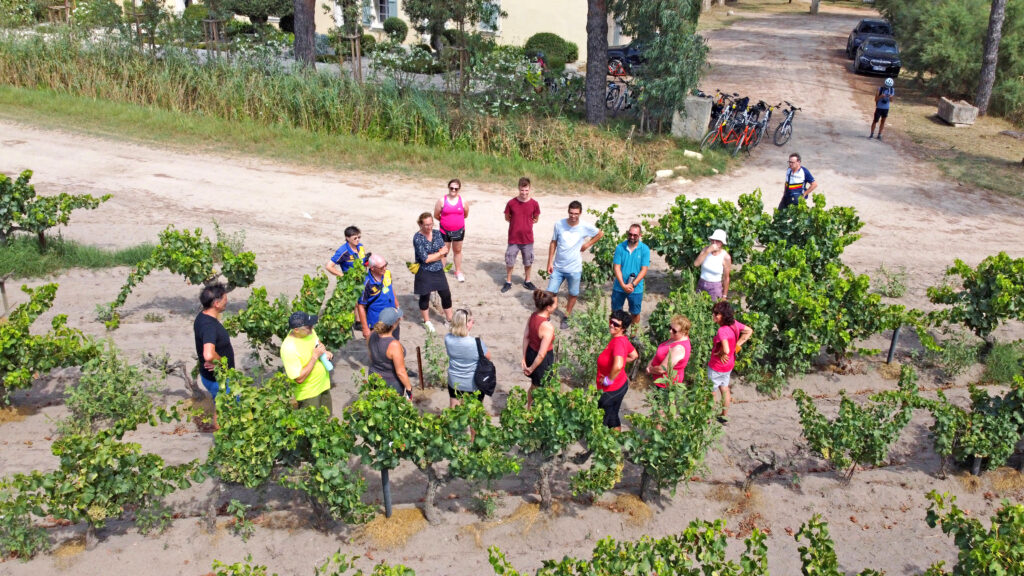
The countryside opens around it into vineyards and gentle hills, gradually introducing the area’s winemaking vocation. Not far away, Aramon marks the entrance into one of the most representative areas of the Southern Rhône, where the vine shapes the territory and defines its character.
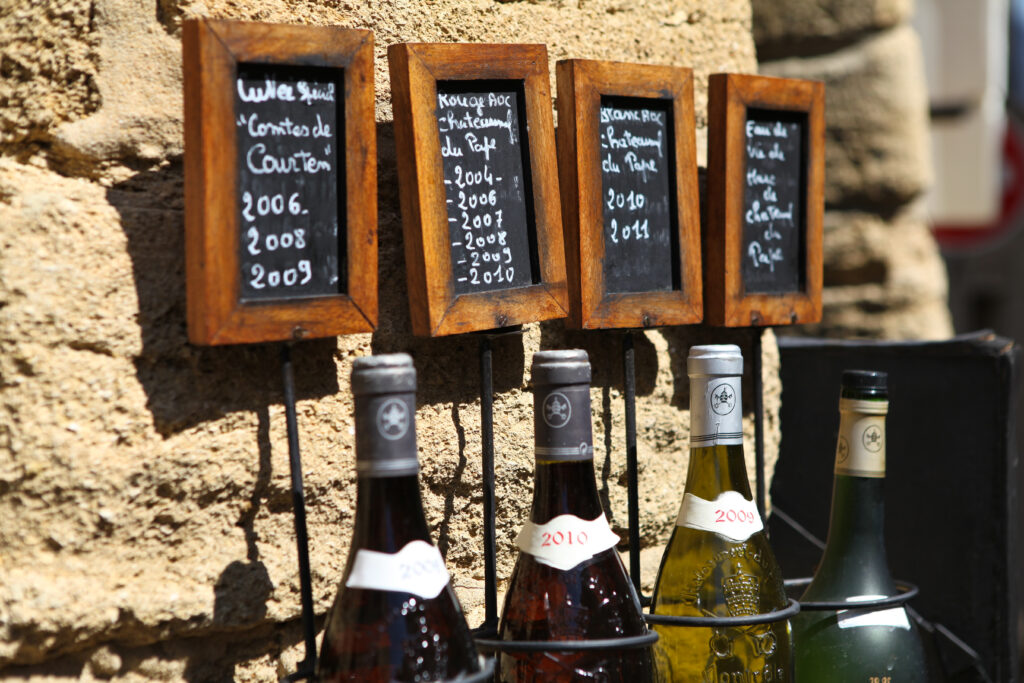
The iconic flavour: Côtes du Rhône wines. More than an accompaniment, these are the backbone of the table. Generous reds — often built on Grenache, Syrah and Mourvèdre — capable of standing up to a robust cuisine of rich sauces, substantial meats and long, slow cooking. Here, wine enters the dish as readily as the glass, forming the structural base of braises and reductions that give the food its depth and complexity.
Avignon and its markets
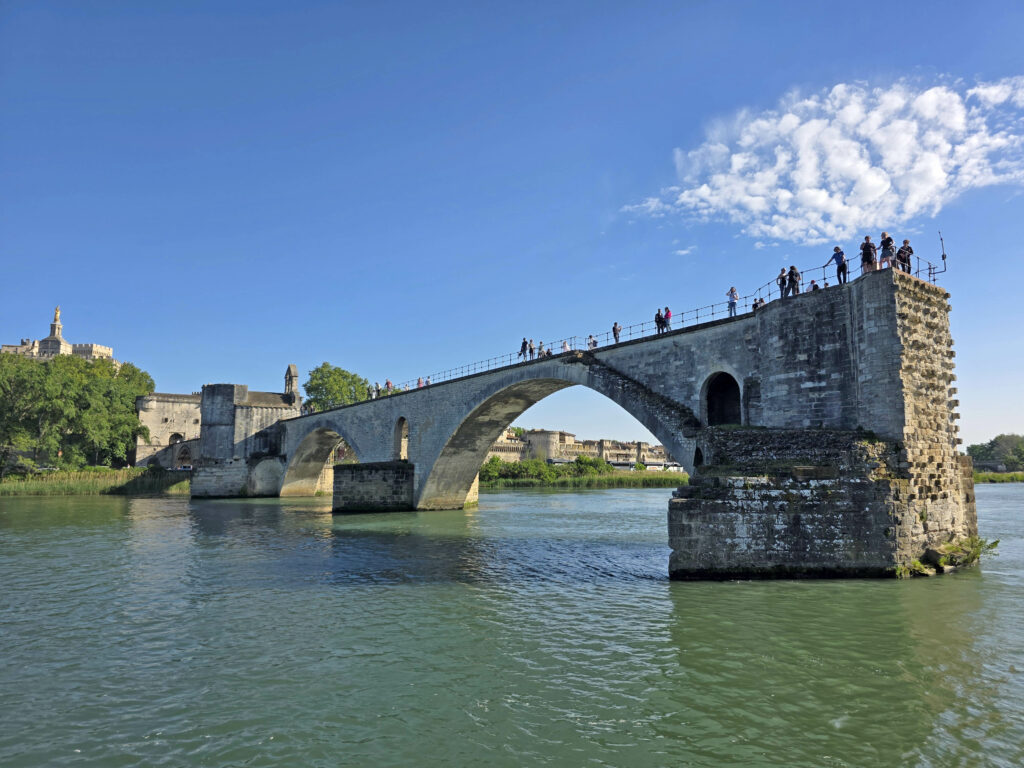
The journey ends in Avignon, the papal city par excellence, where history speaks in monumental forms. The Palais des Papes towers with Gothic authority, while the Pont Saint-Bénézet — the famous unfinished bridge — recalls a past of trade, pilgrimage and European centrality.
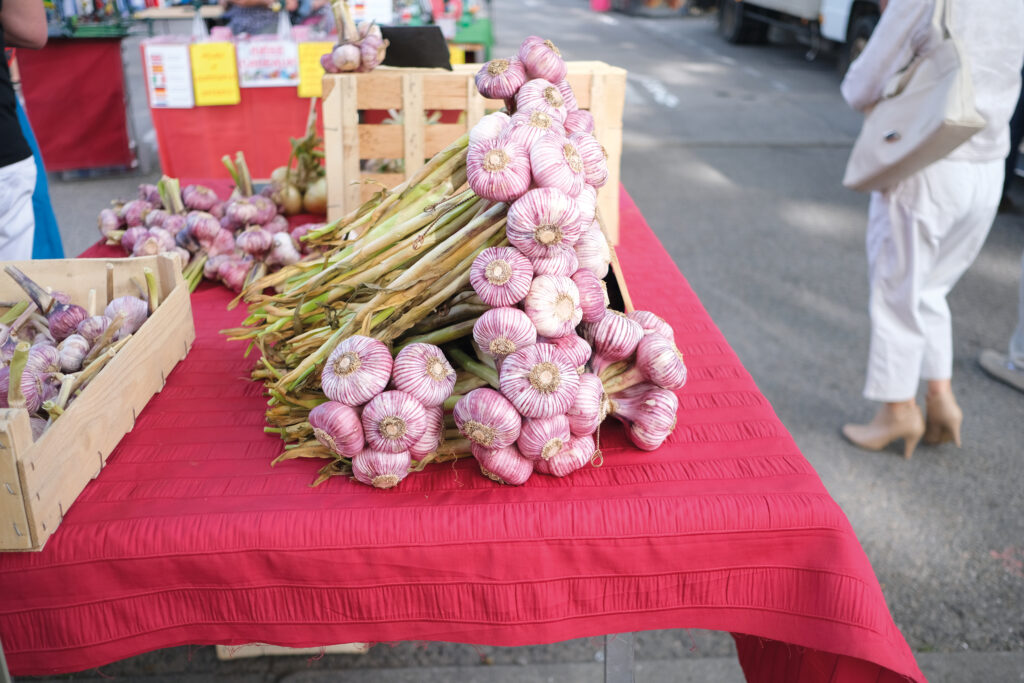
But alongside this solemn register, Avignon reveals a livelier, more everyday soul. It’s in the markets that the city changes pace, becoming a meeting point between local traditions and the broader influences that have layered themselves here over centuries.
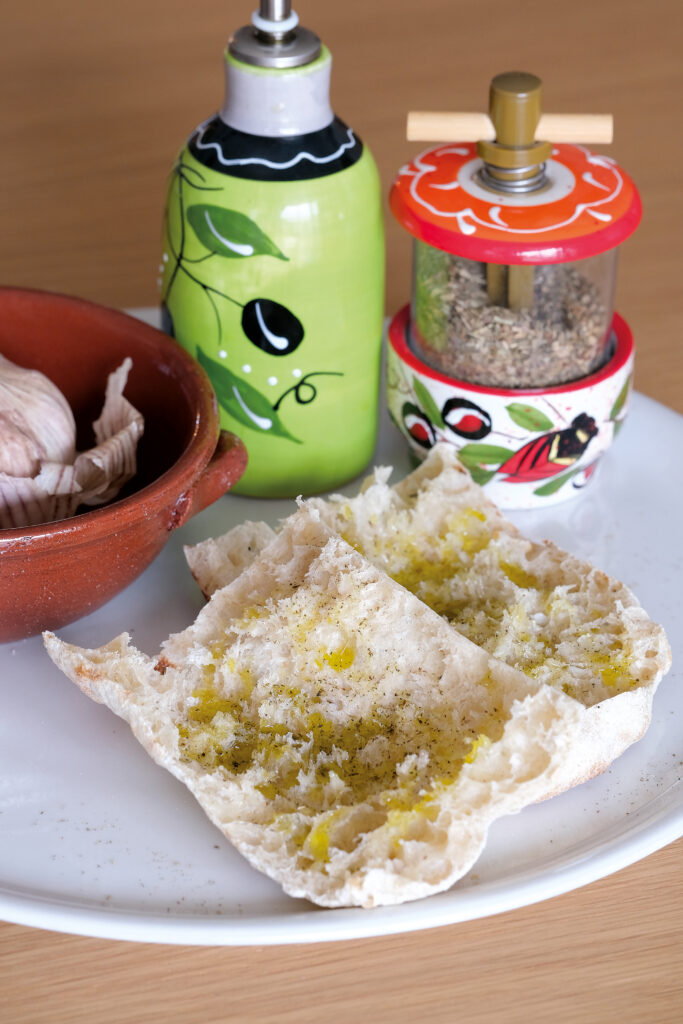
The iconic dish: Brissauda. A speciality of Provençal and Niçois cooking, it’s a culinary gesture as much as a recipe: a slice of toasted bread rubbed with garlic and generously dressed with fresh olive oil. Traditionally eaten as a snack or starter, especially during the olive harvest when the newly pressed oil takes centre stage.
More than an elaborate dish, it’s a celebration — of new oil, of the harvest, of a peasant culture that finds its purest expression in simplicity.
Other tasty destinations to explore by bike
If you’re a food lover, Provence and Camargue is only the beginning: there are plenty of other destinations just waiting to be tasted — and the good news is, they’re all perfect to explore by bike too. Head south to discover the rich, velvety flavours of Piedmont, or dive into the sea-and-earth cuisine of Puglia and the Salento — proof that the best souvenirs are always the ones you eat.
If you have read the article and you can’t wait to experience it all on a bike and barge tour through Provence and the Camargue, check out the Girolibero trips below!1 Travel tips in Provence
