/ Cristina Rombolà / to taste recipes and cooking travel by bike
What to eat in Piedmont: typical food to try while cycling
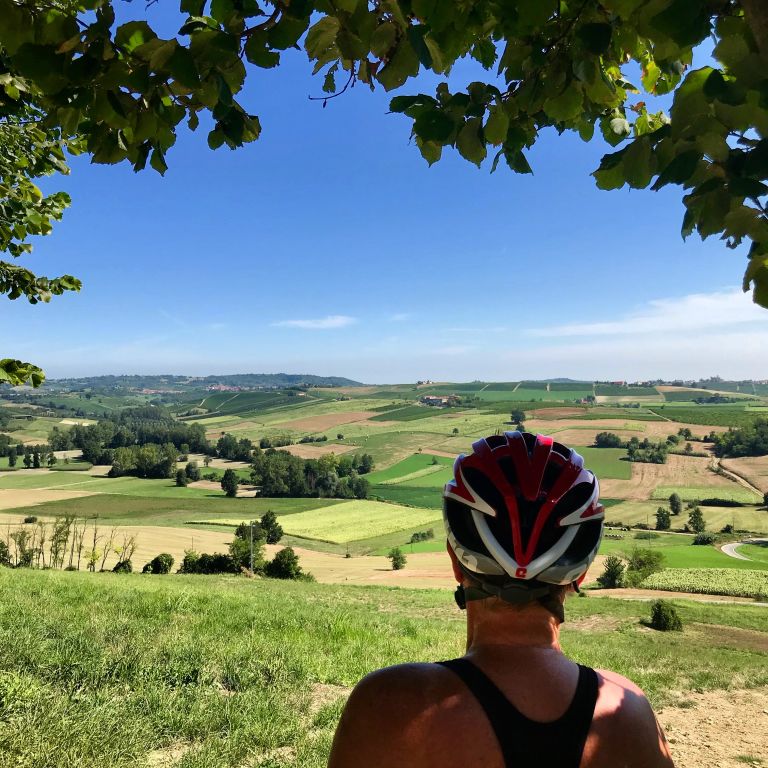
Pedalling through the Langhe and Monferrato means saying yes to a slow journey — one that feeds the mind, the soul and, yes, the appetite too. This is a land shaped like life itself: full of climbs and descents, sweeping horizons, vineyards and castles, and flavours that stay with you long after the ride is over.
As your wheels trace gentle curves between the orderly rows of the Langhe and the soft hills of the Monferrato, the air fills with the scent of grapes and good earth. Hard to resist stopping, isn’t it? And you shouldn’t. Like other bike tours in Italy, this is a route built for gourmet breaks: every climb is rewarded with a glass steeped in history, every descent ends in front of a board of local charcuterie and cheese, and every village hides at least one trattoria worth finding. Ready to set off?
Asti: Moscato Bianco and Asti polenta
Our journey begins in the city of Moscato Bianco — the grape from which the Asti DOCG appellation was born. Unmistakable in its bouquet, deeply tied to the identity of this land, it gives life to two wines you simply can’t leave without trying: Asti Spumante and Moscato d’Asti.
Asti Spumante is a hymn to celebration, synonymous with joy and conviviality; it has been raising spirits at tables across the world for decades. Moscato d’Asti, on the other hand, has a quieter, more intimate tradition: in this area, it was the natural companion to the merenda sinoira, an early evening spread of bread, cured meats and cheeses that gently bridged the gap between afternoon and dinner.
If you’d like to pair either wine with something sweet and local, look no further than polentina astigiana — the oldest confectionery specialty of the area, born in 1928. Don’t let the name mislead you: this is no rustic porridge, but a fluffy, golden cake with a texture reminiscent of sponge cake, made with flour, eggs, butter, sugar, almonds, raisins and maraschino cherries. A small, delicious piece of local history.

Nizza Monferrato: Barbera and bagna càuda
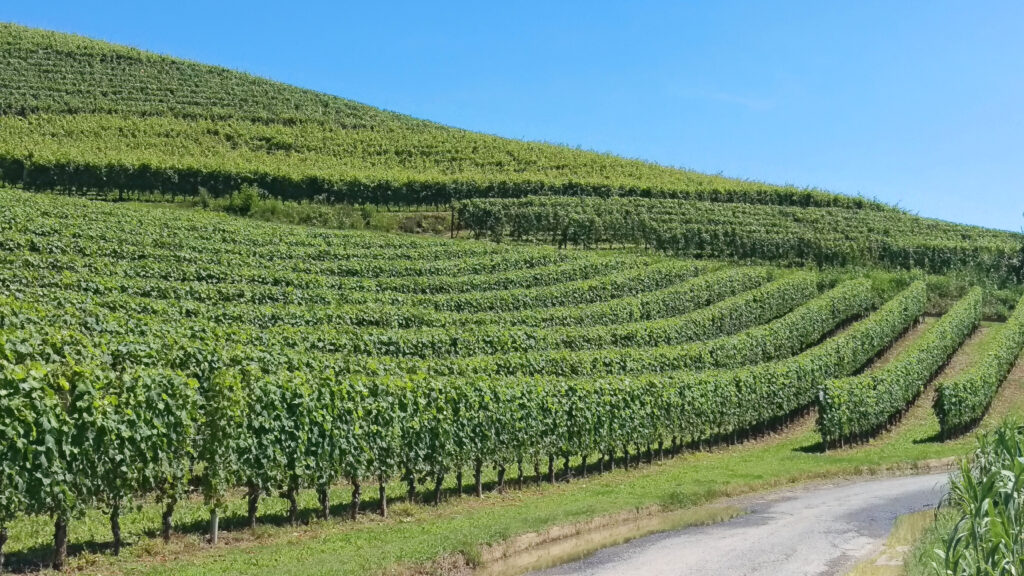
With more than eight hundred cultivated vineyards and around three hundred wineries dedicated to Nizza DOCG, Nizza Monferrato is, without question, the capital of Barbera wine. The town celebrates this identity every year on 10 May with Nizza è Barbera — an event well worth timing your ride around.
But if you really want to taste this territory, there’s one dish that tells its story better than any other: bagna càuda. A hot sauce of anchovies and garlic, melted slowly over the lowest of flames in olive oil, it is humble in its origins and extraordinary in its flavour. Born as a peasant dish, it eventually won over the aristocracy too — legend has it that a member of the Savoy royal family had it secretly served backstage at the Teatro Regio, well away from prying eyes.
The story of bagna càuda is also the story of anchovies in Piedmontese cuisine — and it’s a fascinating one. According to the most widely accepted version, anchovies arrived in the region via the old salt routes. When the salt trade became less profitable towards the end of the 18th century, hit hard by rising taxes, Piedmontese merchants turned to salted fish instead. A practical solution that gave rise to one of the most beloved dishes in the region.
Want to experience it at its most festive? Head to the village of Faule in mid-October for its historic bagna caöda festival — which in 2026 will celebrate its 30th edition — just before the wider Bagna Càuda Day takes over the region in late November.
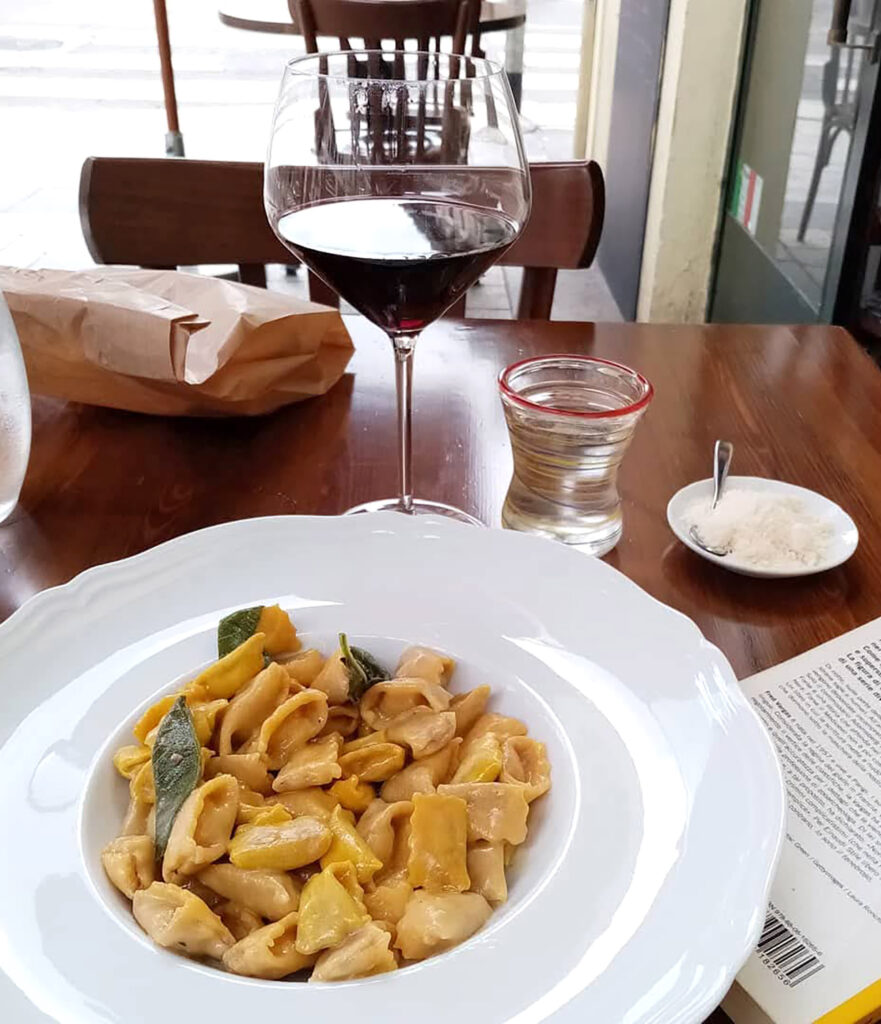
Popular specialties: Tajarin and Agnolotti del plin
Good news for cyclists in need of a carbohydrate top-up: this corner of Piedmont is a paradise for fresh pasta lovers, with two iconic dishes that deserve a place on every table you stop at along the way.
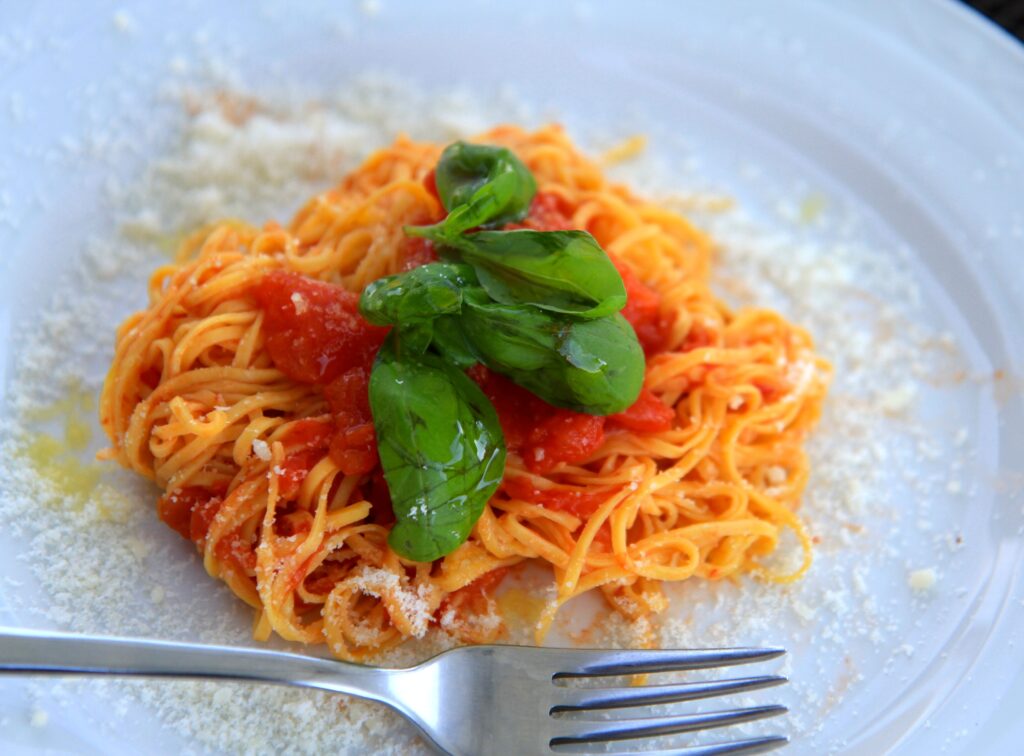
The first is tajarin — a fresh egg pasta that resembles tagliatelle, but finer and more delicate. Its deep, almost golden yellow comes from a famously generous use of egg yolks: up to forty per pound of flour. Writer Beppe Fenoglio, who knew these hills better than most, loved to eat them in elegant, composed silence. We think that’s the right approach.
Then there are agnolotti del plin — small, tightly folded ravioli filled with braised meat, whose name comes from the plin, the pinch used to seal them shut. The most authentic way to enjoy them? Al tovagliolo: cooked, drained and placed on a napkin, with no sauce or seasoning to distract from the filling itself. Simple, honest, and quietly perfect.
If you’re planning your trip in June, consider a small detour to Merana: from 13 to 15 June and 20 to 22 June 2026, the village hosts its Festival of the homemade raviolo al plin — a celebration that is, in itself, reason enough to adjust your route.
The praise of slowness: the Cherasco snail
A French philosopher once called the snail a model of happy degrowth — and it’s easy to see why. Once it reaches the maximum capacity of its shell, it simply stops growing. A quiet, stubborn refusal to expand beyond what is needed, making it a living symbol of balance, autonomy and a gentle critique of industrial gigantism. Rather fitting for a cycling trip, don’t you think?
Beloved by refined palates across Italy, the snail finds its true homeland here in Piedmont — and more specifically in Cherasco, considered the land of choice for this unhurried mollusc. Italy’s undisputed capital of heliciculture, Cherasco is known for promoting a complete natural-cycle, free-range approach to snail farming, with an exclusively plant-based diet. Quality over quantity, from shell to plate.
If your ride takes you through in late October, plan to stop between the 25th and 27th for Gusta Cherasco — a local event dedicated entirely to the snail in all its preparations. Slow food, in every sense of the word.
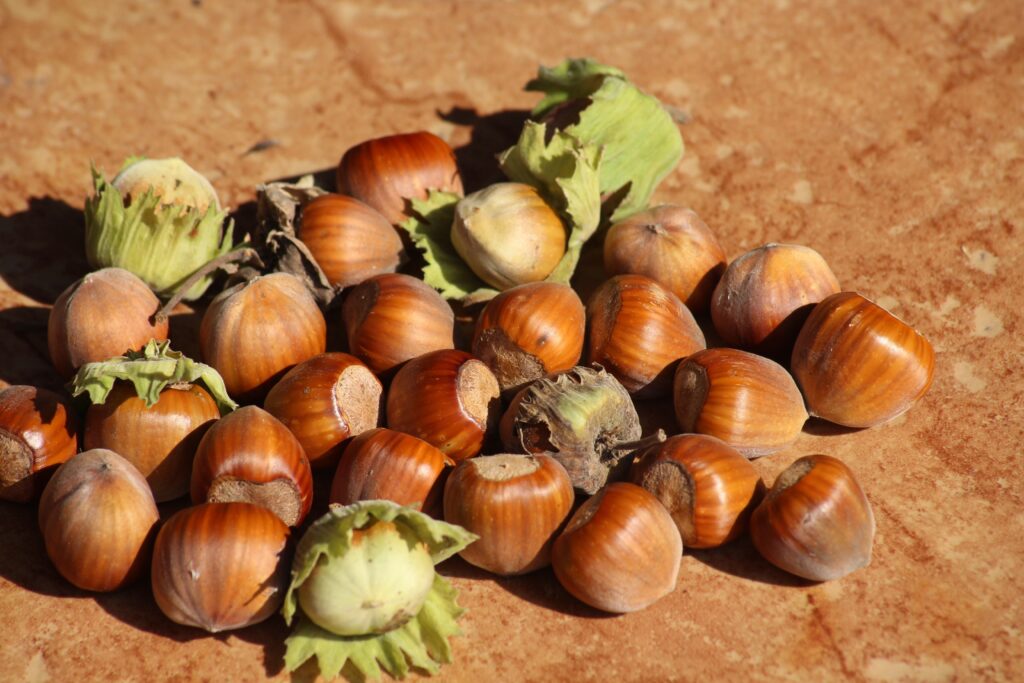
The Tonda Gentile del Piemonte IGP Hazelnut
Few ingredients carry as much history as the hazelnut. Already prized by the Greeks and Romans — Cato recommended its cultivation in the city gardens of Rome, while Virgil mentioned it in both the Bucolics and the Georgics — this small wild fruit has been earning its place at the table for centuries.
Among the most celebrated cultivars is the Tonda Gentile del Piemonte IGP (variety Trilobata), grown across the provinces of Asti, Cuneo and Alessandria. Spheroidal in shape, with a thin shell, a delicate skin and a crisp, intensely aromatic seed, it is renowned for a depth of flavour that makes it the ingredient of choice for the finest patisserie. From spreadable creams to gianduiotto, from nougat to hazelnut cake, chocolate and ice cream — and even the pudding that the father of Italian cuisine, Pellegrino Artusi, recommended making with it — the Tonda Gentile turns up everywhere worth stopping for a sweet break.
If you’re riding through the upper Langa between 16 and 24 August, make sure your route passes through Cortemilia for the 72nd edition of the National Hazelnut Fair. A celebration of one of Piedmont’s most iconic ingredients — and the perfect excuse to slow down and indulge.
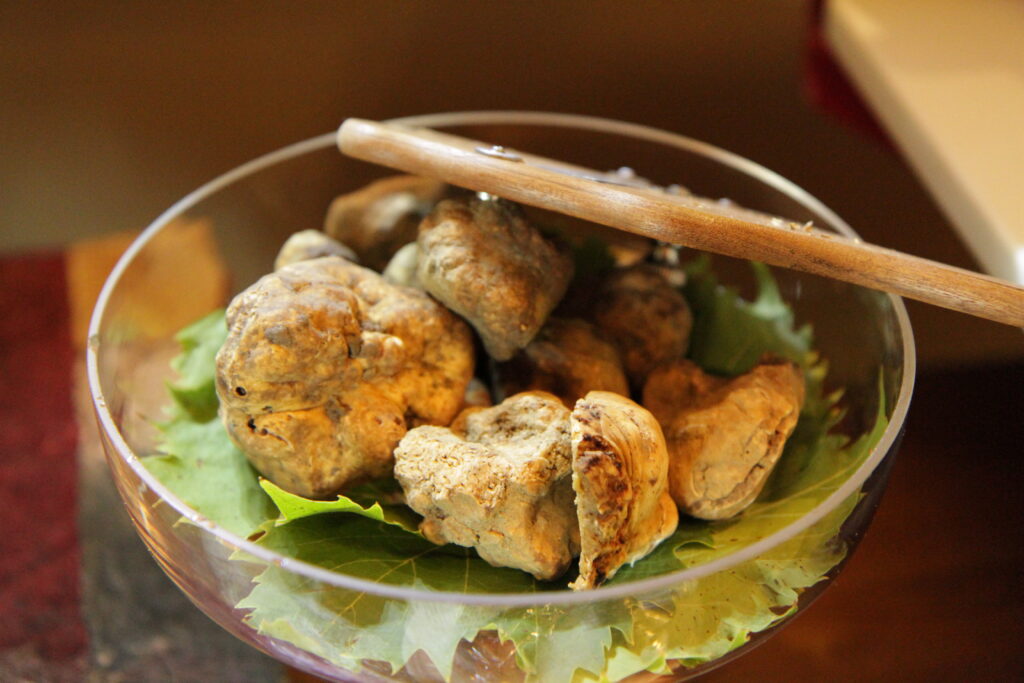
Alba and its white truffle, world-famous star
If a single product could define the city of Alba, it would be the white truffle — the gold of haute cuisine, and what Gioachino Rossini, one of its most devoted admirers, famously called the “Mozart of mushrooms.”
The Piedmontese white truffle has always been a prized variety, but its international fame is largely the work of one man: Giacomo Morra, a local hotelier and restaurateur who was already being crowned “King of Truffles” by the Times of London in 1933. Morra had a gift for promotion: he inaugurated the International Fair of the White Truffle of Alba — now in its 96th year, running from 10 October to 6 December — and every season he would send the finest specimen of the year to a world celebrity. Marilyn Monroe, Rita Hayworth, Harry Truman, Joe DiMaggio, Alfred Hitchcock: all received their share of Alba’s underground gold. A masterclass in glamour, long before the word existed.
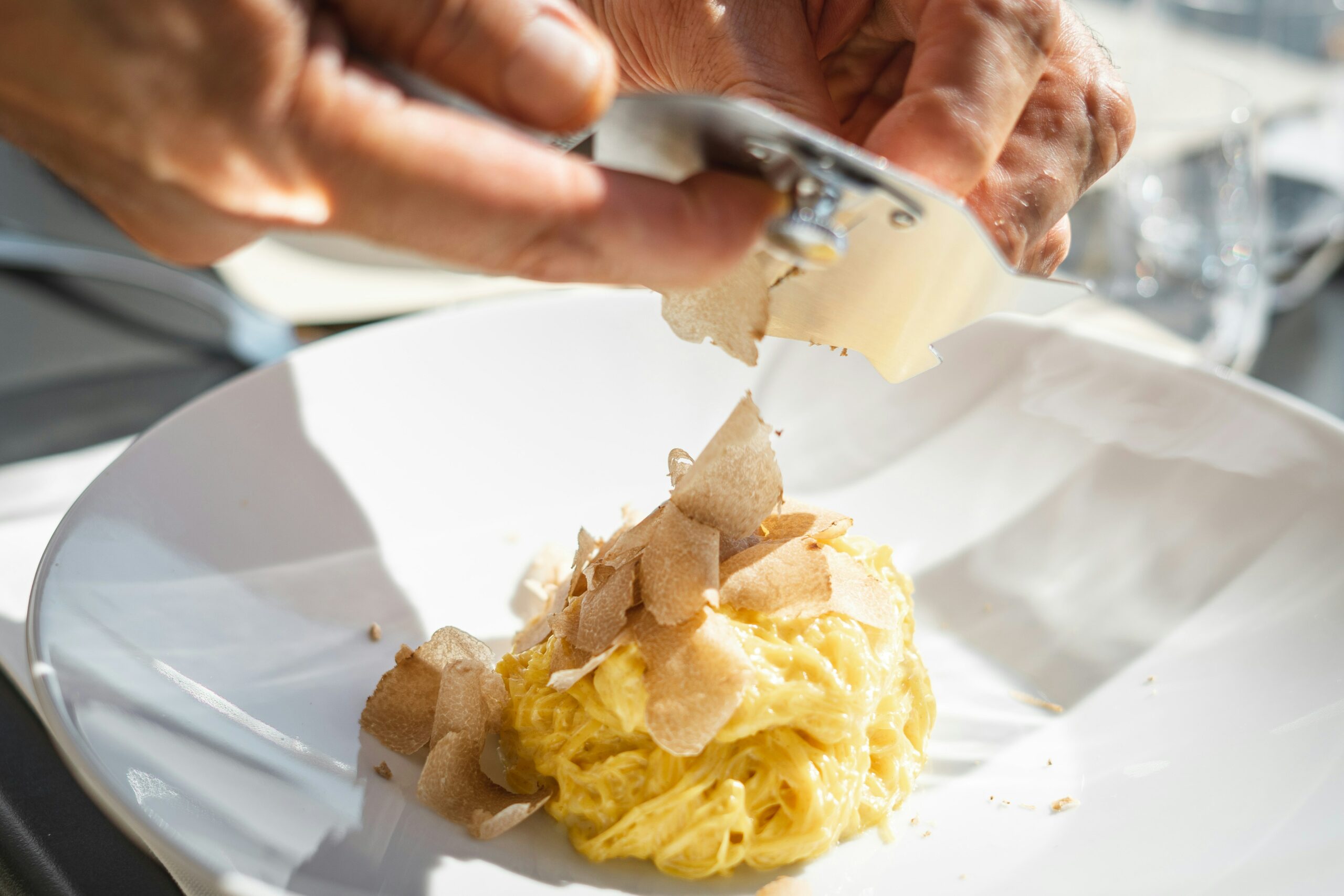
And when you stop in Alba — and you must stop in Alba — slip into a good trattoria and order accordingly. The white truffle should always be eaten raw, shaved generously over egg, risotto, tajarin, or raw meat all’albese. No fuss, no elaborate preparations. Just the truffle, doing what it does best.
Crudo di Cuneo PDO, Master Ham Proof.
Raw ham has been part of this land since at least the 14th century, documented in agricultural manuals long before it found its way into literature and legend. Over time, it earned a name that says it all: Master Ham — a title that speaks to the skill required both to make it and, apparently, to slice it.
Among its most illustrious admirers was Louis XVIII, who reportedly took enormous pride in his ability to carve raw ham strictly by hand. So devoted was he to this pastime that he spent his years awaiting the throne perfecting it. Charles Bukowski, on the other end of the spectrum, saw things differently: in Ham on Rye — Panino al prosciutto in Italian — the act of slicing became a metaphor for a life that was rough, raw and uncompromising.
For cyclists, Prosciutto Crudo di Cuneo PDO is something close to the ideal mid-ride snack: light, digestible and full of flavour. Made from Italian Large White and Landrace breed pigs, it owes its character to expert dry salting — which may also include pepper and vinegar — and a minimum of ten months of ageing. Cut into thin slices, it reveals a bright red colour, a delicate aroma, a sweet flavour and a softness that, quite simply, melts in the mouth.
Thursday gnocchi, but with Castelmagno DOP.
Praised by celebrated Italian writers and food critics, Castelmagno DOP is one of Piedmont’s great dairy treasures, rooted in the province of Cuneo since ancient times. A semi-hard cheese made primarily from cow’s milk, with minimal additions of sheep’s or goat’s milk, its character comes from an unhurried process: the curd is broken up, left to rest for a full day, then broken again into cubes — giving it that distinctive grainy, crumbly texture. After acidification under whey, the mass is salted, pressed into moulds and aged in a natural environment for at least 120 days. Castelmagno is wonderful on its own, paired with a full-bodied wine. But if you really want to do it justice, order it melted over gnocchi or stirred into a risotto. From 26 to 28 September, the town of Caraglio hosts the Sagra degli gnocchi al Castelmagno alongside its Autumn Fair — a very good reason to plan your ride accordingly.
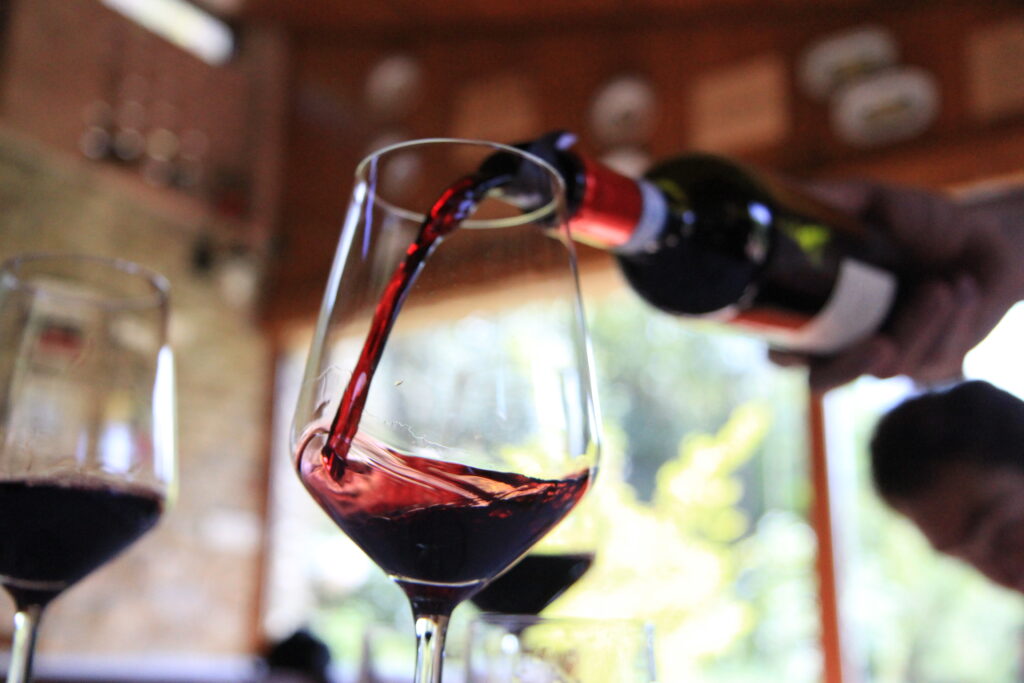
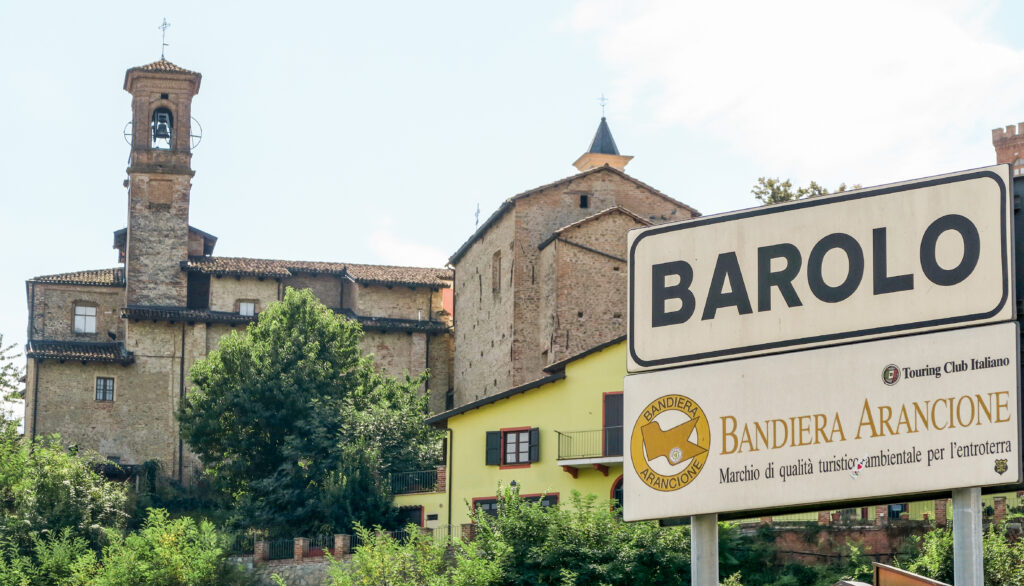
Barolo, the wine that gets better with age
When you stop in the town of Barolo, don’t miss a wine tasting of this flagship wine of Piedmontese enology. A symbol of Made in Italy in the world, Barolo is produced in a restricted area of the Langhe with pure Nebbiolo grapes. Visually it has a fascinating ruby red color, but it is on the nose that it reveals its complexity, releasing an unmistakable bouquet of scents. It is a full-bodied wine, characterized by an important tannic texture and lively acidity, elements that allow it to evolve and improve in the bottle for decades. If you love wine and music and are in Barolo from June 27 to July 4, don’t miss the Collisioni agrirock festival.
Other tasty destinations to explore by bike
If you’re a food lover, Piedmont is only the beginning: there are plenty of other destinations just waiting to be tasted — and the good news is, they’re all perfect to explore by bike too. Head south to discover the sun-drenched flavours of Provence and the Camargue, or dive into the sea-and-earth cuisine of Puglia and the Salento — proof that the best souvenirs are always the ones you eat.
Has all this made you want to pedal through Piedmont and try it all for yourself? Discover the Girolibero tour through Langhe and Monferrato!1 Travel tip