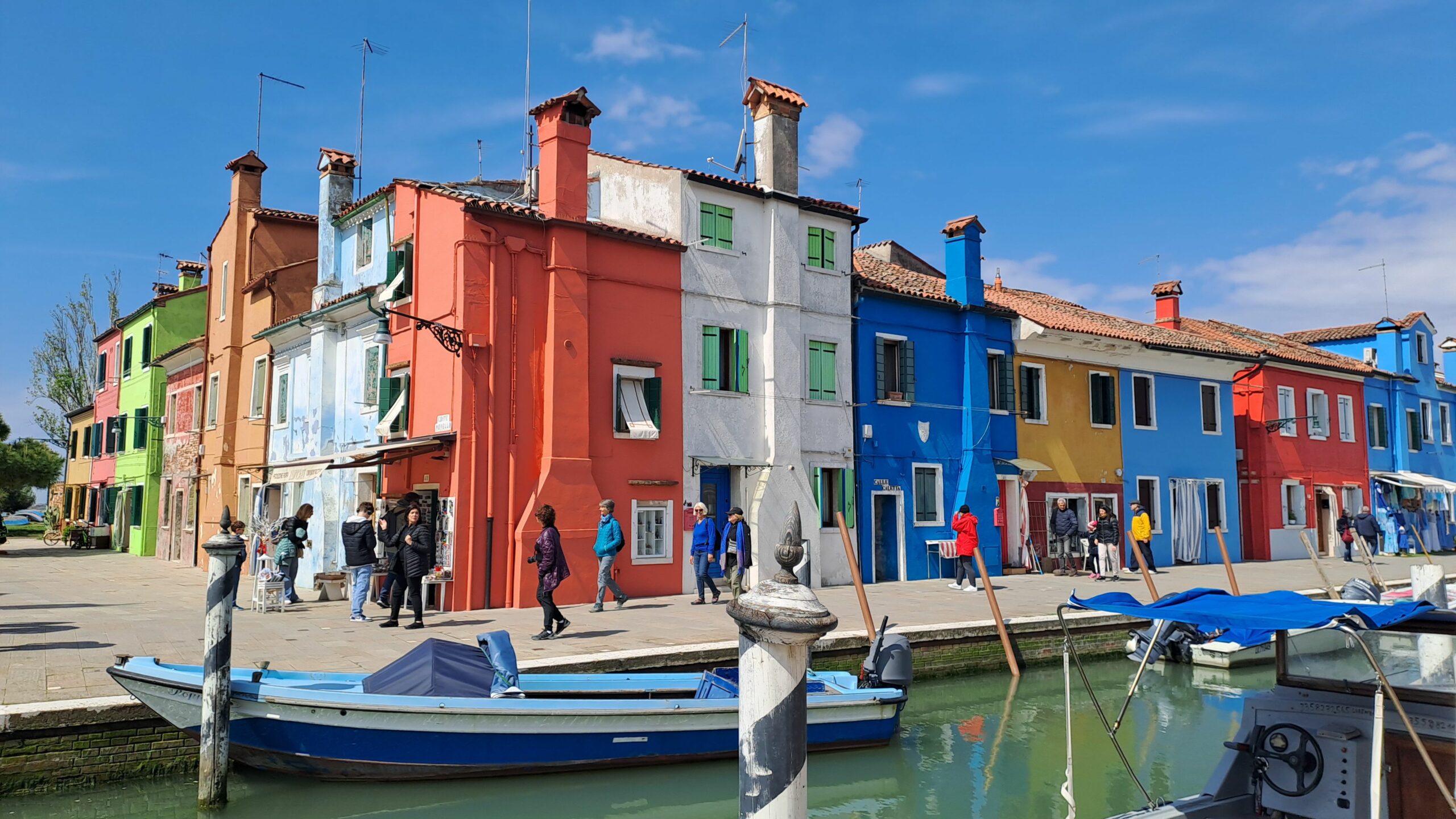
/ Girolibero / to discover culture travel by bike
Beyond Venice: discover Veneto’s historic towns, villages and nature
Veneto has so much to offer, from the magical city of Venice to medieval villages, from Palladian villas to excellent cuisine. It’s the ideal destination for a cycling holiday, where you can discover both well-known and lesser-known places and experience authentic Venetian culture. In this article, we’re playing right at home. The Girolibero headquarters are in Vicenza, in the heart of Veneto, about halfway between Verona and Venice. We’ve compiled our recommendations for sights, food, and events not to be missed, resulting in a useful little guide. Here it is!
The most beautiful villages, from Arquà Petrarca to Asolo
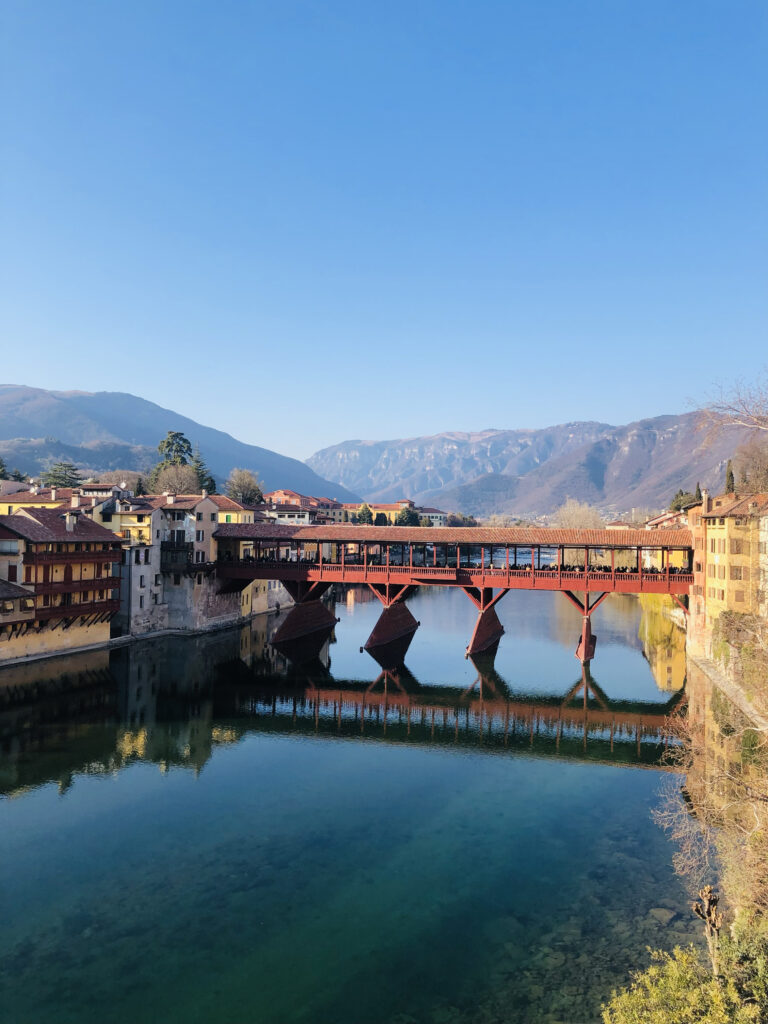
Scattered throughout the Veneto region are numerous villages, each with its own unique atmosphere. Bassano del Grappa is famous for the Ponte degli Alpini, a historic covered wooden bridge that crosses the Brenta River through the center of town. The bridge has been destroyed and rebuilt several times, and it now owes its current appearance to a design by Andrea Palladio, the famous Renaissance architect. It is typical to stop here for a mezzo e mezzo, a typical drink, but we’ll reveal what that is later! Also in the province of Vicenza is Marostica, a small medieval town that welcomes visitors with its Lower Castle and a long wall that leads to the Upper Castle, which offers a wonderful view. Every two years, the town square prepares to host a unique event that adults and children alike eagerly await for its grand setting. Which one? We’ll tell you soon!
Padua has many small villages waiting to be discovered. Arquà Petrarca is a quiet, peaceful village with enviable, picturesque views that have earned it a spot on Italy’s Most Beautiful Villages list. It is famous for being the place where the poet Petrarch spent the last years of his life (you can visit his house-museum). It has always been a popular stop for bicycle tourists. We recommend having a break at one of the small taverns and sampling Arquà Petrarca’s signature product: jujubes! As you walk down the narrow streets, you may find stalls selling fresh produce. When it is in season, you may also find people offering freshly picked pomegranate kernels to eat while you stroll.
Did you know that the Veneto region has a long spa tradition? The Euganean Hills area has long attracted travelers on the Grand Tour, an educational journey that young aristocrats took throughout Europe. The town of Battaglia Terme has long been a popular tourist destination, attracting artists such as Stendhal who appreciated the healing properties of its hot springs. Monte di Sant’Elena was the main destination, as it is home to the only natural thermal cave in the Euganean Hills. Since the time of the Serenissima, the town has also boasted an ancient river navigation tradition. You can learn more today at the Museum of River Navigation, which tells the story of the boatmen, or “barcari,” who transported goods from the Euganean Hills to Venice.
Giosuè Carducci called it the “city of a hundred horizons,” and it’s easy to see why. Asolo boasts a variety of landscapes, from vineyard expanses to olive groves. Then there are the stone houses with panoramic gardens overlooking the surrounding valley. Asolo is considered one of Italy’s Most Beautiful Villages and is known as the City of Three Women because of its strong ties to three female figures. The first is Caterina Cornaro, Queen of Cyprus, who established her Renaissance court in Asolo after abdicating and ceding her crown to the Serenissima. Then there is Eleonora Duse, an iconic Italian theater actress who loved the quiet of Asolo, her favorite place to rest between performances around the world. Finally, there is Freya Stark, a traveler, writer, and photographer who was one of the first explorers of the Arabian Desert. She chose Asolo as her home.
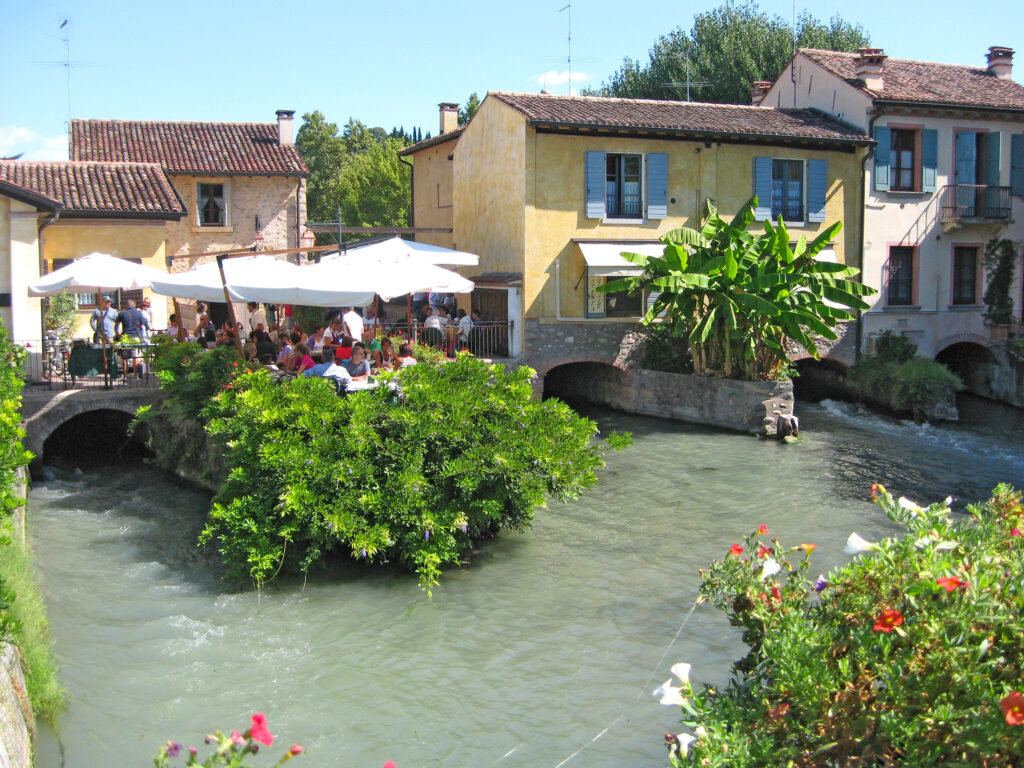
In Valeggio sul Mincio, walk through the small cobblestone streets until you reach Scaliger Castle. From there, enjoy the splendid view of the surrounding landscape. Then, descend along a well-marked path to Borghetto sul Mincio, a Veronese gem with numerous watermills and brick houses that are reflected in the Mincio River. Enjoy the town’s romantic atmosphere and sample some delicious agnolini, a type of tortellini stuffed with meat.
You can see most of these cities and villages on our self-guided round tour in Veneto: Venice Lands
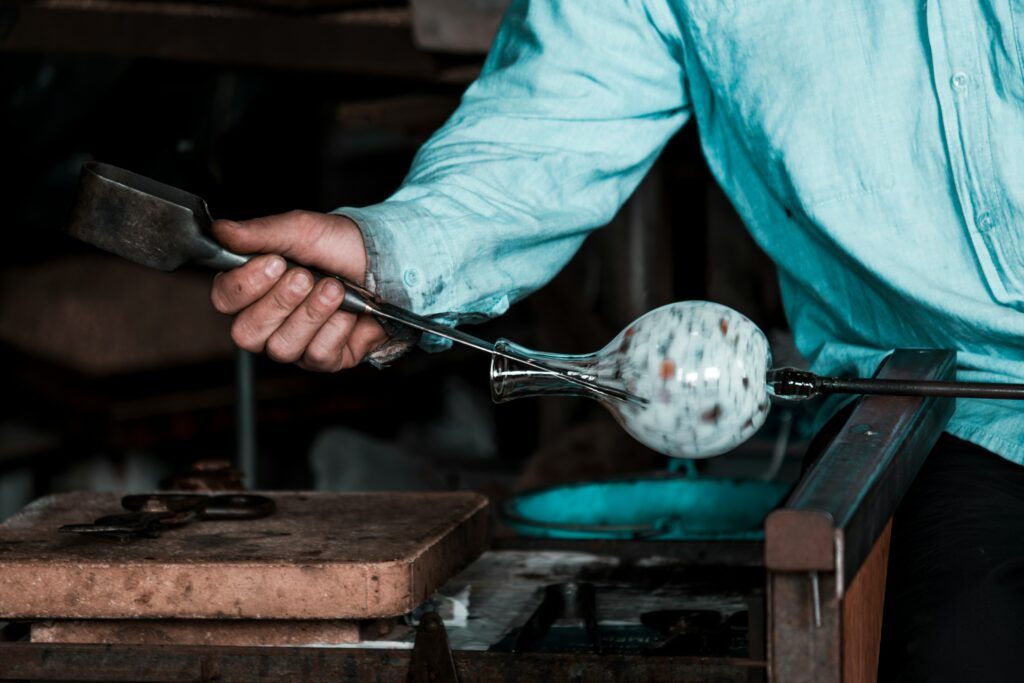
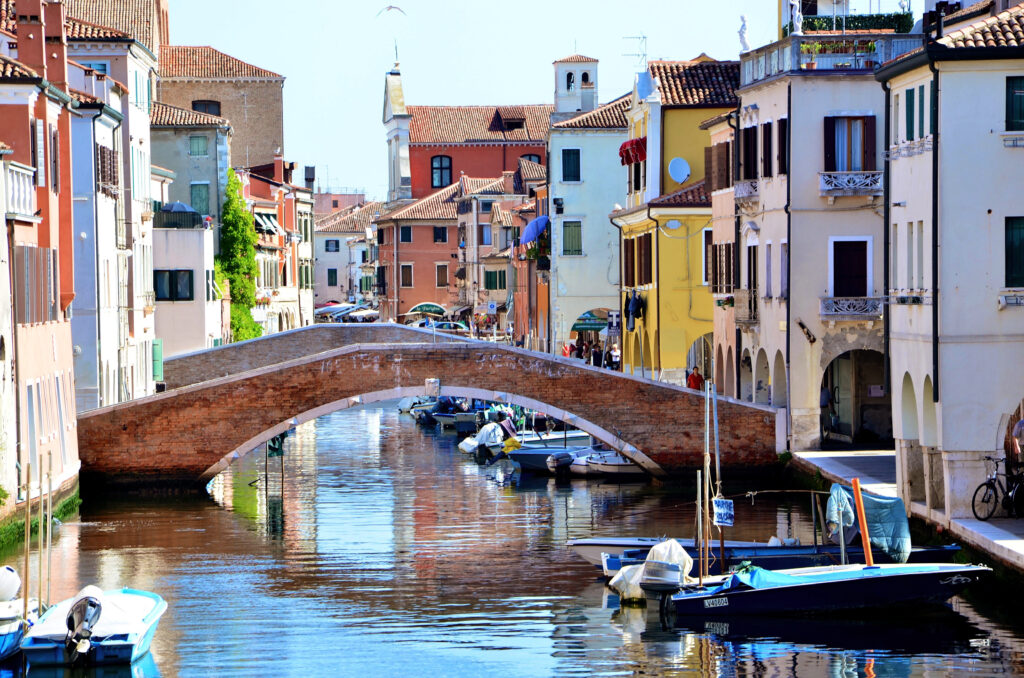
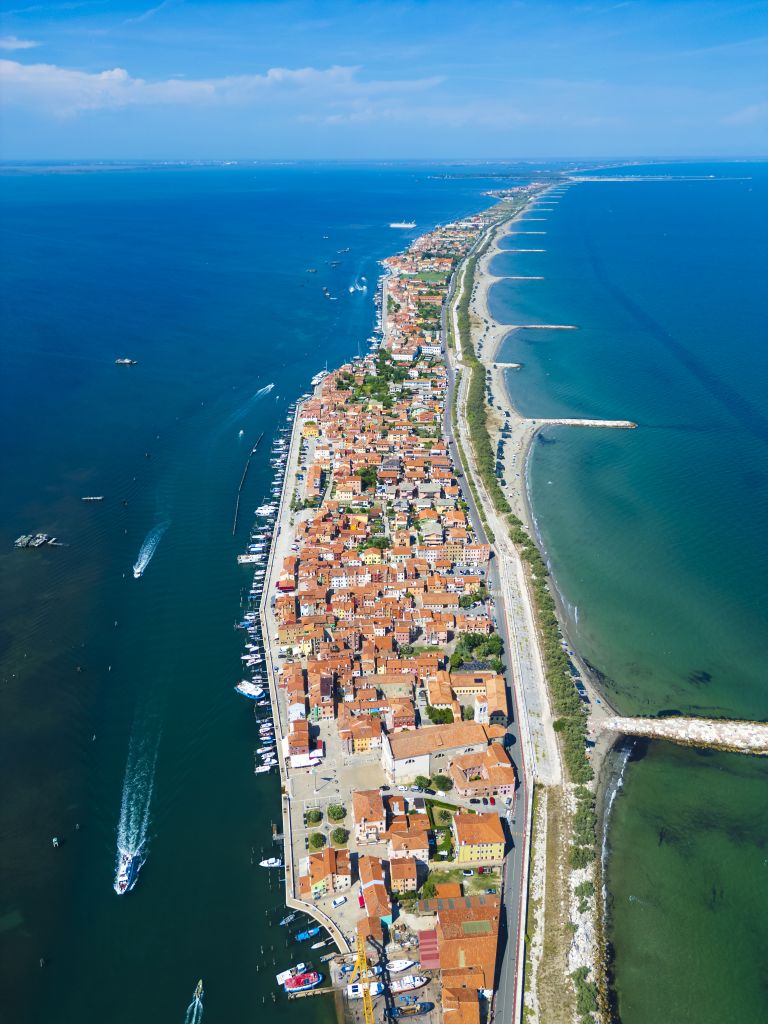
Two small but fascinating islands can be reached from Venice: Burano, with its colorful houses and ancient lace-making tradition, and Murano, famous for its glassmaking. As you walk through the narrow streets, you will easily find workshops where artisans are engaged in glass production. Stop and look through one of their shop windows—the spectacle is unique! Colorful houses also characterize the narrow streets of Caorle‘s lively center. Savor the village’s atmosphere by walking along its streets and losing yourself among the local stores until you reach the waterfront. There, you can stroll while the sound of the waves plays in the background as you admire the sculptures carved by artists into the rocks of the Scogliera Viva, an open-air museum that ends at the Sanctuary of the Madonna dell’Angelo. Then there is Chioggia, also known as Little Venice. You only have to set foot there to understand why. With its narrow streets, bridges, and canals, it’s a veritable Venice in miniature with a seafaring soul.
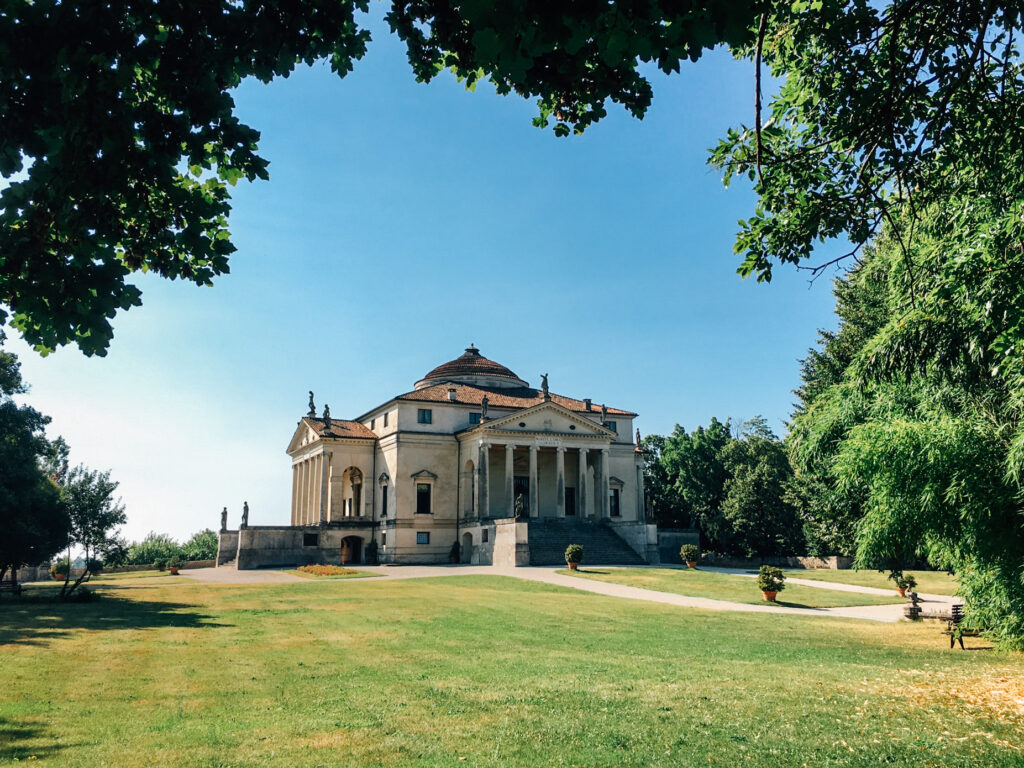
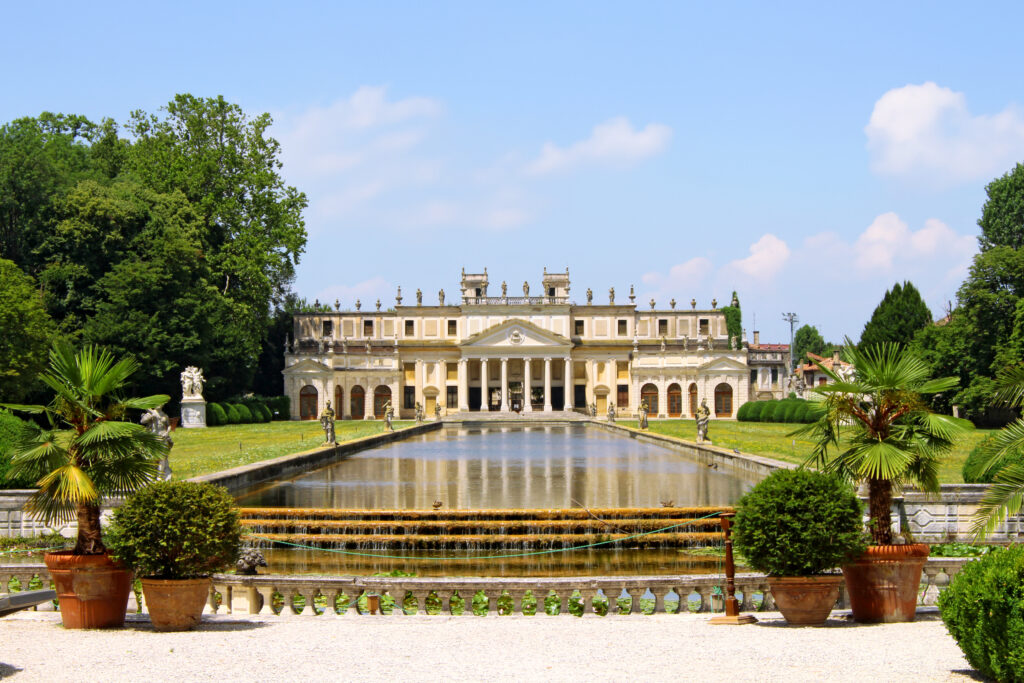
The numerous Palladian villas along the Brenta River on the way to Vicenza
There are many majestic Venetian villas, each with great artistic and cultural value. But they also have a mysterious side, holding secrets, curiosities, and legends that make them even more fascinating. Here are our favorites!
Villa Almerico Capra, also known as La Rotonda, is one of Vicenza’s most notable architectural spectacles. Designed by Andrea Palladio, the greatest architect of the Venetian Republic, the villa dominates the surrounding landscape. Upon visiting it, Goethe was so amazed by its perfection that he wrote in his book Italian Journey, “Perhaps never has architectural art reached such a degree of magnificence.” Just outside Vicenza is another 18th-century masterpiece: Villa Valmarana ai Nani, adorned with frescoes by Giambattista and Giandomenico Tiepolo. The villa owes its name to the seventeen statues of dwarves positioned on the long wall surrounding it. Legend has it that the villa was once home to Princess Layana, who suffered from dwarfism. To not disturb the princess’s peace and quiet, her parents ordered that all the janitors, cooks, and servants working inside be exactly like her. One day, however, a prince entered the mansion. When Layana saw him and realized her situation, she took her own life. Upon hearing the news, her servants were so grief-stricken that they were petrified.
Villa Pisani, located in Stra, is considered the queen of Venetian villas. It is home to one of the most complex labyrinths in Europe. Napoleon himself reportedly attempted to solve it but was unable to reach the center, which features a statue of the goddess Minerva and was once a courtship site. In Mira, there is Villa Foscari, also known as La Malcontenta. According to one legend, the villa is haunted by the ghost of Elisabetta Dolfin, a Foscari noblewoman who was accused of indecent behavior and forced to spend the last 30 years of her life locked up in the villa. The second origin is related to the name of the area, which is called La Malcontenta because the Brenta River often overflowed. In Mira, you can also visit Villa Widmann, one of the finest examples of Baroque and Rococo architecture. Its park, with a tree-lined avenue and small lakes, and its interior frescoes have also enchanted artists such as Goldoni and D’Annunzio.
Villa Barbarigo Pizzoni Ardemani in Galzignano Terme is known for its monumental garden, the Valsanzibio Garden, which was created in the 17th century by Luigi Bernini. The garden symbolizes a spiritual path to salvation and features fountains, waterfalls, and ancient trees. There is also a labyrinth with a path over 1,500 meters long and seven dead ends, representing the seven deadly sins. Visitors are bound to stumble upon at least one of these alleys, as it was deliberately designed to force you to retrace your steps and repent for your sins. In Battaglia Terme, the majestic Catajo Castle is worth a visit. One can admire its wonderful Renaissance frescoes depicting the history of the Obizzi family, the first French family to live in the castle. The extensive Garden of Delights features centuries-old trees and lakes adorned with water lilies.
Surrounded by vineyards, Villa Barbaro in Maser combines the architectural genius of Andrea Palladio with the artistic mastery of Paolo Veronese’s frescoes. Its garden features a nymphaeum with a central grotto, which is said to have been inspired by the Palazzo del Te in Mantua.

The must-see cities, Verona and Venice
When planning your itinerary in Veneto, be sure to include the two major cities of Verona and Venice.
Verona is the city of lovers and deep love. Some stories are better known, like Romeo and Juliet, while others are less well-known, like Conrad and Isabella. We all know the basics of Shakespeare’s play: two young people from rival families, the Montagues and the Capulets, fall in love and ultimately die. Today, visitors can explore Juliet’s House and the famous balcony where she uttered the immortal words, “O Romeo, Romeo, wherefore art thou Romeo?” The courtyard is now adorned with padlocks and love notes.
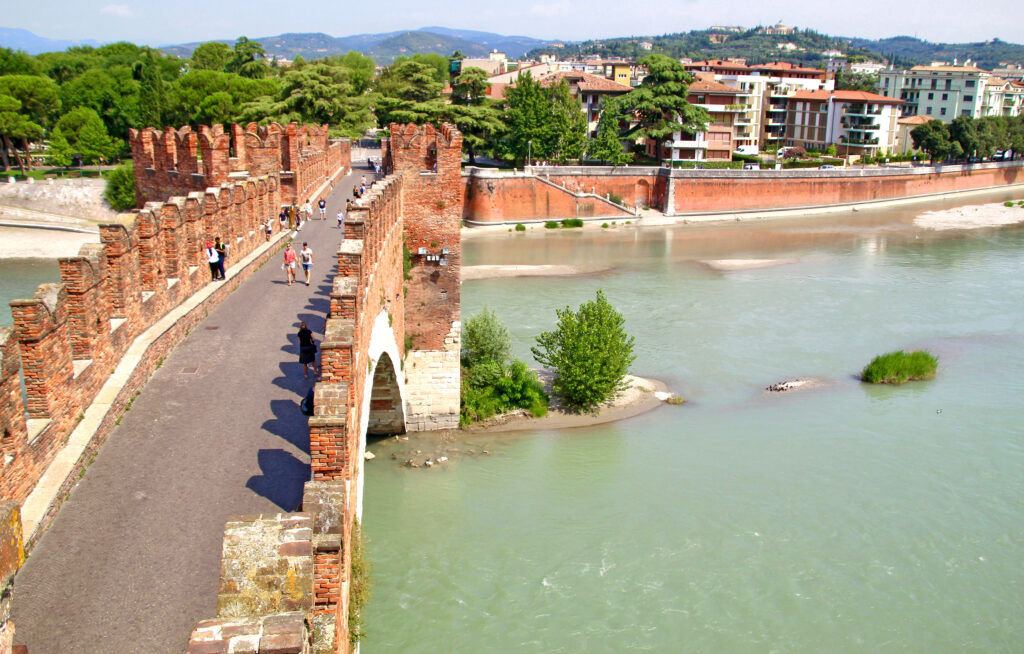
Just a few steps from Piazza delle Erbe, Verona’s oldest square, you will find the Well of Love, named for the legend it contains. After yet another rejection by Isabella, with whom he was in love, Corrado, a young soldier, accused her of being as cold as the water in the well. The young woman then challenged him to jump in, and Corrado did so to prove his love. Seeing this, Isabella, who actually loved him, threw herself in as well. Today, the well is a popular destination for those seeking a soul mate. Throw a coin in and read the inscription carefully. If you don’t make a sound or get distracted, love will come your way! The Adige River flows through the city, and one of its bridges, the Stone Bridge, is said to hold an ancient curse involving lovers. Legend has it that the bridge was the meeting place of a young woman and a nobleman from a rival family. When they were discovered, a quarrel broke out between the two families, resulting in the lovers’ deaths. Some say that cracks appear in the bridge at sunset, caused by the pain of the two broken hearts.
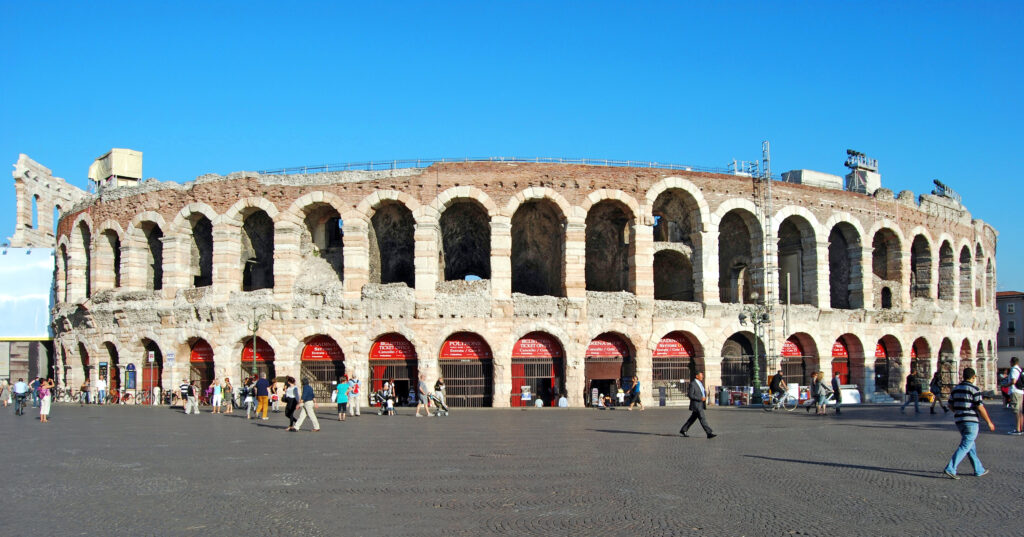
Of course, there is also the city’s symbol, the Arena of Verona, which rises majestically above the entire Piazza Bra. Originally built for gladiator fights, it is the third largest Roman amphitheater in the world. It was later used as a stone quarry and then hosted events and artisan workshops. Today, the Arena hosts numerous concerts. If you love opera, this is undoubtedly the place to be: the highly anticipated Arena Opera Festival is held every year from June to September. Not far away is the Castelvecchio Museum, which houses masterpieces of medieval, Renaissance, and modern art. Among the sculptures and paintings are works by Donatello and Michelangelo. While you’re there, keep your ears open: some people have reportedly heard the footsteps of Cangrande della Scala, a 14th-century lord who became the castle’s janitor.
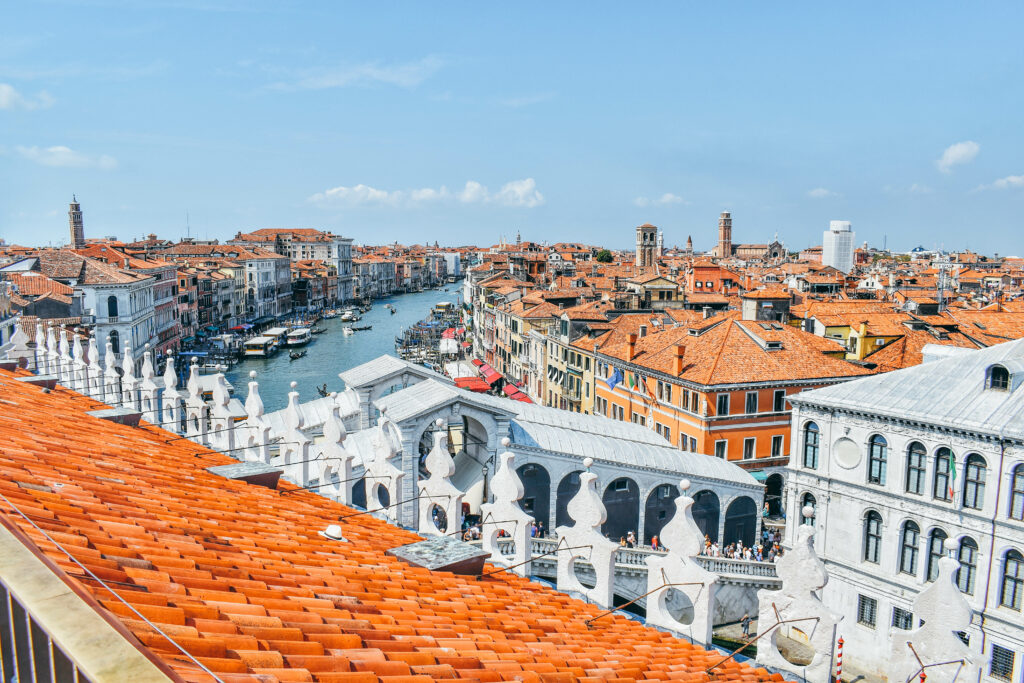
How would you describe Venice in three words? Calli, canals, and bridges! The Rialto Bridge is the oldest bridge to cross the Grand Canal. For years, it was the only way for pedestrians to cross the Grand Canal, and now it has been transformed into a kind of open-air market with 12 stores on each side. Napoleon called it the most beautiful salon in Europe, and one look at it reveals why. St. Mark’s Square, the only square in Venice (the others are called “campi”), is home to a basilica with Byzantine architecture. The high bell tower offers a marvelous view of the entire lagoon, and the Clock Tower marks the time, day, moon phases, and zodiac with its gold and blue background. Beware of passing between the two columns at the end of the square. In the past, this was where death sentences were read and executions took place. For Venetians, crossing them is considered bad luck!
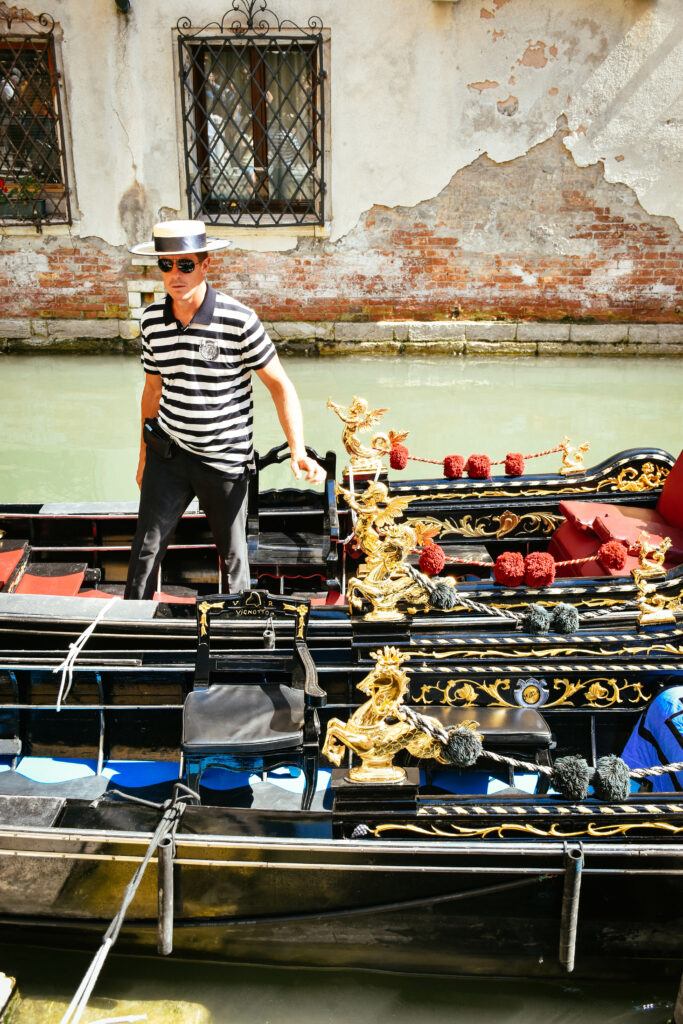
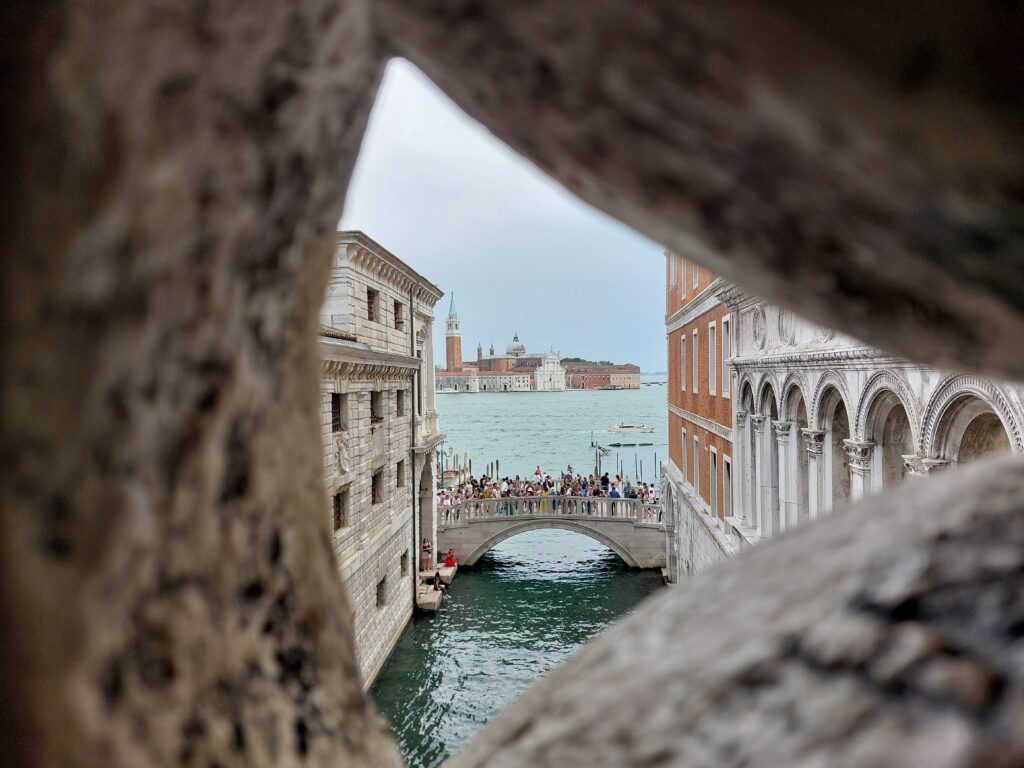
Then there is the Palazzo Ducale, where you can admire paintings by Titian and Tintoretto, as well as the Giants’ Staircase, where doges and their families were once crowned. Some of the prisons where condemned prisoners were held are located just inside the palace. Others, the Prigioni Nuove (from which even Casanova escaped!), are connected to the Palazzo Ducale by the Ponte dei Sospiri (Bridge of Sighs). The bridge has a romantic meaning today. In fact, it is said that if you pass under the bridge on a gondola and kiss at the stroke of the bells of St. Mark’s, your love will be eternal. However, the bridge is not actually romantic. Its name comes from the sighs of prisoners who were looking at freedom, the sky, and the lagoon one last time during their passage from the Doge’s Palace to the prisons.
Have you ever wanted to see Venice from a unique perspective? Get on board and experience our bike and barge tours in the Venice lagoon: The waterways of Venice by bike and barge, or Venice and its islands, from beach to beach.
Museums and unusual places to visit
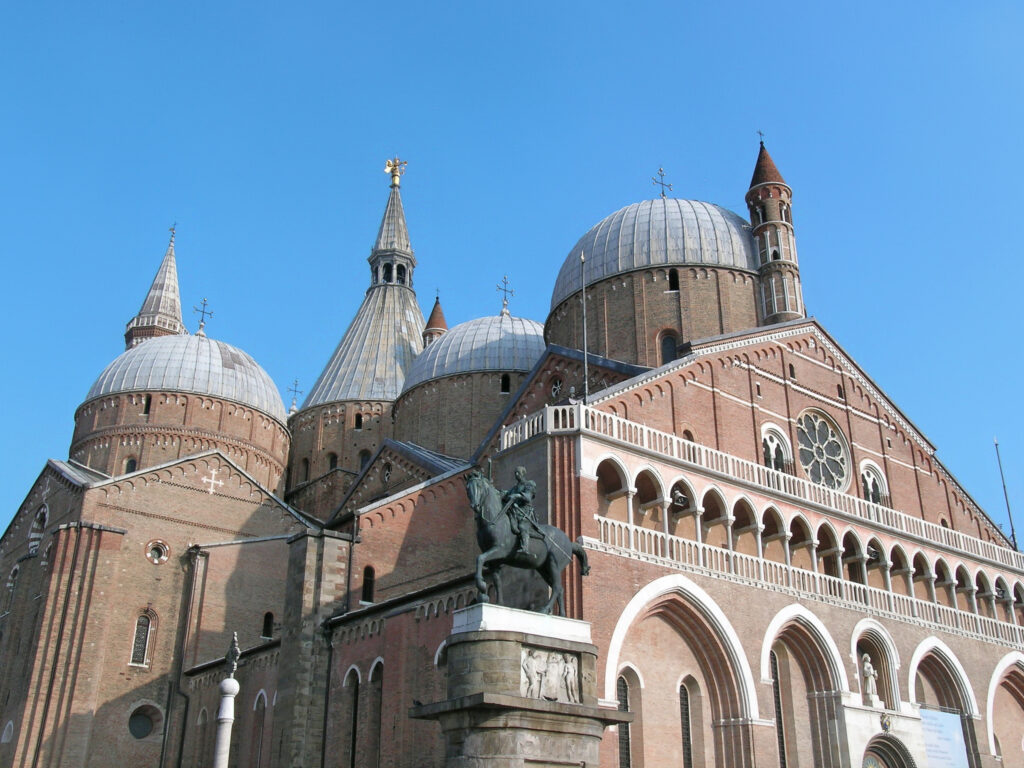
Padua is known as the “city of three withouts“: the city of the saint without a name because the Basilica of Saint Anthony is simply called “Il Santo”; the city of the meadow without grass because Prato della Valle was originally a marshy area; and the city of the café without doors because Caffè Pedrocchi was open 24 hours a day. Founded in the 1800s, the café was frequented by many artists and intellectuals, including Stendhal, who called it the best restaurant in Italy. Until 1916, anyone could sit at the tables, even just to read books or newspapers, without having to order anything.
The Scrovegni Chapel, a UNESCO World Heritage Site, is a small masterpiece by Giotto that you should not miss when you stop in Padua. Its frescoes depict biblical stories from the lives of Anne and Joachim to the Last Judgment. It is believed that Michelangelo was inspired by Giotto’s drawings when creating the majestic Sistine Chapel.
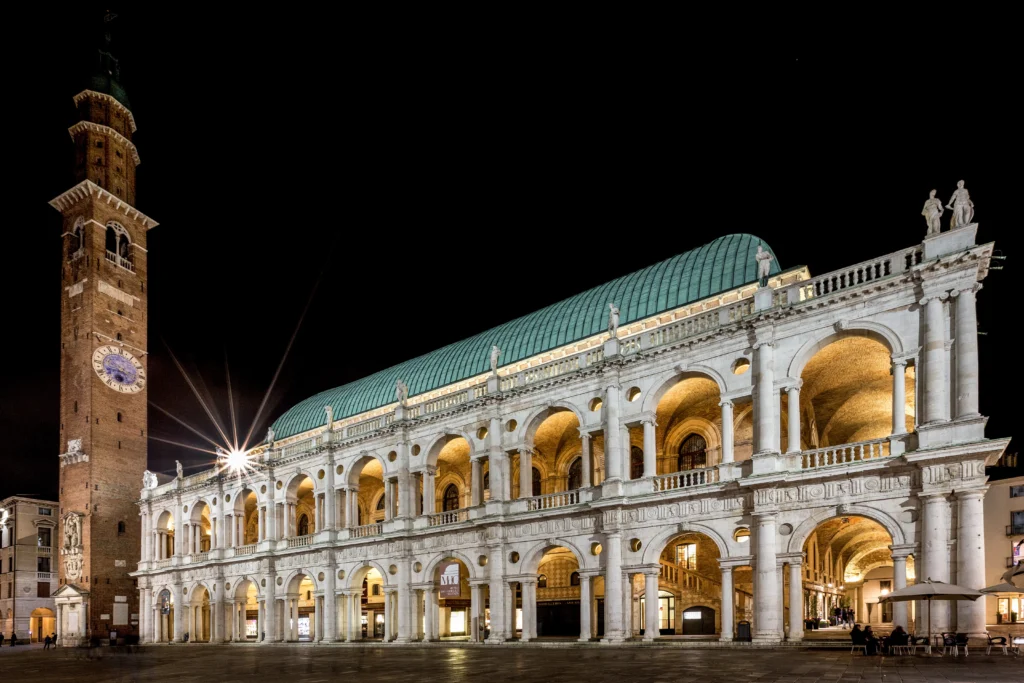
Vicenza is home to the Teatro Olimpico, the first permanent indoor theater of the Renaissance. Designed by Andrea Palladio and completed by Vincenzo Scamozzi, the theater is renowned for its spectacular use of perspective, which creates the illusion of an immense stage. Goethe called it “unspeakably beautiful.” Another masterpiece by the famous architect can be found in Piazza dei Signori: the Basilica Palladiana. This large public building, a symbol of Vicenza, often hosts interesting temporary exhibitions. If you go up to Monte Berico Square, you can enjoy a view of the entire city, with the tall tower and the greenish color of the basilica’s roof standing out.
If you’re planning a trip to Veneto, be sure to include the Cimitero dei Burci in Casier (province of Treviso) on your itinerary. In the past, the Sile River was the main route for communication between Treviso and Venice. Today, numerous remains of burci, large wooden boats that were used to transport goods, are scattered along one of its bends. The burci were sunk as a protest by barcarians in the wake of the river transport crisis. The silhouettes of the wrecks peek out amidst the lush vegetation, and you can observe them up close thanks to long walkways.
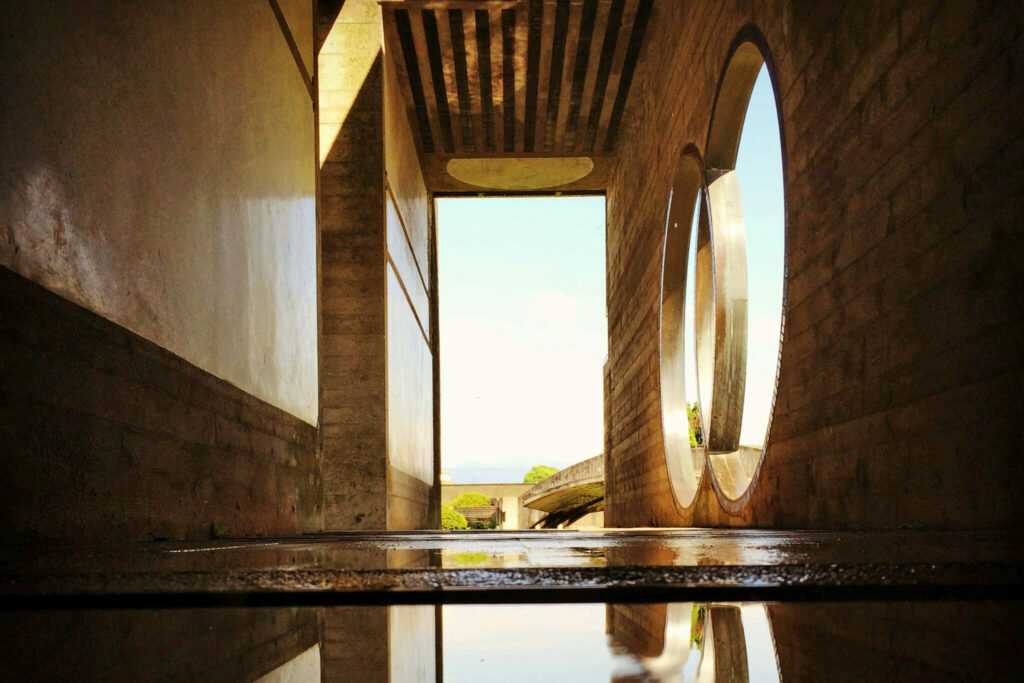
Did you know that a scene from the film Dune: Part Two was filmed in Veneto? The Brion Memorial, a monumental funerary complex in San Vito di Altivole designed by architect Carlo Scarpa, was the chosen set. Commissioned by Onorina Tomasin Brion after the death of her husband Giuseppe Brion, the work is a masterpiece of the 20th century. The memorial celebrates life through nature and loving symbolism, culminating in the figure of two intertwining rings at the entrance.
Spectacular nature
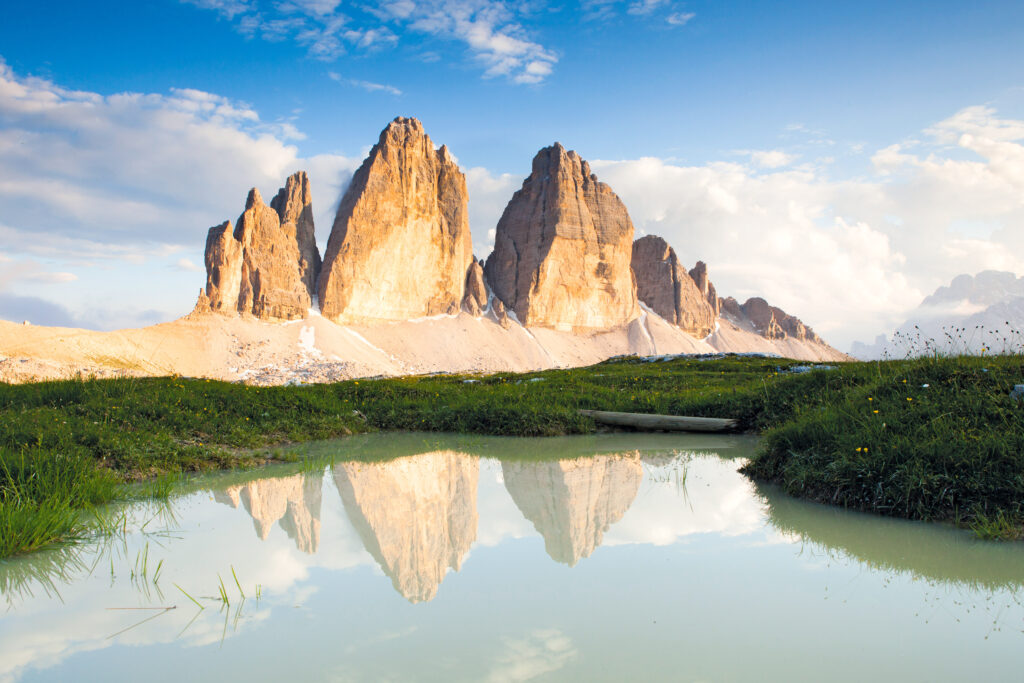
The Dolomites are also located in Veneto! Designated a UNESCO World Heritage Site in 2009, the Dolomites enchant visitors with scenic routes, turquoise lakes, and mountain huts where you can rest after a hike. This is a place of discovery and adventure that can be explored at your own pace. You will pass more or less steep passes and elevations while being surrounded by an unspoiled natural landscape that offers unique spectacles. One example? At sunrise and sunset, the peaks are tinged with a clear pinkish hue in a phenomenon called alpenglow. If you want to visit the Dolomites check out our article: Experience the Dolomites like a local: authentic travel tips
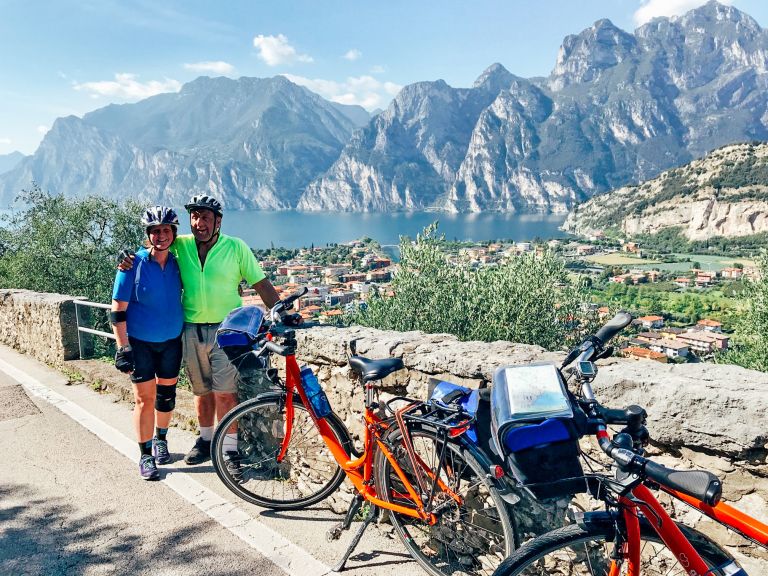
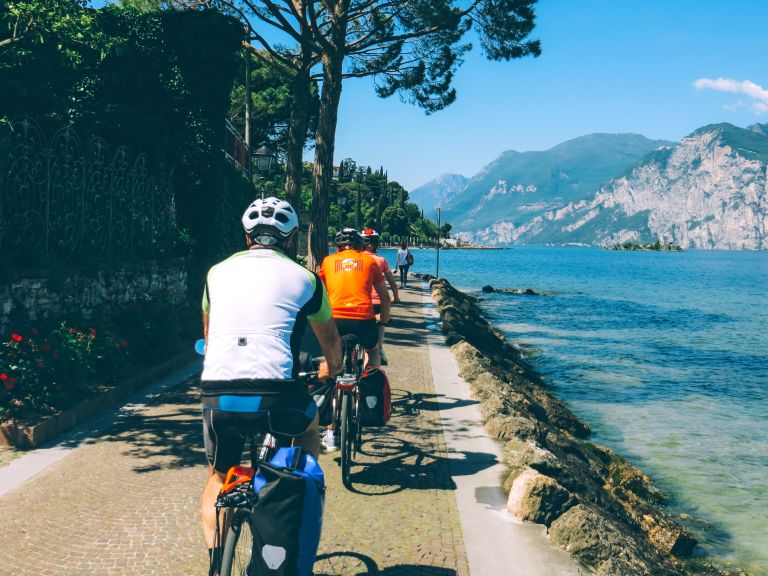
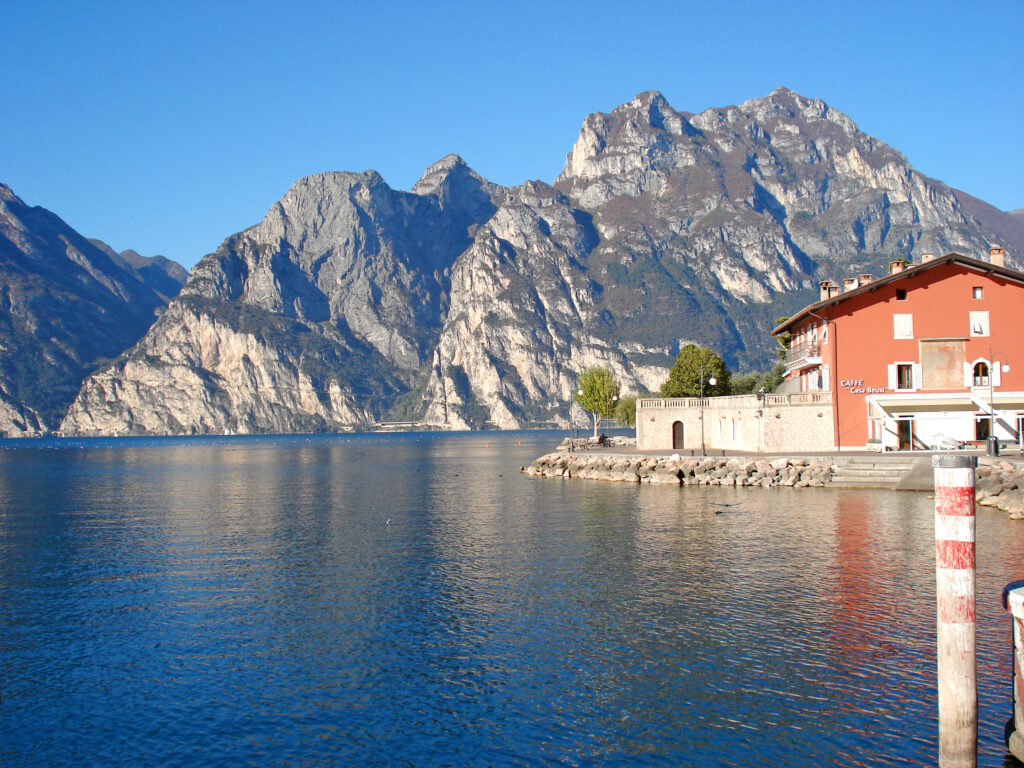
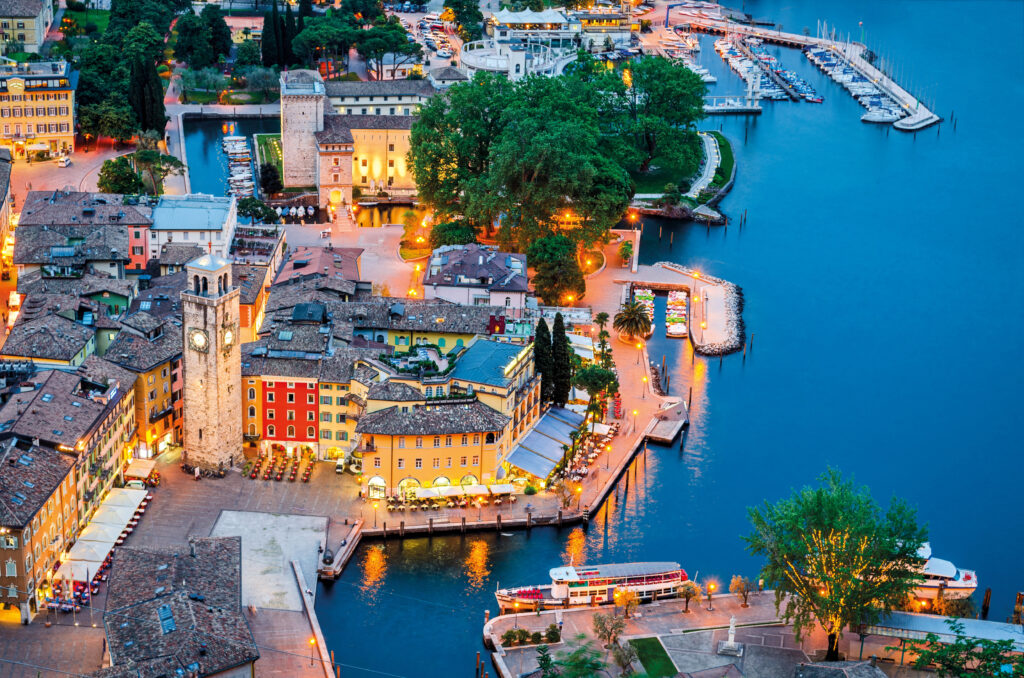
How could we forget Lake Garda? It is an expanse of turquoise water, and many small villages with an authentic atmosphere rise on its shores. Lazise, for example, is accessed through ancient Roman gates and features high walls and the Scaliger Castle, which dominates the entire scene. Lazise is also the perfect place for a family vacation. Some of the most beautiful amusement parks in Italy are located nearby, including Gardaland and Parco Natura Viva, a wildlife park dedicated to protecting endangered species.
Then there’s Bardolino, which has one of the area’s most picturesque lakefront promenades. Here, you can find brightly colored small boats moored and purple bougainvillea cascading from the balconies of the small historic center. There are also little restaurants where you can enjoy fresh seafood. Stop at one of the wineries to taste Bardolino, the local wine. If you visit between September and October, you can also attend the Grape and Wine Festival!
In the winter, Lazise and Bardolino come alive with Christmas kiosks, merry-go-rounds, and plenty of delicious food. You can stroll between the stalls while enjoying a hot chocolate or skate on one of the two ice rinks.
Further south is Peschiera del Garda, which offers a beautiful view of Lake Garda. From the charming Porta Brescia Bridge, you can reach the center of Peschiera. Get lost in its narrow streets lined with taverns, artisanal ice cream parlors, and souvenir stores until you reach the small square where you can sit and enjoy the beautiful weather.
Typical food to taste, from sarde in saor to tiramisù
In Veneto, the ingredients are simple: fresh fish, meat, rice, cheese, and cured meats. They come from the land, sea, and mountains. Where better to taste typical Venetian dishes than in one of the small osterie or at a traditional festival? Here are some tips.
If you’re in the Veneto region, you can’t fail to try the famous salt cod, whether it’s mantecato or Vicenza-style. Every year in September, the Festa del Bacalà takes place in Sandrigo (province of Vicenza), a historical event where you can taste the original recipe and attend the investiture ceremony of the new Knights of Bacalà. Instead of a sword, dried cod is used! There is even a Brotherhood!
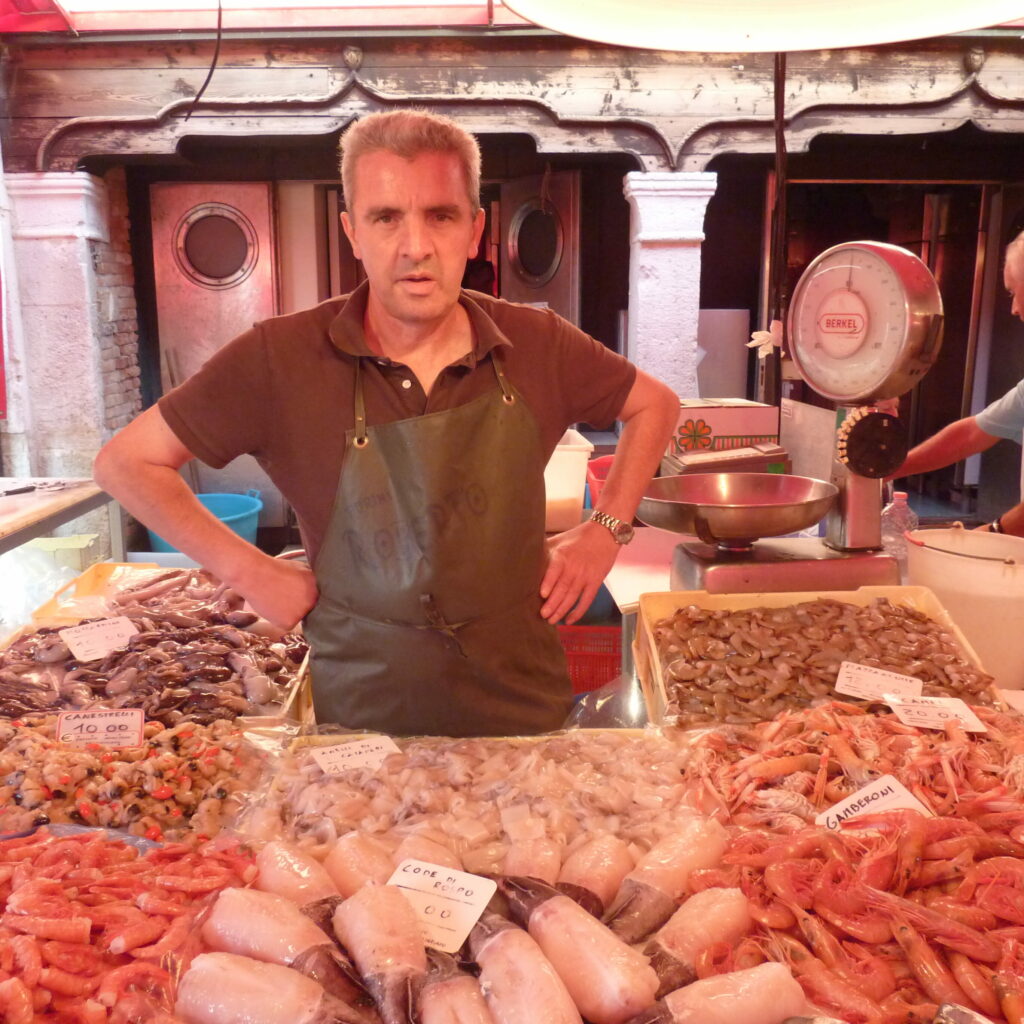
Venetian cuisine has humble beginnings. One example is sarde in saor, a typical Venetian dish born in the 14th century. It was prepared by the poorest because the ingredients could easily be found. It consists of fried sardines marinated in a sweet and sour vinegar and onion dressing with pine nuts and raisins. Originally, sailors used this method to preserve fish during long sea crossings, and over the years, it became a staple dish in Venetian cuisine. Today, it is easy to find it served cold in one of the many bacari (taverns) lining the canals of Venice. It is often offered as a cicchetto, or appetizer, to accompany a good glass of wine. Chioggia is undoubtedly the right destination for seafood lovers: in July, the Sagra del Pesce (Fish Festival) takes place, with lots of stands, a lively atmosphere, and ancient fishermen’s nets hanging to decorate the square. Long tables are set up where you can eat with friends. Chioggia is also home to one of the oldest fish markets in Italy. It’s easy to recognize: just follow the big red marquee and the smell of freshly caught fish!
If you prefer meat and strong flavors, try Venetian-style liver cooked with white onions. During the holidays, it is common to eat cotechino, a pork sausage often served with lentils. In Verona, it is easy to find cotechino served with pearà, a Veronese dialect word meaning “pepper.” This sauce is made with stale bread, ox marrow, meat broth, and lots of pepper. This peasant dish is linked to an ancient legend. It is said that the Lombard king Alboin’s cook first cooked it to boost the morale of Princess Rosmunda, who was forced to marry Alboin and was sad after her father’s death at Alboin’s hands. There are also cured meats and cheeses, such as soppressa, which is often eaten with hot polenta, and Asiago or Montasio.
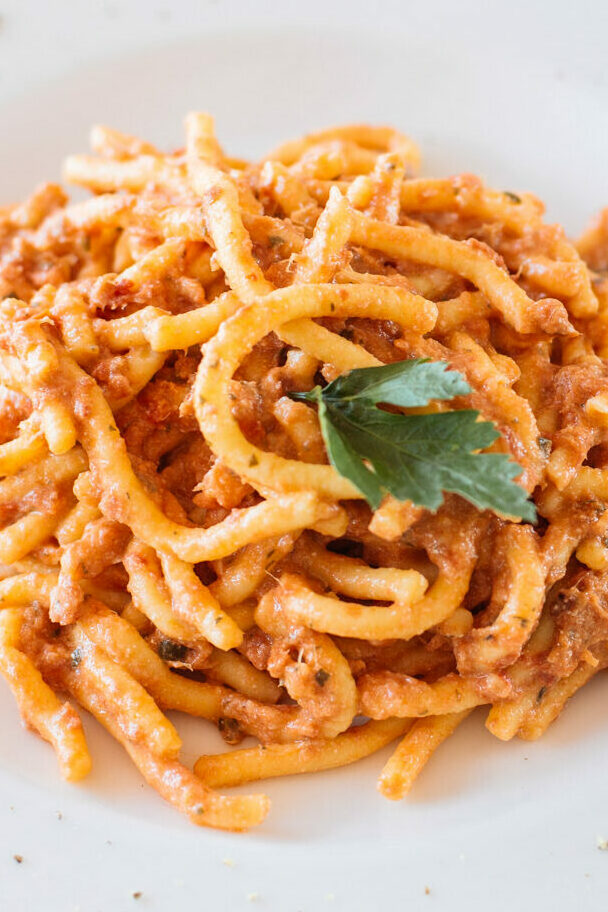
Which first course should you choose? There are bigoli in sauce, a pasta similar to spaghetti dressed with an anchovy or sardine sauce; bigoli all’arna with duck sauce; risi e bisi, a risotto with fresh peas; and rice with tastasal, spiced pork mince. Another famous dish is risotto with radicchio. If you have the chance, we recommend trying it at the Red Radicchio Fair in Casaleone. There, you can taste not only the risotto but also its pairings with cheeses, meats, and even desserts!
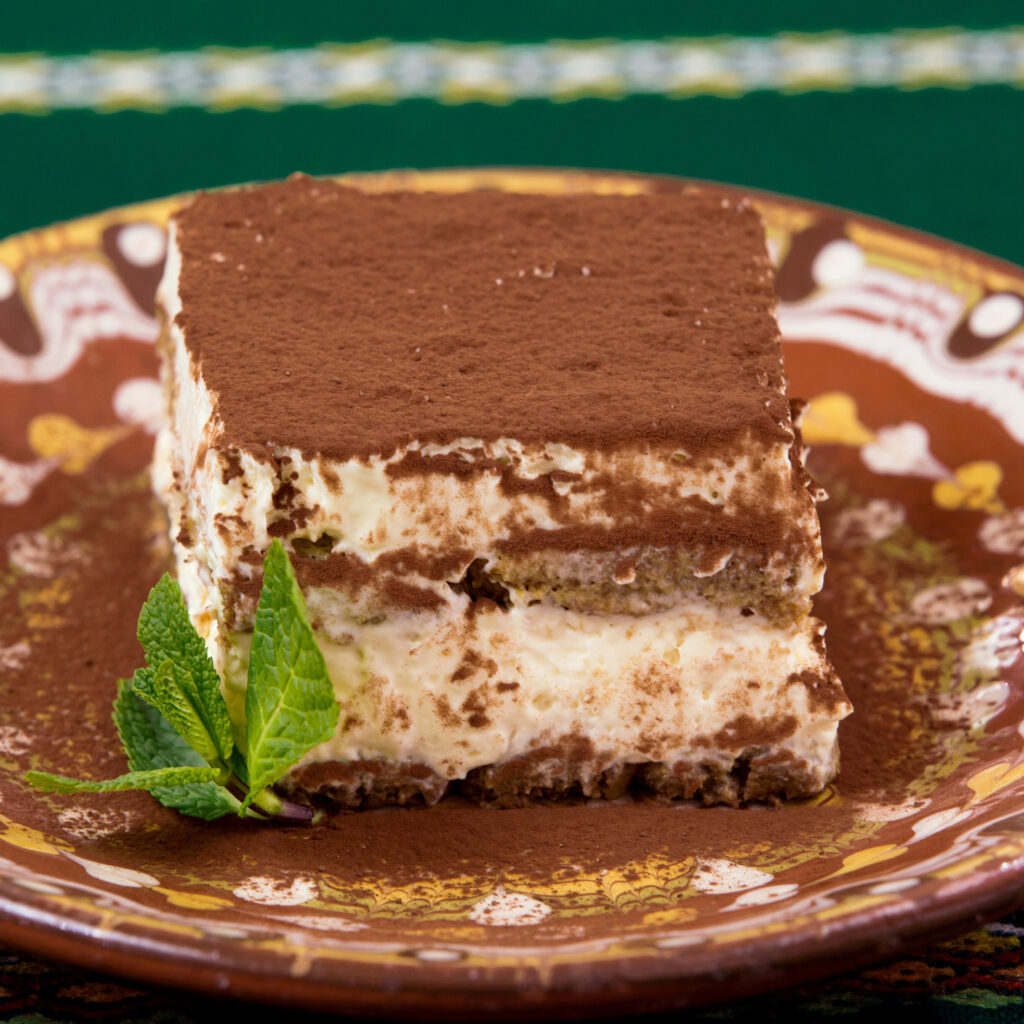
Why not end with a delicious tiramisu? Made with ladyfingers, coffee, and mascarpone cheese, tiramisu is the Veneto dessert par excellence. Its place of origin is still debated: some claim it was invented in Friuli-Venezia Giulia, while others claim it was invented in Veneto. According to Venetian tradition, the dessert was first prepared in the 1950s at the Le Beccherie restaurant in Treviso. A version with mascarpone cheese was developed from a simple dessert made with zabaglione and coffee, and it became a popular menu item.
The Jujube Festival takes place in Arquà Petrarca on the first and second Sundays of October. The village is transformed into a medieval setting with flag-wavers, drummers, and people dressed in period clothing. The town center is filled with markets selling traditional products and food stands. It’s the perfect opportunity to try jujube broth, a liqueur made from an infusion of jujubes. Jujubes are also often used to make desserts, such as tiramisu. Want to feel like a real local? Try the mezzo e mezzo, an iconic aperitif from the Nardini distillery. It’s called that because it consists of half rhubarb liqueur and half bitter liqueur.
Save the date: festivals and events not to be missed!
How could we start anywhere but with the famous Venice Carnival? Every February, the streets of Venice come alive with people dressed in extravagant period costumes and traditional masks. This centuries-old tradition combines the ancient art of mask-making—with contests to determine the most beautiful mask—with gondola parades. The Carnival opens with the Flight of the Angel in St. Mark’s Square. A young woman dressed as an angel descends on a rope from the bell tower to the center of the square, where she is greeted by the Doge.
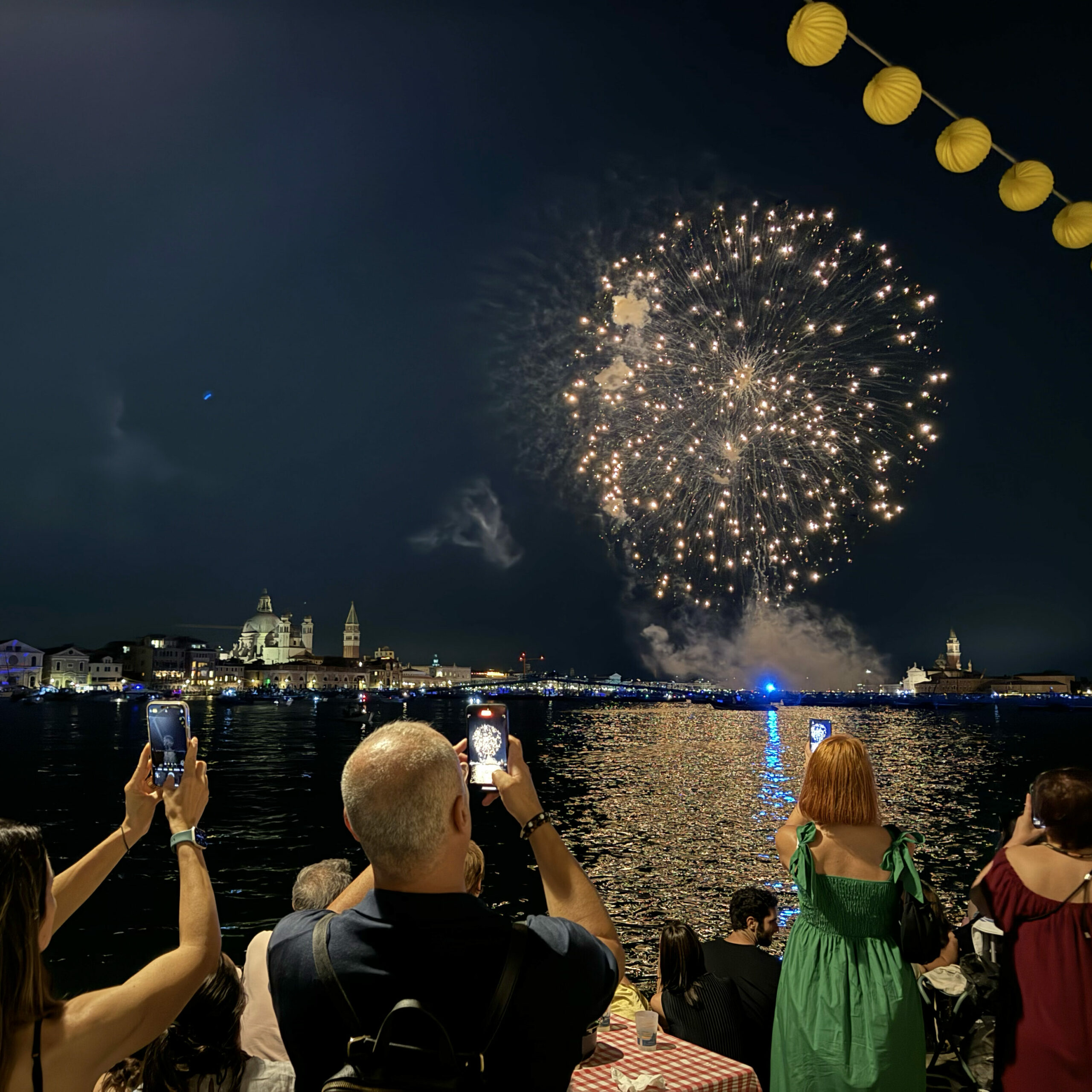
There’s another can’t-miss event in Venice that we love: the Feast of the Redeemer, Festa del Redentore. On the third Saturday in July, Venice is filled with stalls, kiosks, and long tables where everyone eats together to commemorate the end of the 16th-century plague epidemic that hit the city. The highlight is the famous floating bridge of boats, which allows people to walk across the Giudecca Canal from the Zattere to the Palladian Church of the Redeemer. The two highlights? Charity fishing in the Redentore parish and a fireworks display in St. Mark’s Basin.
The Venice Historical Regatta takes place on the first Sunday in September on the Grand Canal. It begins with a long historical procession consisting of traditional boats with figures dressed in period costumes to recreate the atmosphere. Then, the actual regatta begins, with brightly colored boats competing against each other for the hard-fought flagpoles. The flags symbolize victory and are handed out during the final prize-giving ceremony.
The Giostra della Rocca in Monselice is a medieval reenactment created to commemorate the welcome that Frederick II received when he passed through the city in 1239. Nine districts clash in a series of activities, including archery and relay races. Points are added up from the individual challenges, and on November 1, the winning district is named. The prize is the coveted Palio dei Santi, a red silk banner displayed until the following year.
Verona takes a step back in time with Tocatì, the International Festival of Street Games. The name comes from the Venetian expression toca a ti, meaning it’s your turn. Here, in fact, adults and children can participate in traditional games of the past, such as bell, tug-of-war, poison ball, marbles and many more. Every year there are dances, music and games from a different region or country, making Verona a true crossroads of cultures. A bridge between different generations, a perfect event for all families.
Take a step back in time with Tocatì, Verona’s International Festival of Street Games. Here, adults and children alike can participate in traditional games from the past, such as tag, tug-of-war, poison ball, marbles, and many more. Each year, the festival features dances, music, and games from a different region or country, making Verona a true crossroads of cultures. It’s a bridge between different generations and a perfect event for all families.
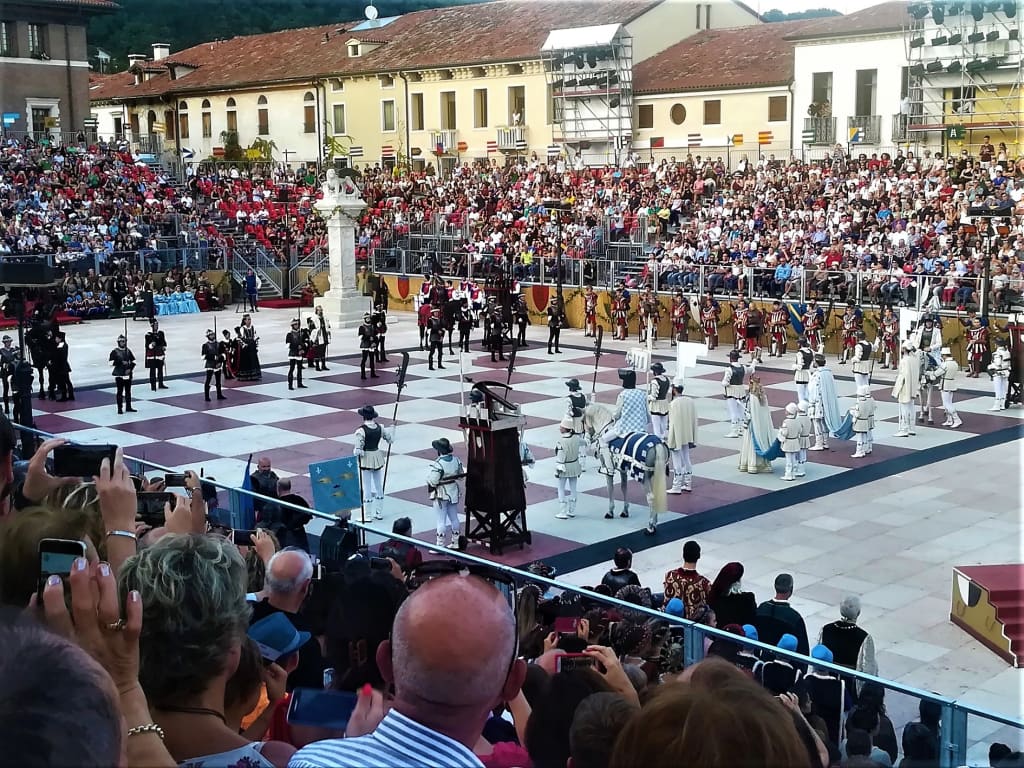
Have you ever seen a live chess game? In Marostica, you can! Set against the backdrop of the castle walls, this historical reenactment takes place every two years and features more than 650 costumed participants, some of whom play the chess pieces. The game is inspired by an ancient legend. It is said that two knights competed for the love of Lionora, the daughter of the castellano of Marostica. To avoid a deadly duel, the king decided that Lionora would marry the knight who won the chess match. The game reenacted in Marostica is not the original, as some moves were lost. Instead, a famous ancient game was chosen to recreate. A master of ceremonies moves the pieces on a real chessboard, and the living pieces perform the move according to his directions.
4 movies about Veneto
Brenta Connection by Cristian Tomassini
Inspired by a true event that occurred in Vicenza in 2022. What happens when six unlikely characters find a treasure?
Welcome Venice by Andrea Segre
Two fishermen from Giudecca witnessed the transformation of Venice and its people.
Io sono Li by Andrea Segre
Shun Li, a Chinese immigrant, forms a deep friendship with Bepi, a poet of Slavic descent who is now a fisherman, in a bar in Chioggia. It is the story of a friendship that faces prejudice and gossip.
Le città di Pianura by Francesco Sossai
An unlikely trio—two 50-year-old drinking buddies and a 20-year-old architecture student who is not in school—embark on a journey across the Venetian plain in search of hidden treasure, as the legend they are following says.
We think this Italian region is one of the destinations not to be missed for a bike tour or a bike and barge holiday, so all you have to do is checking our organized tours!
Now that you’ve read the article, are you eager to set off and explore this fascinating region? Take a look at Girolibero’s trips to Veneto! From Mantua to Venice Bike and Barge self-guided or guided girolibero.com From Venice to the Gulf of Trieste Bike and Barge self-guided or guided girolibero.com Venice and its islands, from beach to beach Bike and Barge self-guided or guided girolibero.com From Innsbruck to Venice Cycling self-guided girolibero.com Bolzano-Resia Pass-Lake Garda Cycling self-guided girolibero.com Bolzano-Verona-Venice Cycling self-guided girolibero.com Innsbruck-Bolzano-Verona Cycling self-guided girolibero.com Bolzano – Resia Pass – Verona/Mantua Cycling self-guided girolibero.com From Vicenza to Venice 5 days Cycling self-guided girolibero.com From the lands of Venice to Croatia Cycling self-guided girolibero.com Lake Garda for families Cycling self-guided girolibero.com South Tyrol for families 5 days Cycling self-guided girolibero.com Lake Garda to the Venice lands Cycling self-guided girolibero.com From Venice to Vicenza 5 days Cycling self-guided girolibero.com Veneto region for families Cycling self-guided girolibero.com Venice lands 8 days Cycling self-guided girolibero.com16 Travel tips in Veneto