Things to do in Tuscany: art cities, villages, cycling routes
It’s easy to understand why Tuscany is one of Italy’s most beloved regions. Famous for its Renaissance cities brimming with history and art, it also boasts charming villages nestled in lush green hills, such as San Gimignano and Volterra, and excellent cuisine that will delight every tourist’s palate.
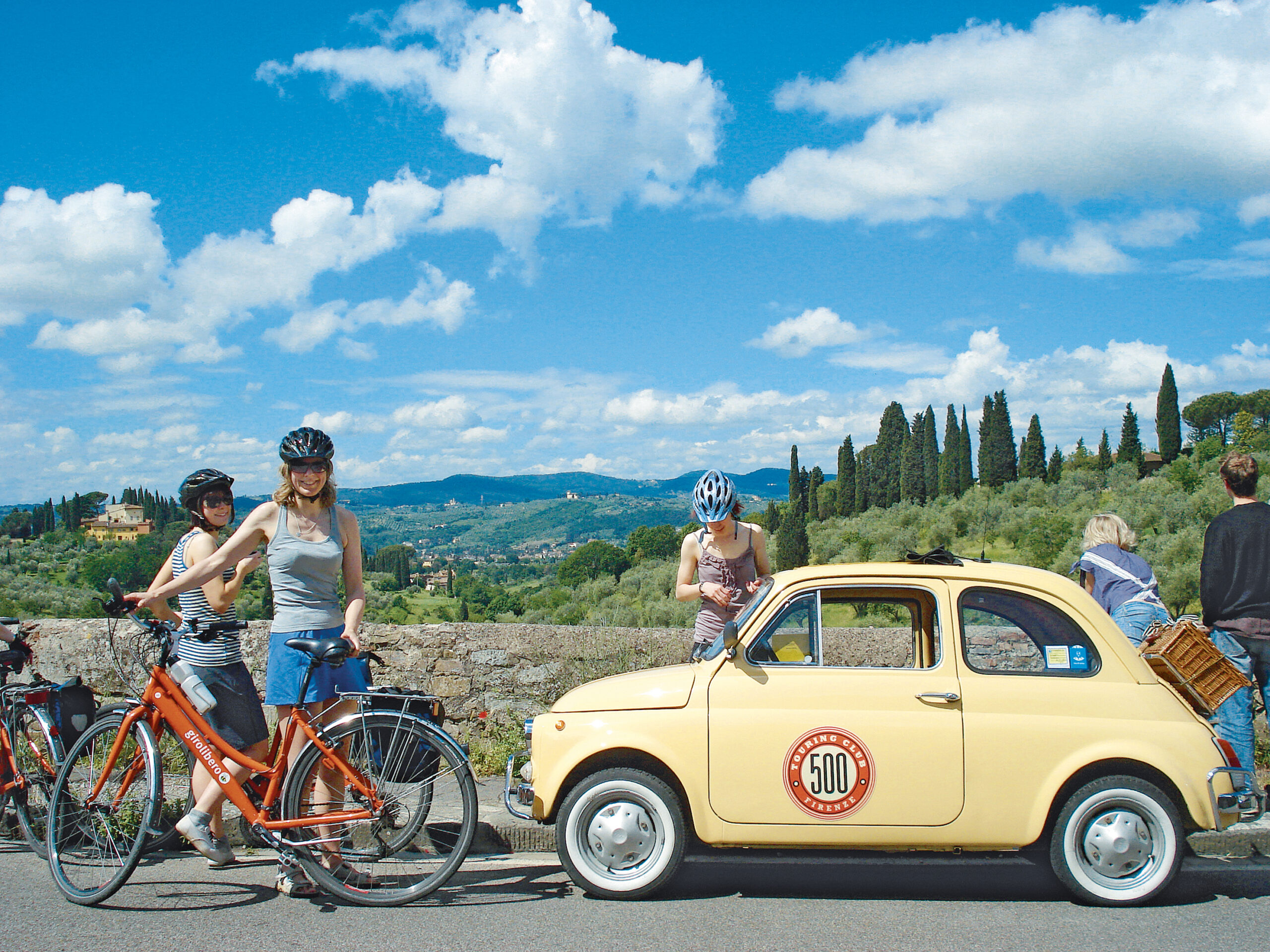
Tuscany is also an ideal destination to discover by bike, as you can cycle through unique landscapes and experience the authentic spirit of the area, from the cities of Pisa and Florence to the rolling hills of Chianti. After more than 20 years of organizing bike tours in Italy, we have developed a few Tuscany self-guided bike tours, with different itineraries and styles to suit every type of traveller while staying true to the region’s unique character.
Here is a useful travel guide with our recommendations on the best cities and villages to visit, and also typical dishes and local wines to try. Ready to start planning your next trip?
Florence, cradle of the Renaissance
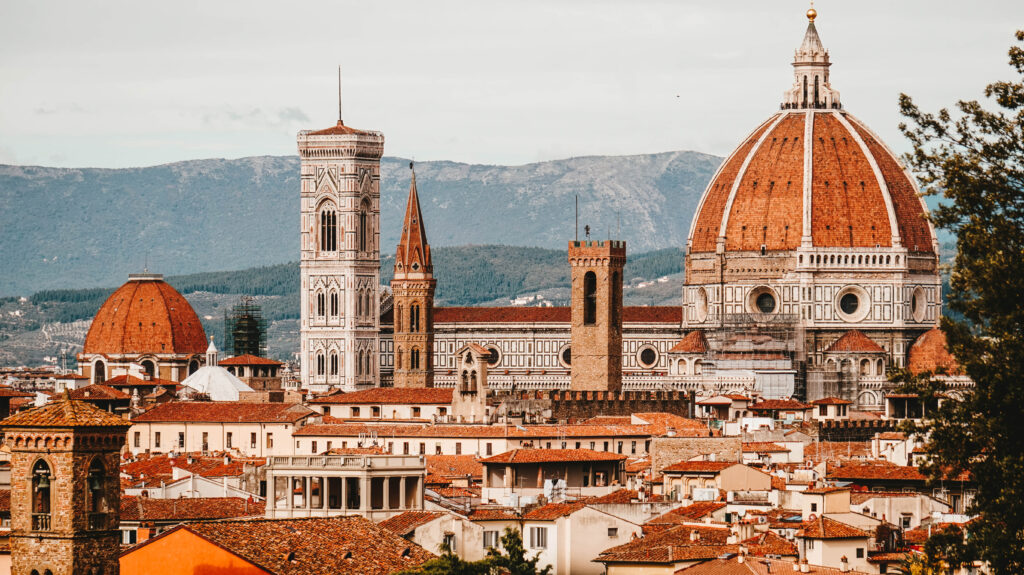
Florence reached its peak under the influence of the Medici family. The city is home to an extraordinary concentration of artworks from this period, making it truly unique and drawing millions of visitors every year. One of these is the Cathedral of Santa Maria del Fiore. At the end of the nave, look up. Brunelleschi’s dome is breathtakingly beautiful, and you can admire the Last Judgment frescoes. If you don’t suffer from vertigo or fear enclosed spaces, you can walk around the entire perimeter of the dome and observe every detail up close. Just a few steps away stand the Baptistery (currently under renovation) and Giotto’s bell tower. Nearly 90 meters high, it has more than 414 steps. Climbing all of them takes a bit of effort, but you can stop and catch your breath on each floor until you reach the top. There, you can enjoy a wonderful view of the entire basilica and the center of Florence.
With a combined ticket, you can also visit the Museo dell’Opera del Duomo, which houses masterpieces by Michelangelo, Donatello, and Brunelleschi.
Florence’s artistic wealth doesn’t end here. We suggest visiting other churches as well, such as Santa Maria Novella, close to the train station, which has Masaccio’s Trinità; Santa Croce, with the graves of Dante Alighieri and other important Italian characters; and Santa Maria del Carmine, a small church hidden in a corner of Florence with a treasure inside: Cappella Brancacci, also created by Masaccio.
Inside the Church of San Lorenzo, you can find a hidden gem: the Medici Chapels. The solemn interiors have very high, elaborately decorated ceilings, and a small room contains the tombs of Lorenzo and Giuliano de’ Medici. It is one of the most surprising places in Florence.
Museums to see in Florence
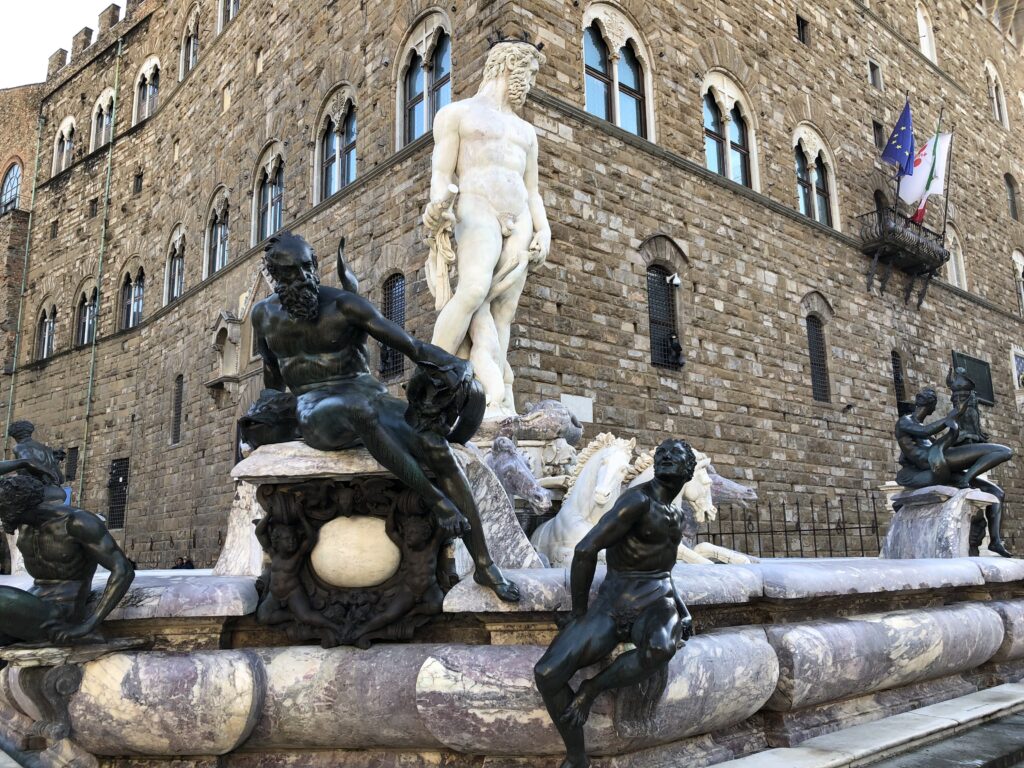
Of course, Florence is also home to some of the world’s greatest museums. The Galleria dell’Accademia hosts Michelangelo’s David, one of the most iconic sculptures ever created. Take a moment to observe the bulging veins, the tense muscles, and the determined gaze. Considering that Michelangelo was only 26 years old when he completed it, the sense of wonder becomes even stronger. At the Bargello Museum, you can admire Donatello’s David, smaller in scale but equally fascinating. The museum also preserves two famous panels from the 1401 Florence competition. Two great architects, Brunelleschi and Ghiberti, competed against each other for the opportunity to decorate the north door of the baptistery. Who won? The outcome was surprising, but we won’t spoil it for you.
No visit to Florence would be complete without the Uffizi Gallery, which has more than 1,800 paintings from various periods and artists. Among them are Botticelli’s Venus, Leonardo da Vinci’s Annunciation, Michelangelo’s Tondo Doni, and Caravaggio’s Medusa. It is impossible to describe them all; only by admiring them in person can one grasp their majesty.
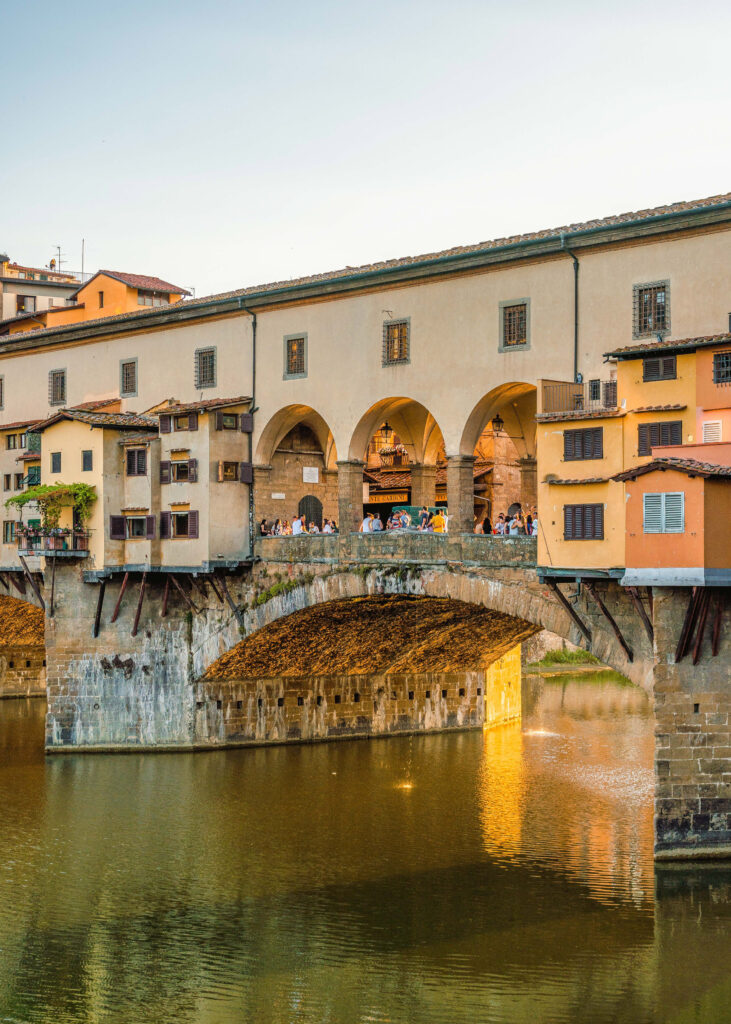
Just a few steps from the Uffizi is the Palazzo Vecchio, which was the seat of government for the ancient Florentine Republic. Visiting it is like stepping into the past. Once you cross the Ponte Vecchio bridge, you will reach the immense Renaissance palace of Palazzo Pitti. Each room contains a small art gallery with hanging paintings, crystal chandeliers, and plenty of gold.
There are many other places in Florence that you shouldn’t miss, but one stop we particularly recommend adding to your itinerary is Piazzale Michelangelo. It is the perfect place to enjoy a stunning view of the entire city. If you go at sunset, you might encounter singers and musicians with guitars, trumpets, and other instruments, ready to entertain the crowd.
Pisa and its “miracles”
Pisa is a city that captivates visitors, whether it’s thanks to the famous Leaning Tower, which never fails to amaze, or to the romantic scenery along the Arno, especially when strolling beside the Lungarni.
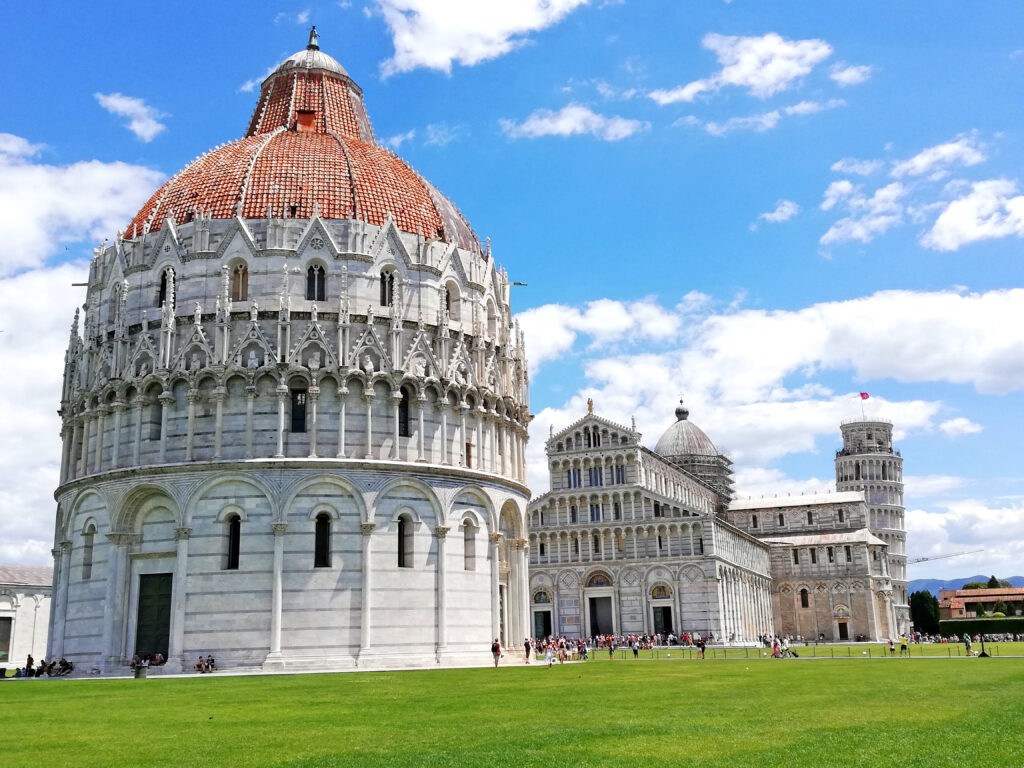
Piazza del Duomo, also known as Piazza dei Miracoli. The name was coined by the writer Gabriele d’Annunzio, who described the four extraordinary monuments gathered here as “miracles”: the Cathedral, the Baptistery, the Camposanto Monumentale, and the Bell Tower, better known as the Leaning Tower of Pisa.
The Pisa Cathedral stands in the green square with its imposing marble facade. The interior is solemn, featuring high coffered ceilings and rich sculptural decorations. Like many ancient churches, the cathedral is surrounded by legends: one tells of mysterious holes in the façade said to be marks left by the Devil’s nails. Jealous of the beauty of the square, the Devil allegedly tried to destroy the cathedral, only to be chased away by an angel who saved the entire complex.
The Leaning Tower of Pisa is the cathedral’s bell tower, and its architecture is fascinating. Its tilt is due to the ground’s inability to support such a heavy structure. Climbing 294 steps will take you to the top, where you can enjoy a splendid view of the entire square. Nearby are the Romanesque-Gothic Baptistery and the Camposanto Monumentale, which features 43 arches, ancient Roman sarcophagi, and 14th-century frescoes. Leaving Piazza dei Miracoli, pass through Piazza dei Cavalieri, dominated by the Palazzo della Carovana, before reaching the Lungarno Mediceo. This lively area, where historic buildings overlook the Arno River, offers one of Pisa’s most charming and romantic atmospheres—perfect for a slow walk at the end of the day.
By the way, did you know that you can cycle from Pisa to Florence?
Lucca, the city of 100 churches
Lucca, a beautifully preserved medieval town with a distinctly Tuscan character. Encircled by its impressive Renaissance walls, Lucca is traditionally known as the city of 100 churches—a reflection of its long religious and artistic history. One of the most striking landmarks is the Lucca Cathedral (San Martino), whose asymmetrical façade immediately catches the eye. The right side of the church was adapted to accommodate a pre-existing bell tower, resulting in its slightly “compressed” appearance. Inside, the cathedral holds remarkable treasures, including the tomb of Ilaria del Carretto and the Volto Santo of Lucca, an ancient wooden crucifix said by legend to have been carved by angels.
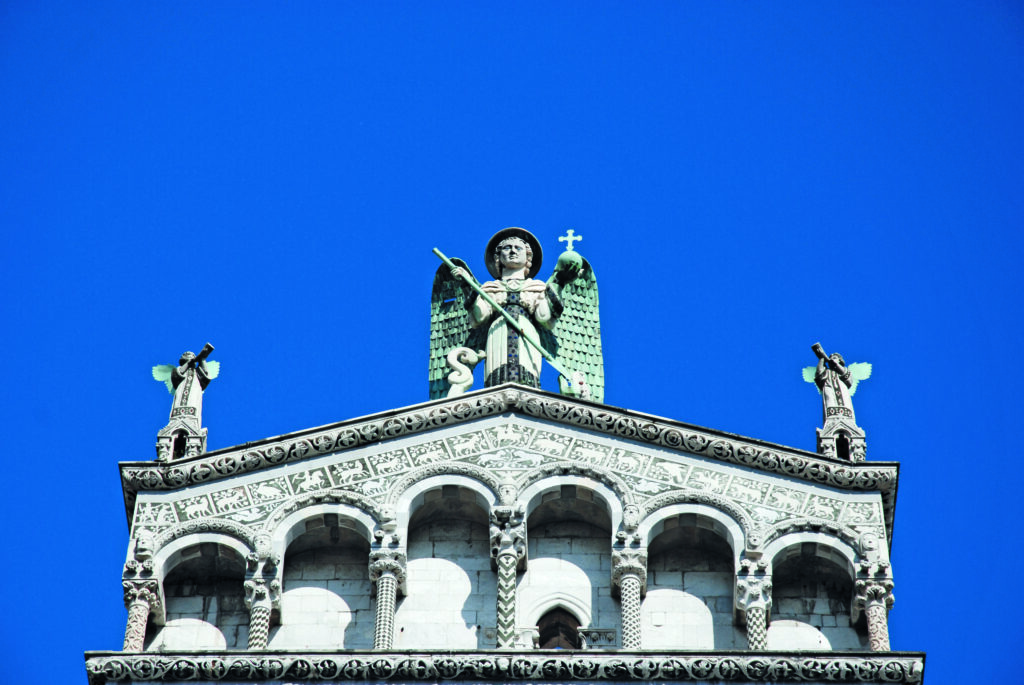
Another notable church is San Michele in Foro, built on an ancient Roman forum. Its tall, richly decorated façade is crowned by a statue of St. Michael slaying the dragon. Look closely: according to legend, the archangel wears an emerald ring, and when it catches the light, it is said to grant wishes.
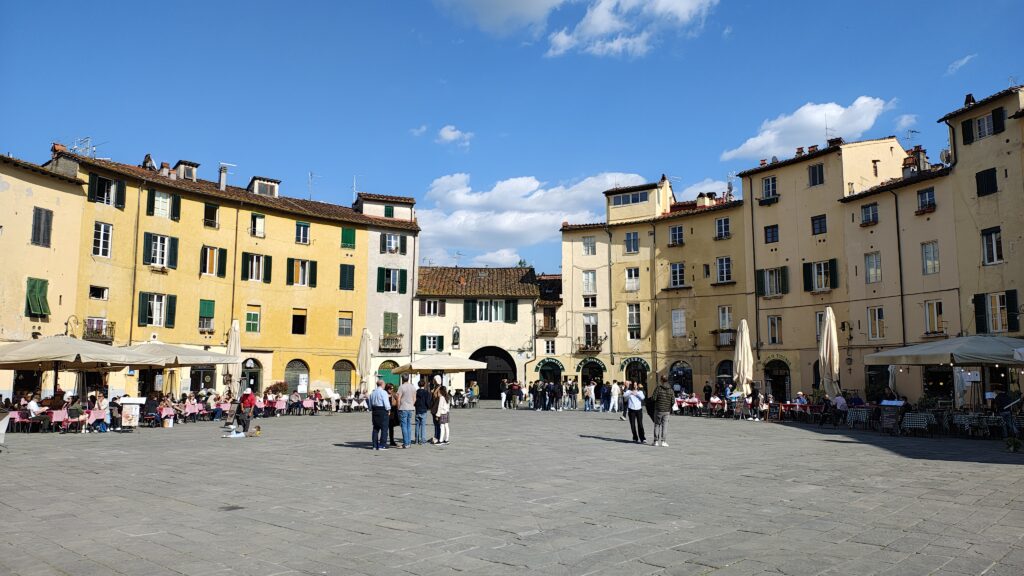
Perhaps the most characteristic place in Lucca is the elliptical Piazza Anfiteatro, built on the ruins of an ancient Roman amphitheater. Surrounded by colorful buildings, shops, small bars, and typical restaurants, the square’s atmosphere today is one of pure vitality.
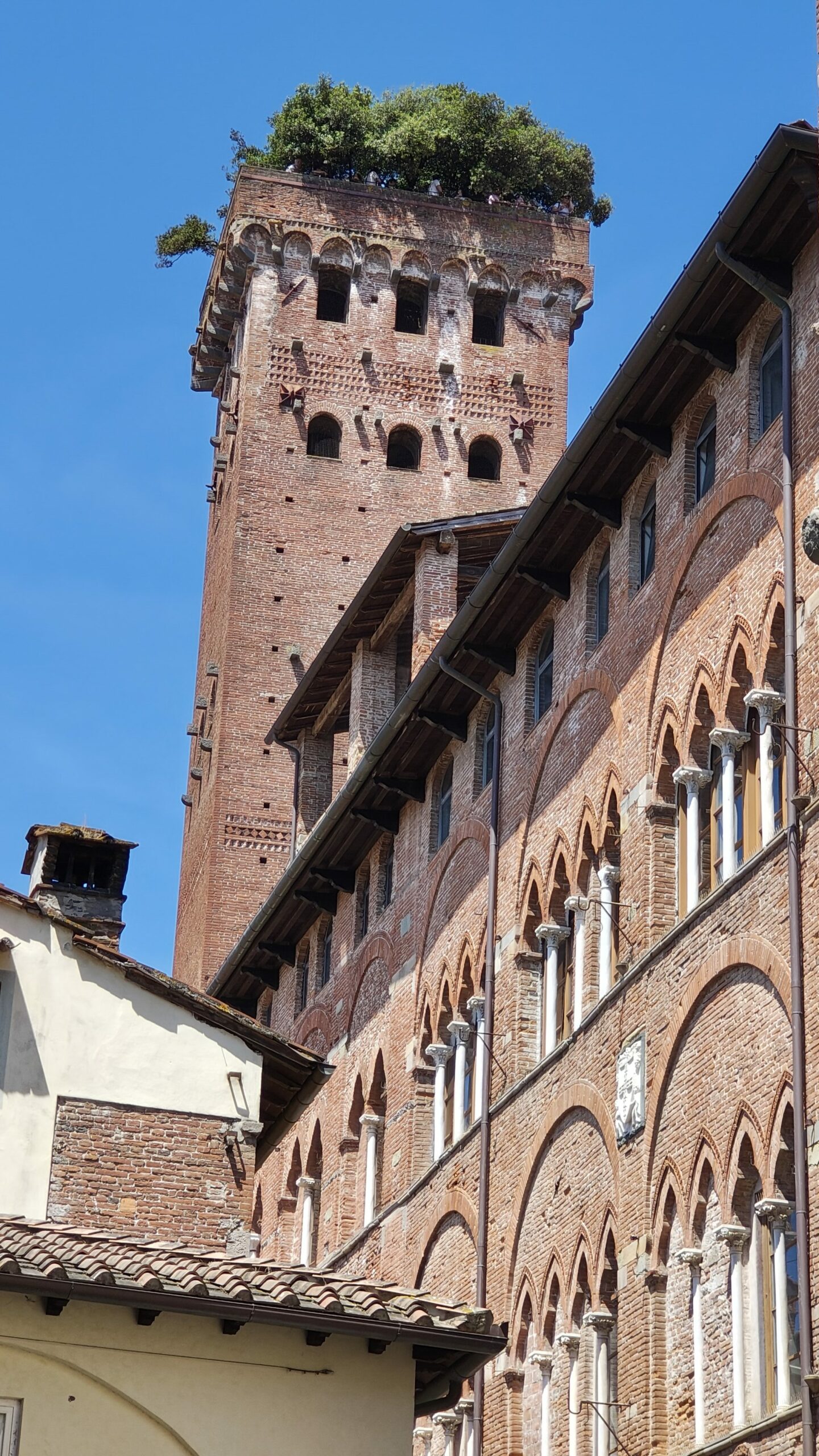
During your trip to Lucca, we recommend stopping at the Guinigi Tower. What makes it truly unique is the small garden on its rooftop, where seven holm oak trees grow against the skyline. From above, Lucca reveals itself in a magical way—it feels almost like standing in a grove suspended in the sky.
Siena, the city of the Palio
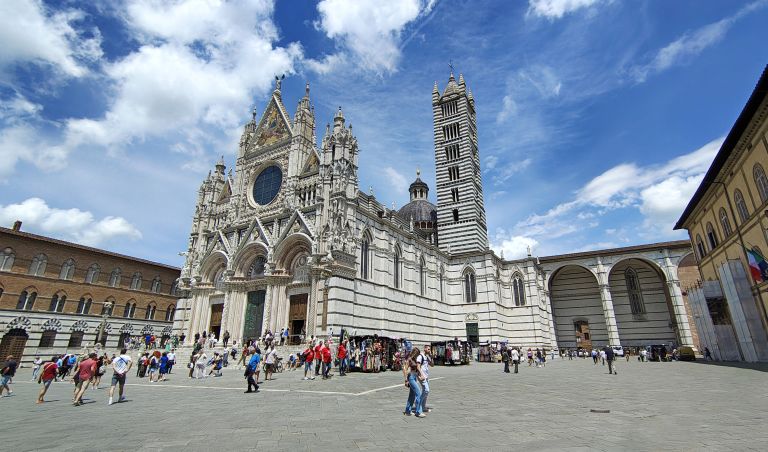
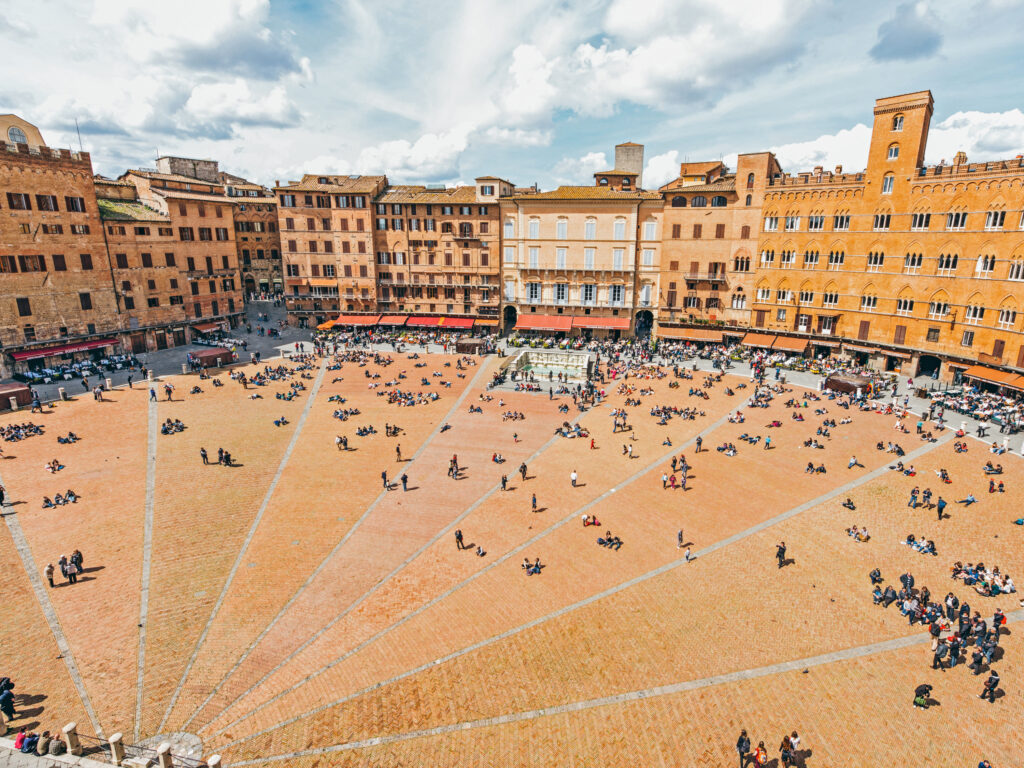
Siena is a historic Tuscan gem and one of the best-preserved medieval cities in Italy. Begin your exploration at Piazza del Campo, one of the most beautiful squares in the world. The square’s unique shell shape represents the Government of the Nine, who led Siena during its golden age. The name Campo (meaning “field” in Italian) comes from the fact that, in the past, the square was used as a market and fairground. Today, it is the center of city life, and it is common to sit and enjoy the sun after a long walk. In addition to the ancient noble palaces, the square is overlooked by the harmonious Palazzo Pubblico, a symbol of Siena’s ancient political power, and the 88-meter-high Torre del Mangia. The tower is named after its first bell ringer, Giovanni di Balduccio, nicknamed il Mangia (the eater) because he spent all his earnings at the city’s taverns and inns. Climbing its 400 steps is well worth the effort: from the top, you’re rewarded with sweeping views over Siena and the surrounding countryside.
Don’t miss the Cathedral of Siena, which rises majestically above the square. Its façade combines white and red marble and features numerous statues and decorations. The interior is stunning as well, with a blue vaulted ceiling, a bright rose window, lionesses on the pulpit, and detailed frescoes.
An event not to be missed? The Palio di Siena! Held twice a year, on July 2 and August 16, it is one of Italy’s most spectacular traditions. On these days, Piazza del Campo is transformed into a medieval stage, as ten districts compete for the renowned “Drappellone” banner. Who will claim victory this time?
You can visit Siena by bike on our Grand Tour of Tuscany, will you join us?
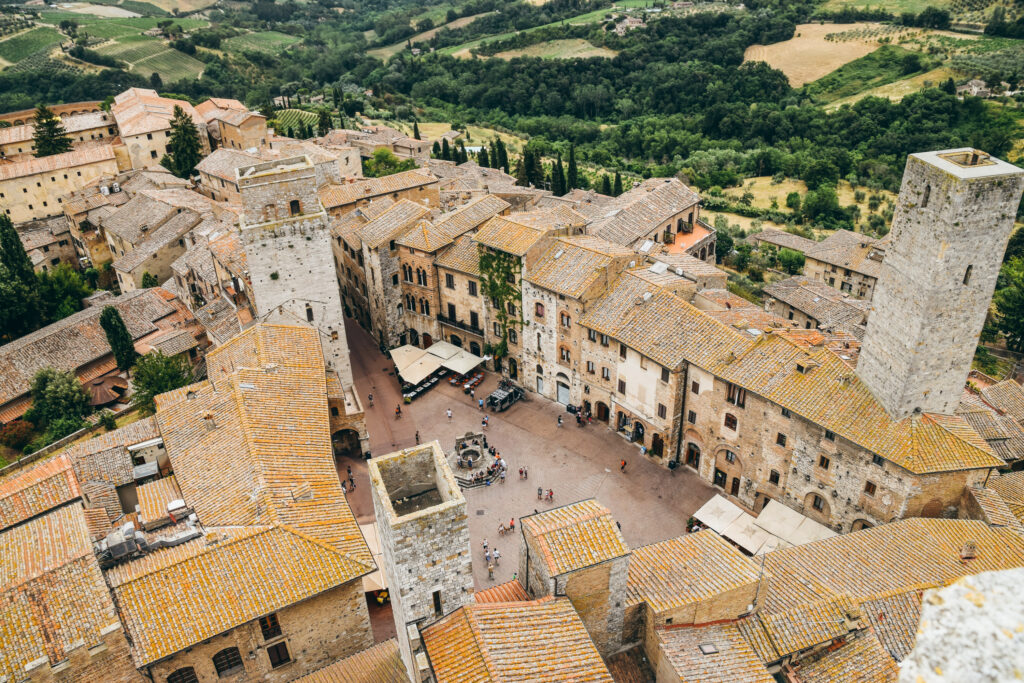
San Gimignano, the town of Medieval towers
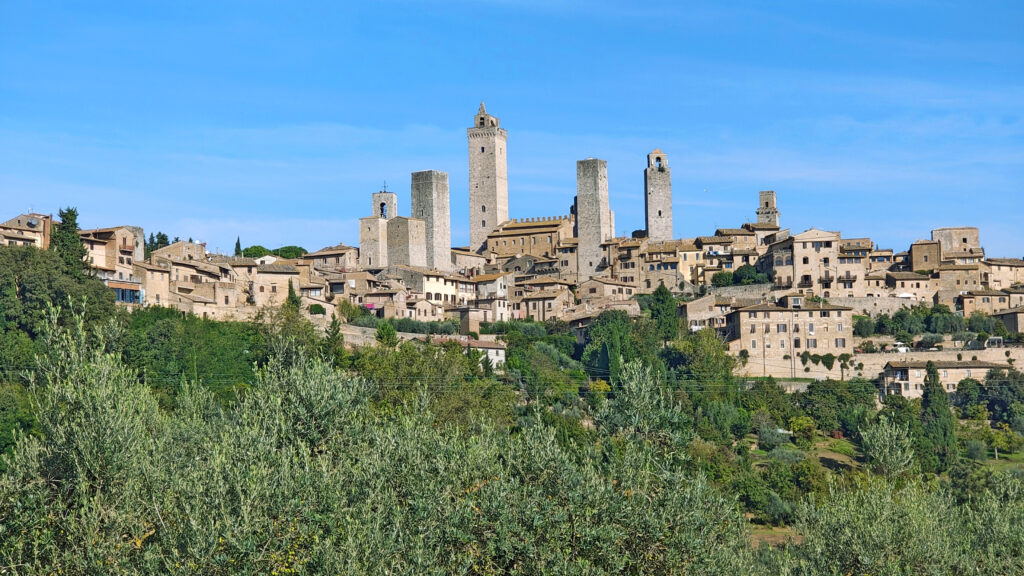
The village of San Gimignano lies among the green Tuscan hills, and its thirteen towers make it easily recognizable from afar. It is a place to be discovered slowly, enjoying its relaxed rhythm. There is the Duomo, with its fascinating cycle of frescoes, and the Palazzo del Popolo, which is now a civic museum housing precious works of art.
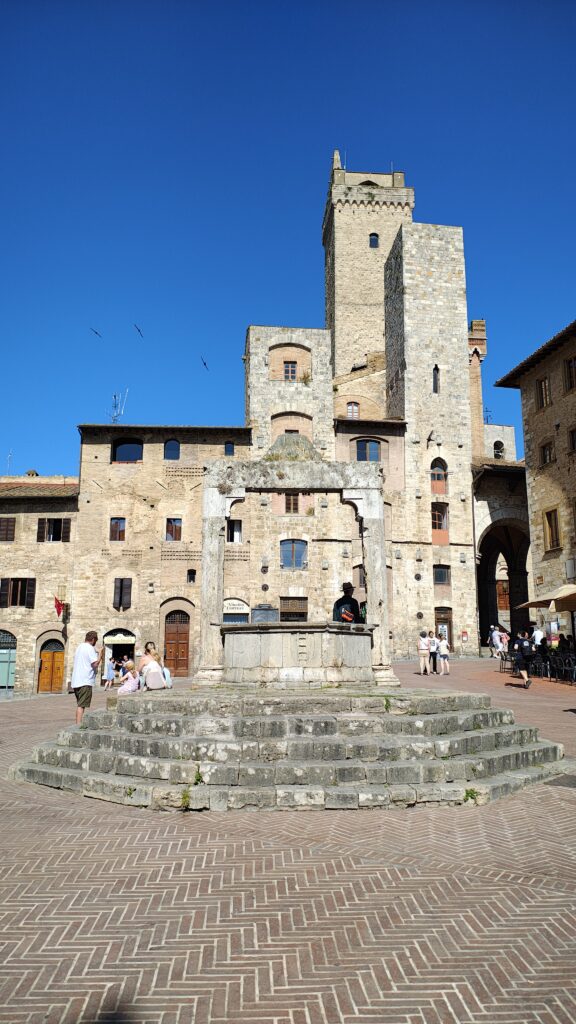
Beyond the classic tourist sights, San Gimignano is a place to experience. Wander through its historic streets, soak up its medieval atmosphere, and enjoy the views at every turn. One of the most iconic spots is Piazza della Cisterna, which sits atop a hill and boasts small artisan shops and tall towers, such as Torre del Diavolo. Why this name? Legend has it that the owner, upon returning from a long journey, found the tower taller than before, and blamed the Devil for it!
Volterra, an Etruscan hill town
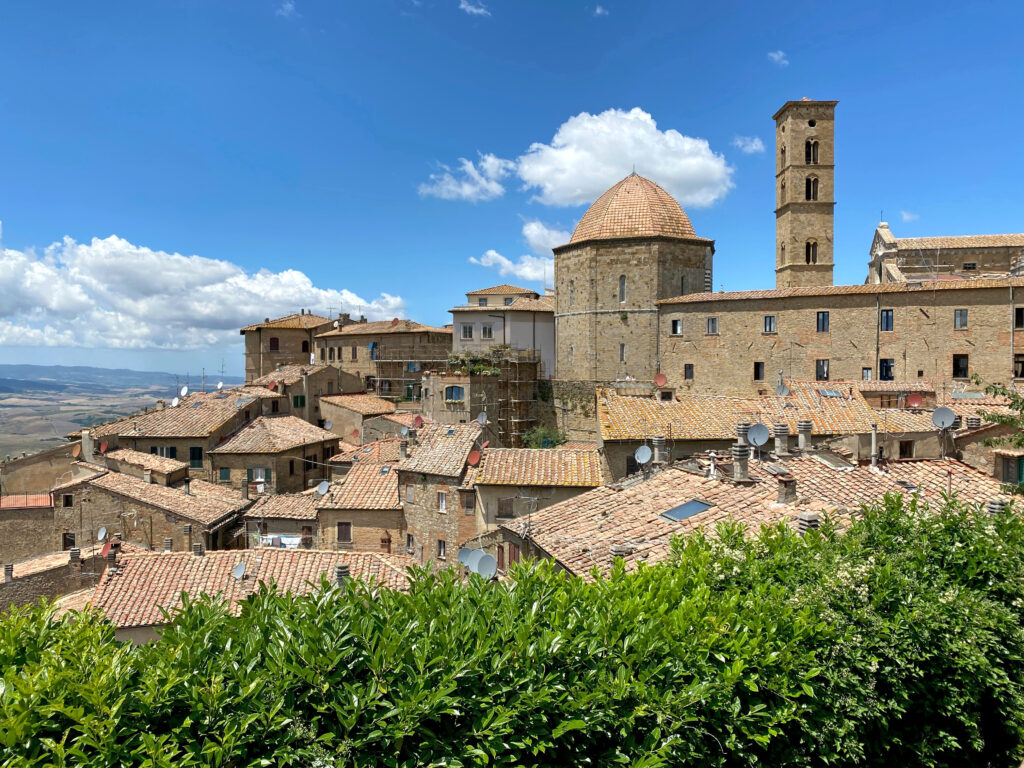
Strolling through Volterra’s cobbled streets and passing under its ancient Etruscan gates is like taking a journey back in time. At the heart of the village lies Piazza dei Priori, where the Palazzo dei Priori stands out as a symbol of Volterra’s civil power. Today, it houses the municipal offices and the magnificent Council Chamber with its impressive cycle of frescoes. From the tower, you can enjoy a wonderful bird’s-eye view!
In front of the palace is the Duomo of Volterra, where Romanesque and Baroque styles blend in a display of pink stucco columns, detailed sculptures, and gilded coffered ceilings. The Medici family’s influence is clearly evident as soon as you notice (even from a distance!) the Medici Fortress. Lorenzo de’ Medici commissioned the fortress to protect the city and prevent internal rebellions. It is now a prison, so it is not possible to enter. However, if you are interested, you can visit the nearby Torre del Mastio. Conclude your tour with a visit to the Roman Theater, one of the best-preserved Roman theaters in the world.
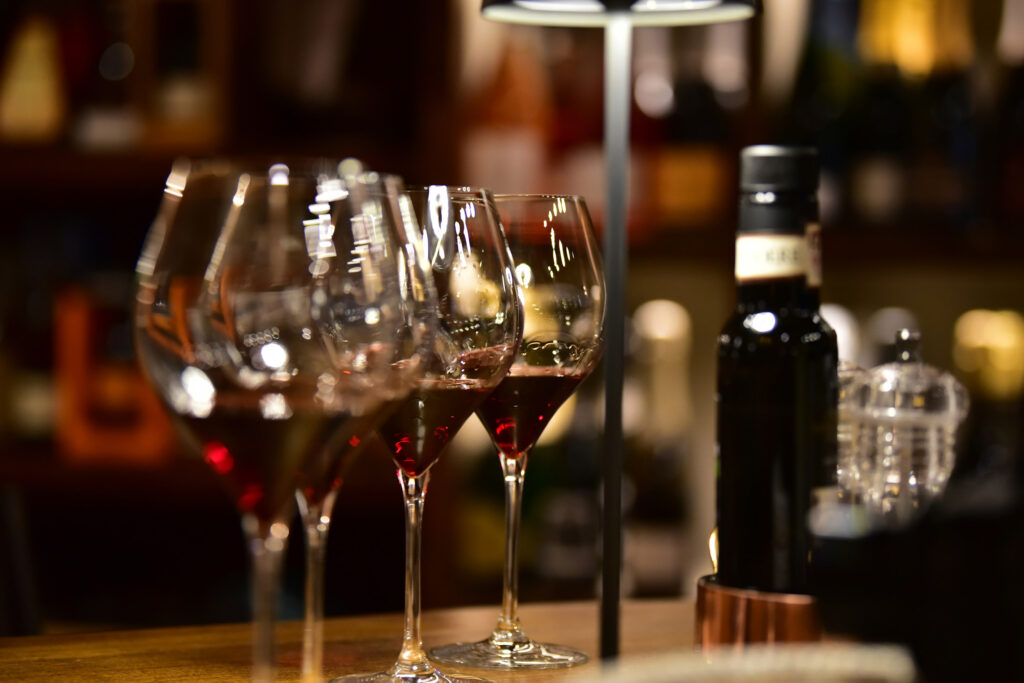
Montepulciano and the wine cellars beneath the Piazza
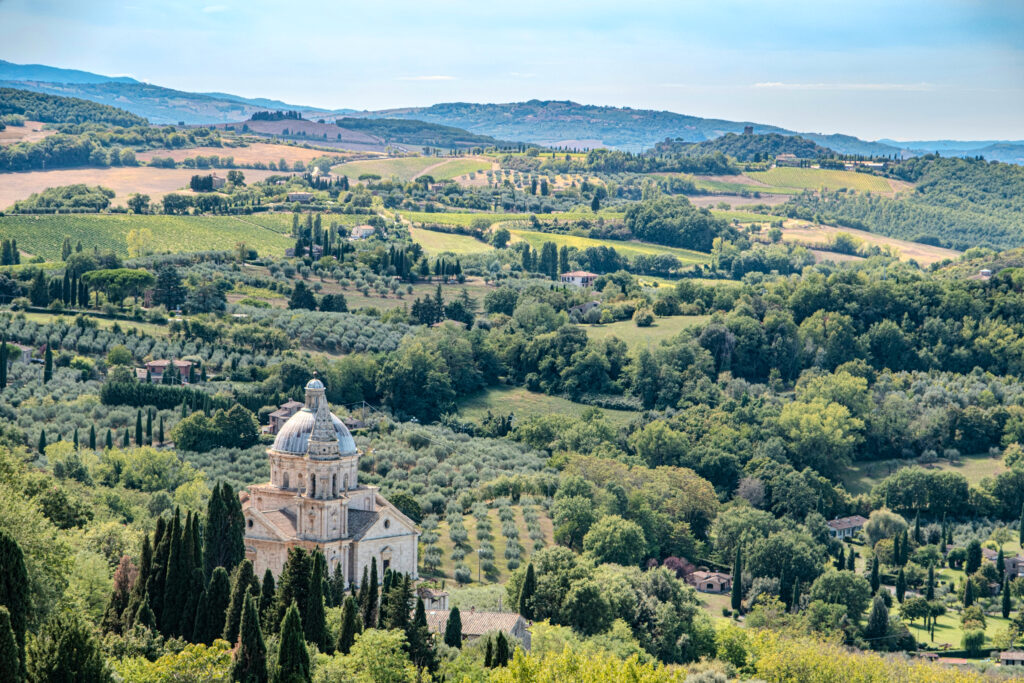
As soon as you arrive in Montepulciano, you will be struck by its authentic character and peaceful atmosphere. The heart of this picturesque village is Piazza Grande, surrounded by ancient noble palaces. Here, you will find some of the town’s main buildings, including the Duomo and the Palazzo Comunale. Did you know that the square has a secret? At the bottom, there are underground cellars carved into the tuff that are still used to produce and age Montepulciano wine. If you happen to be here on the last Sunday in August, you will be fortunate enough to witness the unique Bravìo delle Botti event. What is it? For over 600 years, eight districts have competed to roll 80-kilogram barrels uphill along a well-defined route to win the famous “Panno”.
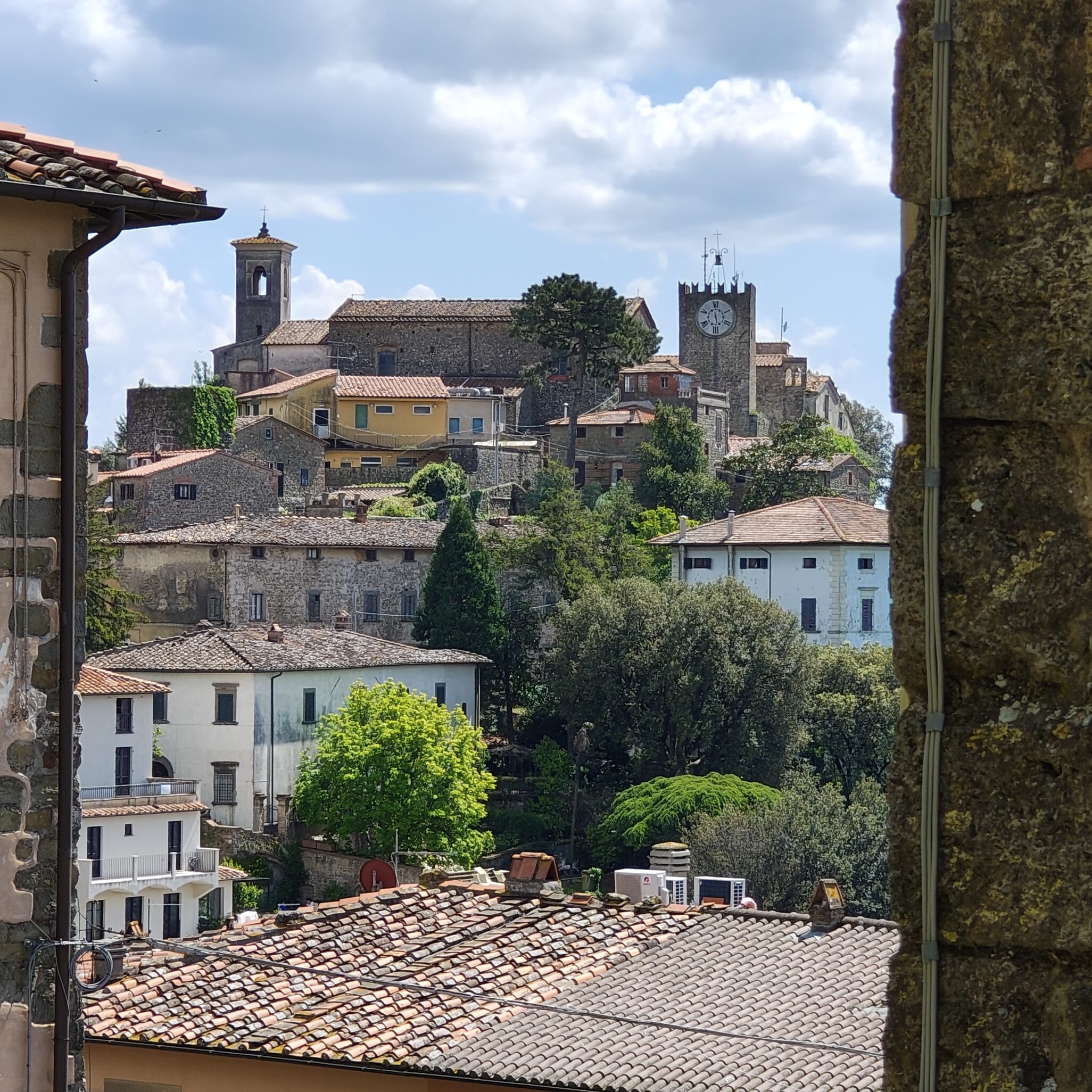
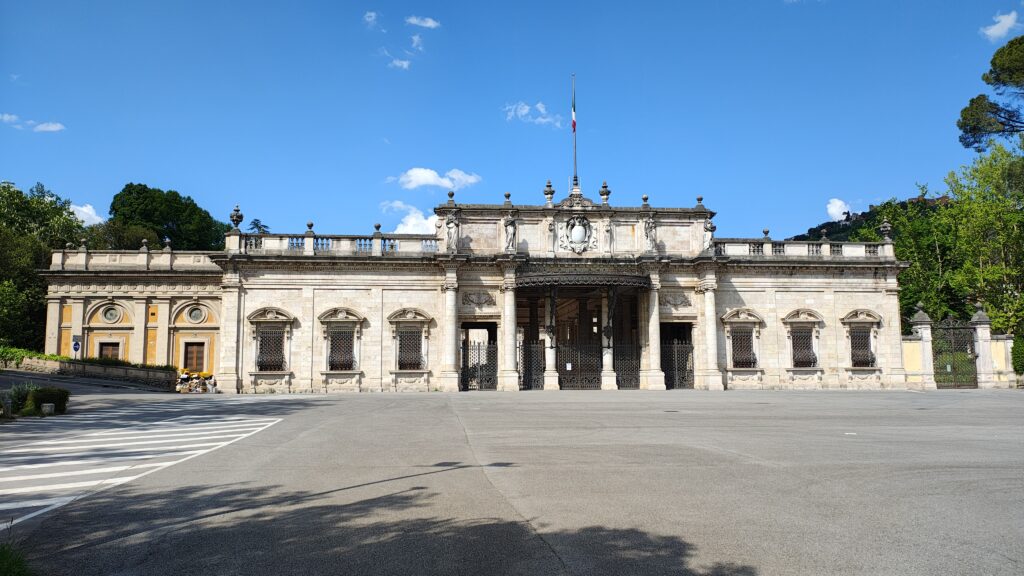
Montecatini, Tuscany’s historic spa town
Where better to spend a day of total relaxation? Montecatini boasts a long tradition of thermal baths, so much so that it has been declared a UNESCO World Heritage Site. Two establishments not to be missed are Tettuccio and Tamerici. Tettuccio stands out for its Art Nouveau and Neoclassical style, featuring long romantic colonnades, fountains, bas-reliefs, and a historic café with an antique atmosphere. Tamerici, on the other hand, is known for its richly decorated ceramic interiors, an entire pavilion adorned with arabesque motifs, and a fountain featuring a cherub and a frog. Today, it hosts important exhibitions.
Have you heard of Gigio and Gigia? They are the two red carriages of the funicular railway that take you to Montecatini Alto. Enjoy a short ride through the green hillside landscape to reach this small medieval village with a lively soul.
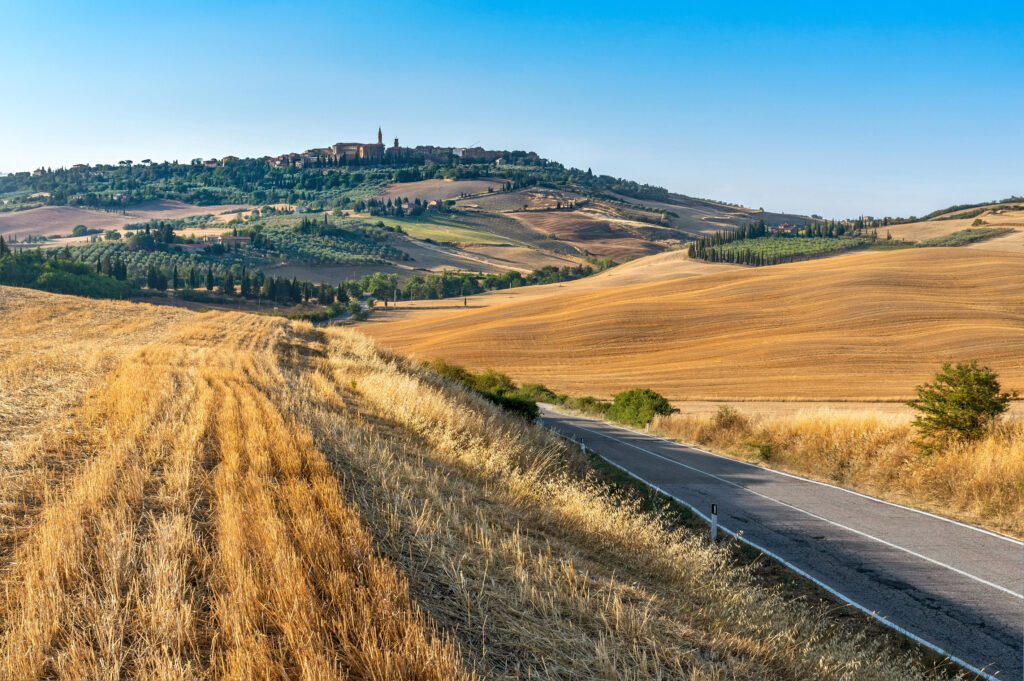
Val d’Orcia and its iconic landscape
Just a few kilometers away from the cities of Florence, Siena, and Pisa, you can find small medieval villages, expanses of tall cypress trees, and plenty of good wine.
Breathtaking landscapes await you in Val d’Orcia, including expanses of vineyards, roads lined with tall cypress trees, and golden wheat fields that turn reddish at sunset. There are also authentic medieval villages, such as Pienza, a town with a Renaissance soul that is famous for pecorino, a traditional Italian cheese, and Montalcino, an Etruscan village surrounded by green countryside. Stop here to taste a glass of wine, as Brunello is produced right here! Other highlights include Montepulciano, Castiglione d’Orcia and its castle, and Radicofani with its picturesque narrow streets.
Chianti, vineyards, and hilltop villages
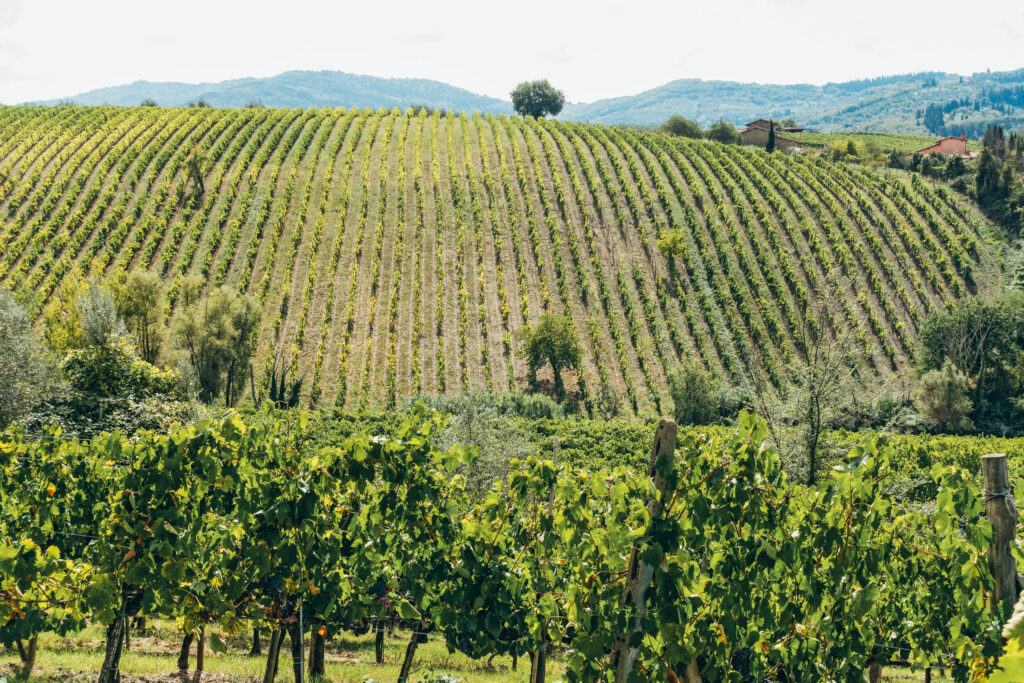
Chianti is one of the most famous areas in Tuscany. Why? Because Chianti, one of Italy’s most renowned wines, is produced here. Stop at one of the many wineries nestled in the green hills and enjoy an excellent wine tasting—you won’t regret it! Long stretches of vineyards and olive groves are interspersed with ancient villages. Greve welcomes you with its triangular square, arcades, and artisan shops. There are also the elegant villages of Radda and Castellina with their medieval buildings and Gaiole, which is surrounded by imposing castles. Then there’s Montefioralle, the hidden gem of Chianti with a deep connection to the Mona Lisa (yes, the one in the painting!). Lisa Gherardini’s family owned large tracts of land in the Chianti region. Some claim that the landscape in the background of the Mona Lisa painting is actually Montefioralle!
What to eat: soups, pasta and… cantucci!
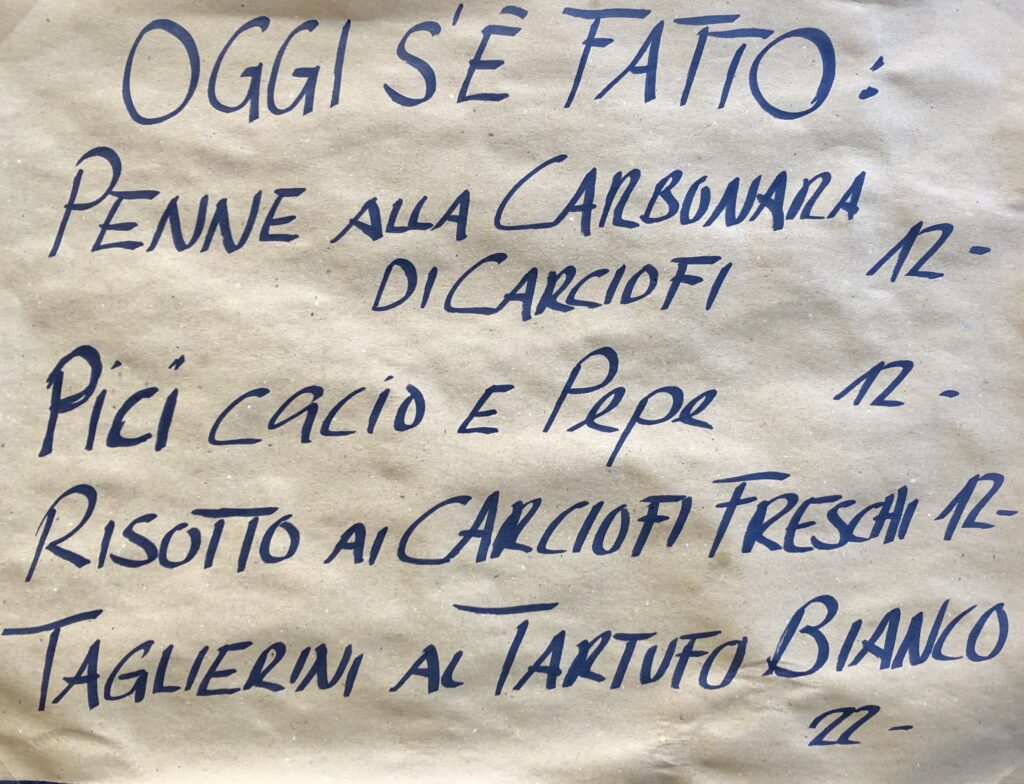
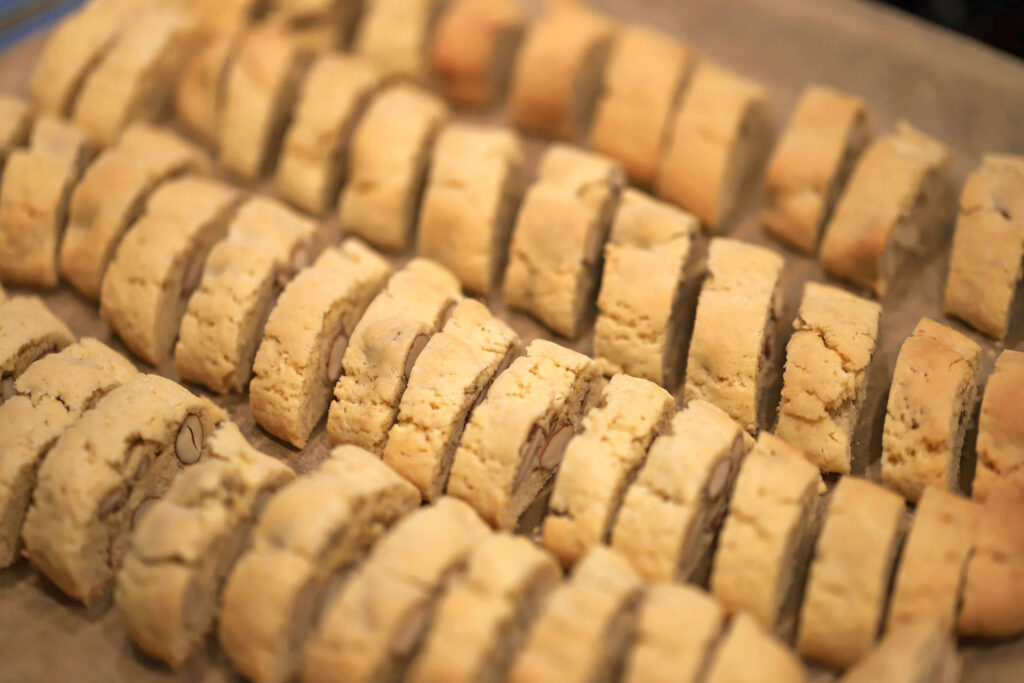
Tuscan cuisine has its roots in rural traditions and is based on simple, authentic ingredients like bread, olive oil, and legumes. Classic dishes include bistecca alla fiorentina, a T-bone steak cooked on the grill and served rare; ribollita, a soup made with black cabbage and stale bread; and lampredotto, a sandwich made with beef tripe. Pasta dishes are sure to make your mouth water. Typical Tuscan pasta dishes include pici all’aglione (garlic pasta) and pappardelle al cinghiale (pasta with wild boar sauce). In the small seaside town of Livorno, cacciucco, a fish soup created from the need to use unsold fish, is famous. It’s a dish of humble origins but rich in flavor. Cantucci, dry almond biscuits perfect for dipping in wine, stand out among the desserts. Other notable desserts include castagnaccio, a cake made with chestnut flour and rosemary, and zuccotto, made with sponge cake, chocolate, and ricotta cheese.
How to visit Tuscany
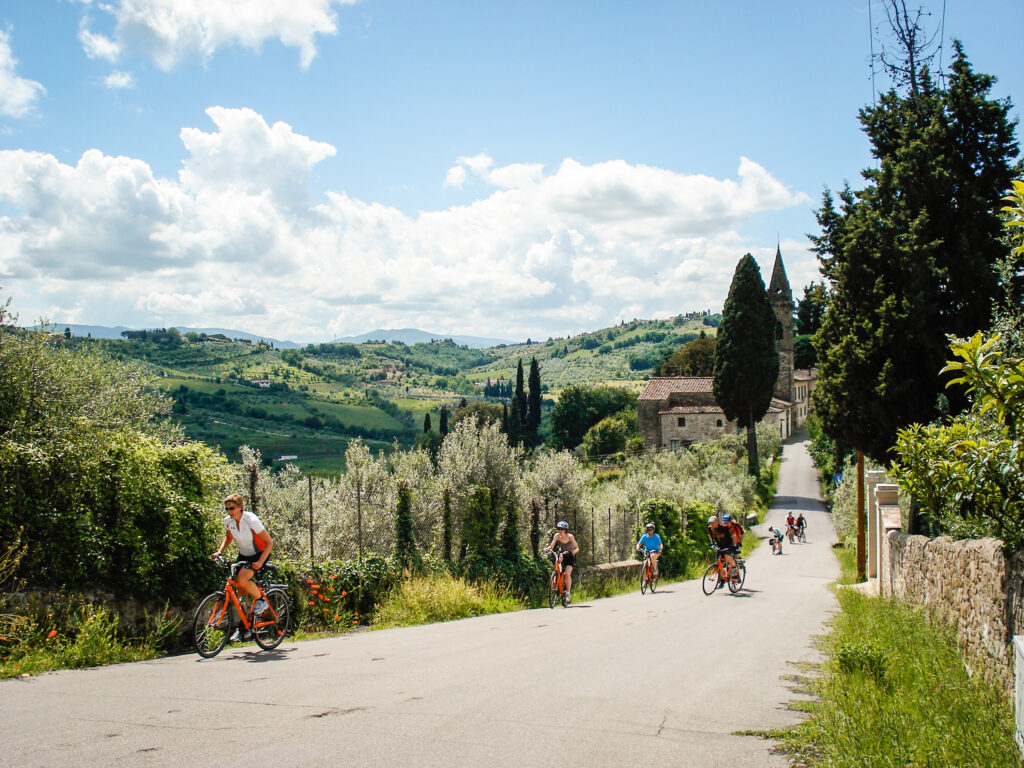
One of the best ways to experience Tuscany is by bike or with an e-bike. Cycling through the region lets you set your own pace, moving between Renaissance cities, medieval villages and stretches of breathtaking countryside, with plenty of stops along the way to sample the local food and wine.
Our promise is simple: cycle easy, travel light. Choose your tour and we will take care of everything else: a carefully designed itinerary, handpicked accommodations, luggage transfer, and multilingual assistance along the way.
How to get to Tuscany
Tuscany is easy to reach and well-connected. The main airports are Pisa Galileo Galilei and Firenze Amerigo Vespucci. From these airports, you can easily reach the major cities by public transportation. We recommend using Trainline to find the best connections.
Now that you’ve read the article, are you eager to set off and explore this fascinating region? Take a look at Girolibero’s trips to Tuscany! Grand Tour of Tuscany 10 days Cycling self-guided girolibero.com From Pisa to Florence 8 days Cycling self-guided girolibero.com From Pisa to Florence 5 days Cycling self-guided girolibero.com Grand Tour of Tuscany 7 days Cycling self-guided girolibero.com From Pisa to Siena 5 days Cycling self-guided girolibero.com5 Travel tips in Tuscany